Mãostiqueiras in Brazil: Wool, Women’s Work and a Living Textile Museum
DDUJA KNIT JOURNAL · BRAZIL · REGIONAL CRAFT AND WOOL
Research and writing: DDUJA KNIT
When choosing yarn, we often start with color and thickness. Asking who washed, dried and prepared the fleece changes the story. Mãostiqueiras in Campos do Jordão offers a specific way to explore those less visible stages: raw material, women’s work, a wool museum and local documentation belong to the same account. This is a regional case study, not a substitute for the history or origins of knitting across Brazil.
People and work · The museum · Fiber and yarn · Reading a swatch · The 2026 mapping project · Sources
Image note: All five images are newly generated AI reference illustrations. Follow their caption links to photographs of the actual organization and materials.
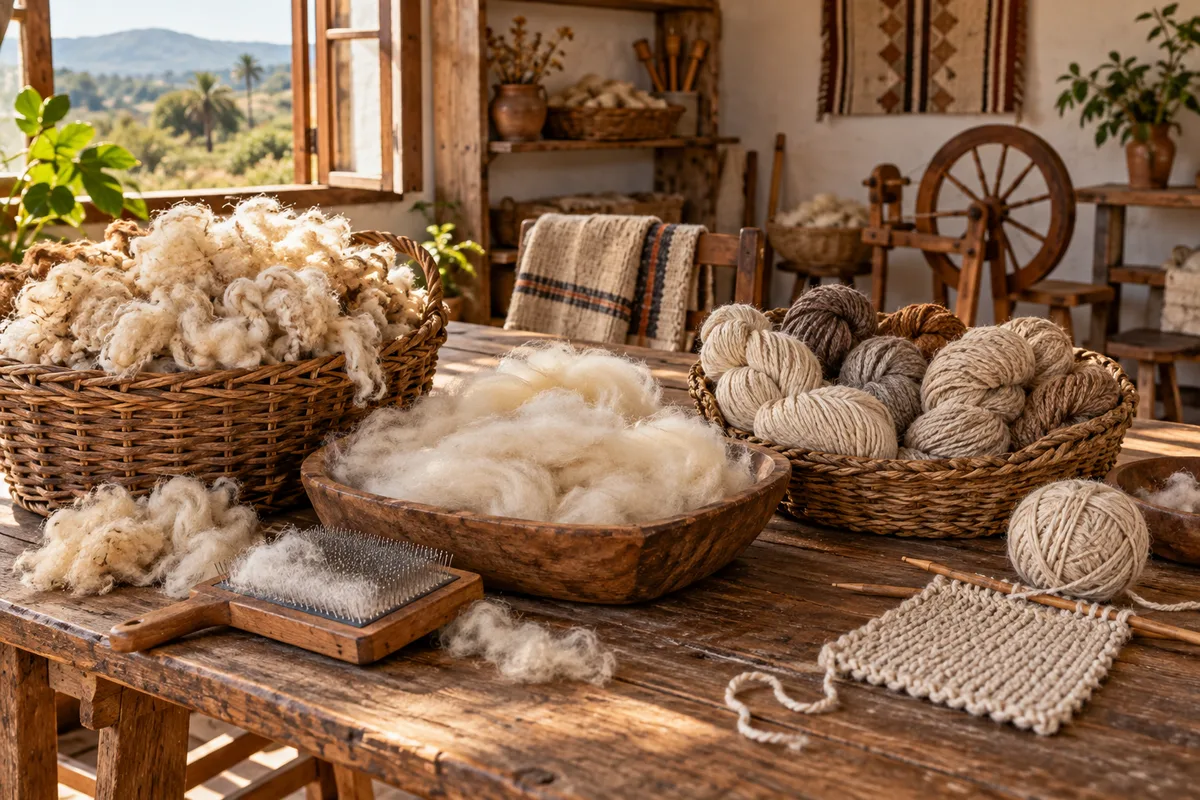
Connecting local wool with people’s skills
The organization identifies Juliana Müller Bastos as its founder and craft teacher and designer Rosélia Benedita de Araújo, known as Lika Araújo, as its technical supporter. Its account begins with making use of previously discarded regional fleece. The name brings hands together with the Serra da Mantiqueira. [1]
It describes weekly meetings combined with making at home, payment on delivery according to complexity and production time, and an additional share when an item sells. These are the organization’s descriptions, not independently audited income or employment findings. [1]
A useful question follows: which kinds of work are hidden behind the phrase “handmade”? Preparing fiber, spinning, knitting and checking a finished piece need not be done by one person. In your own notebook, separate time spent with needles from preparation, washing, drying and finishing. Otherwise, the visible act of knitting can stand in for a much longer sequence. This is a suggested way to reflect on making, not a reconstruction of the group’s actual cost calculations.
Look before the finished object
The official Museu da Lã introduction organizes its subject around sheep, fiber, processing, textile techniques and history. It identifies support from São Paulo state and federal cultural bodies and the Lei Paulo Gustavo, and locates the museum at Parque da Lagoinha. We do not attach an unverified opening year or a claim that it is the first of its kind. [2]
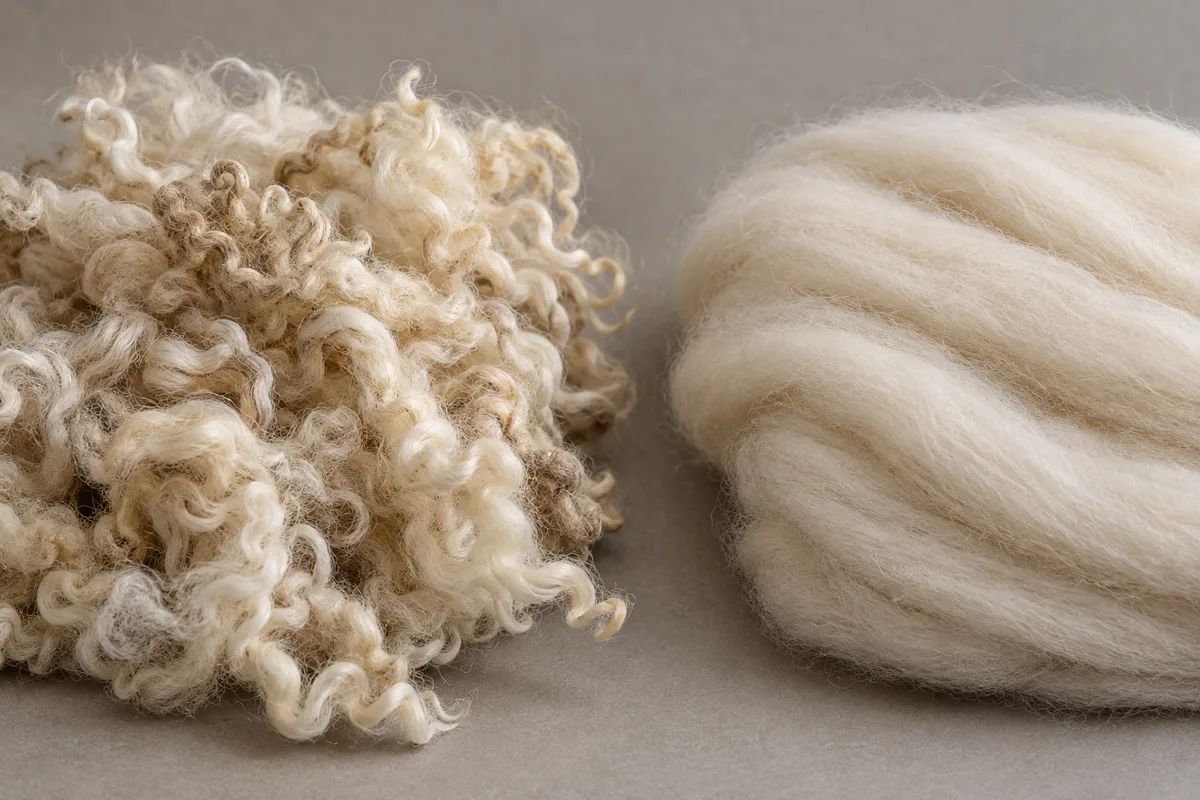
Try opening the source photographs of fiber and finished yarn side by side. At what point does a mass of fleece become an organized length of material? At what point does it look like yarn? Following only the color of a finished object makes it easy to overlook the intervening work. A museum’s process material can restore those questions even when you cannot visit in person.
The museum also covers spinning, felting, weaving, knitting and crochet. Those categories must remain distinct: shared use of wool does not make every object knitted. Retaining distinctions between tricô, crochê and feltragem helps a reader avoid confusing appearance with construction. [2]
Fleece is not automatically yarn
The museum’s processing material follows shearing, washing and drying, opening and carding fibers, spinning and dyeing. It discusses both spindle and wheel spinning. Treat this as a map for understanding material rather than proof that every product follows one identical sequence with the same equipment. [3]
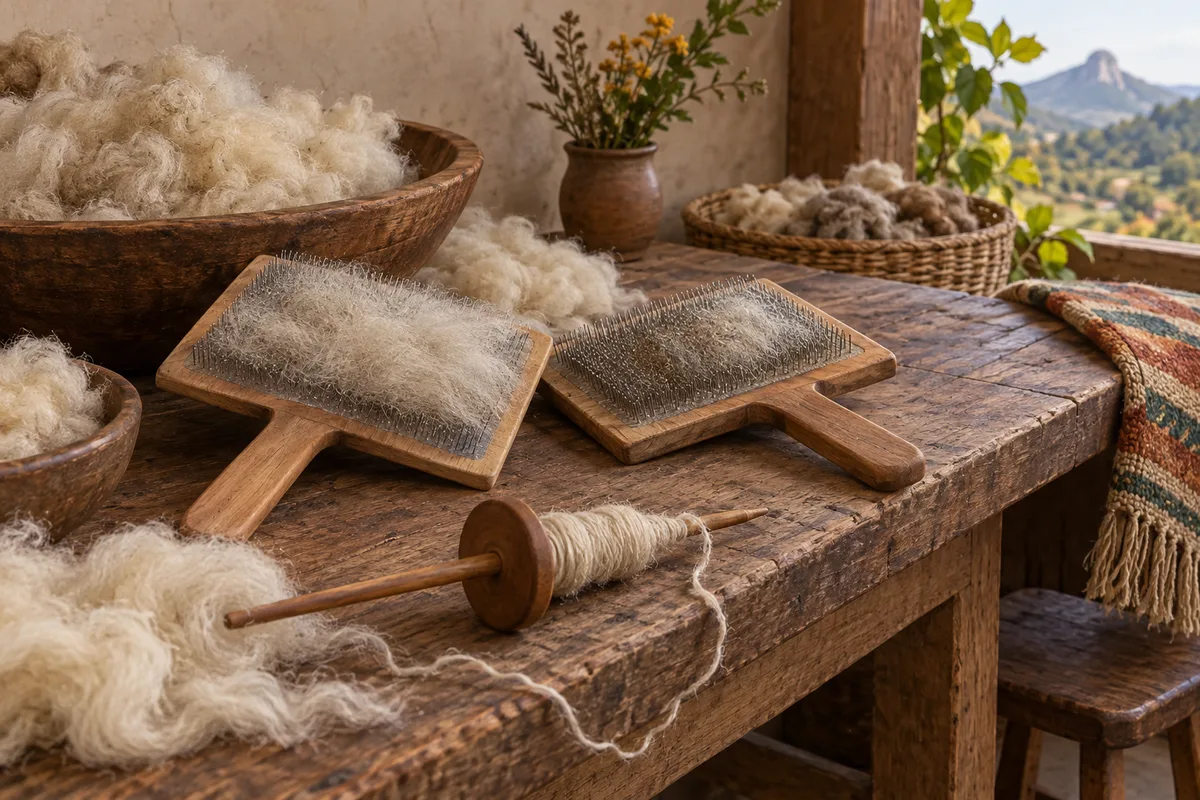
A concrete example appears in the official Corriedale carded-wool listing. It identifies Brazilian breeders as the source, gives approximately 10–12 meters per 100g, and presents the material for giant knitting, felting and spinning. A length measurement alone does not make prepared fiber equivalent to an ordinary twisted knitting yarn; the preparation described in the listing matters. [4]
Put weight and length into comparable units before choosing a substitute. Then work a small sample in the intended structure. Matching a needle size alone cannot establish that two materials will produce the same dimensions or feel. Note preparation, loop size and density alongside the tool size, so the next trial can be compared with something more useful than a memory of softness.
Questions for a chunky cushion or blanket
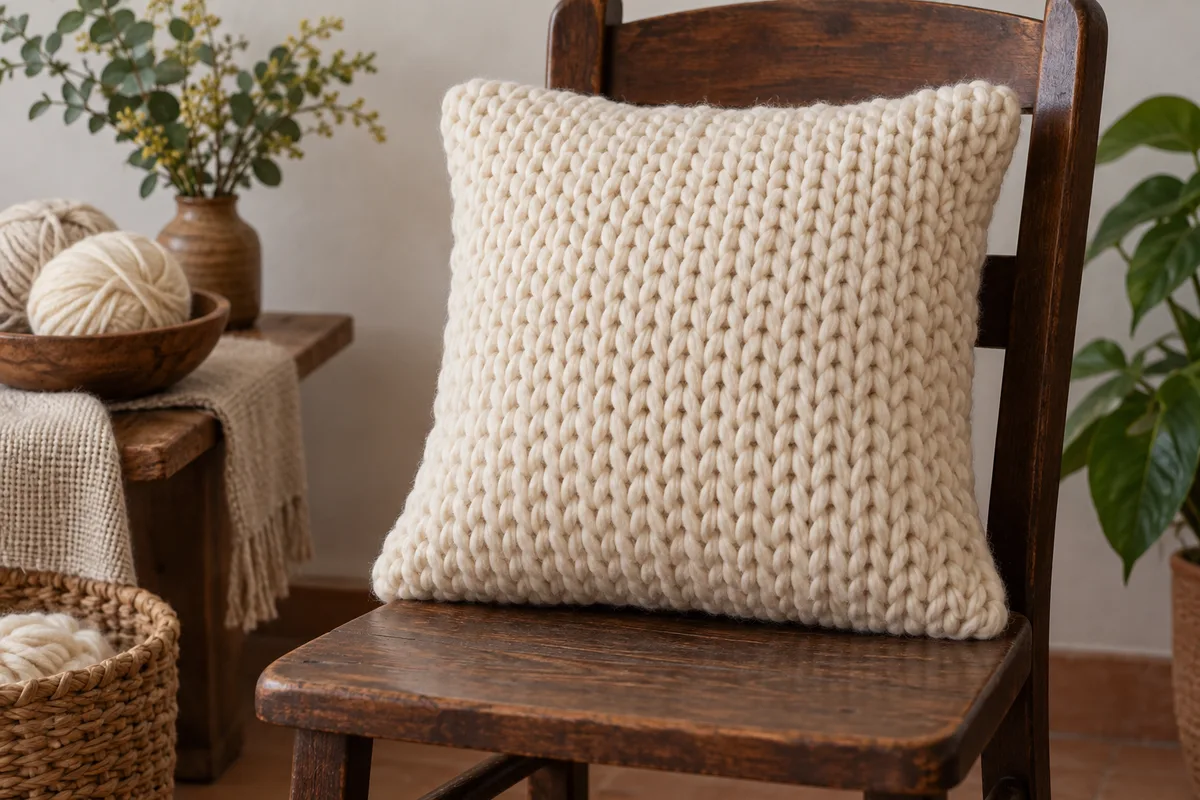
Large knitted loops can be read from across a room, which is part of their visual appeal. Yet a photograph leaves practical questions unanswered. How are the two sides joined? Does the filling show? What happens at the edge? How does the surface behave where people touch it frequently? Our invented cushion is an illustration for those questions, not evidence of the construction or durability of a product sold by Mãostiqueiras.
For a small experiment, change one condition at a time. Make a relaxed sample and a denser one with the same material. Compare them in your hands and resting on a chair. If a cushion is the eventual goal, join two sample edges as well as examining a single piece. A pleasing surface and a useful seam are separate decisions. This helps turn an appealing visual mood into choices suitable for your own home rather than an attempted copy of a source photograph.
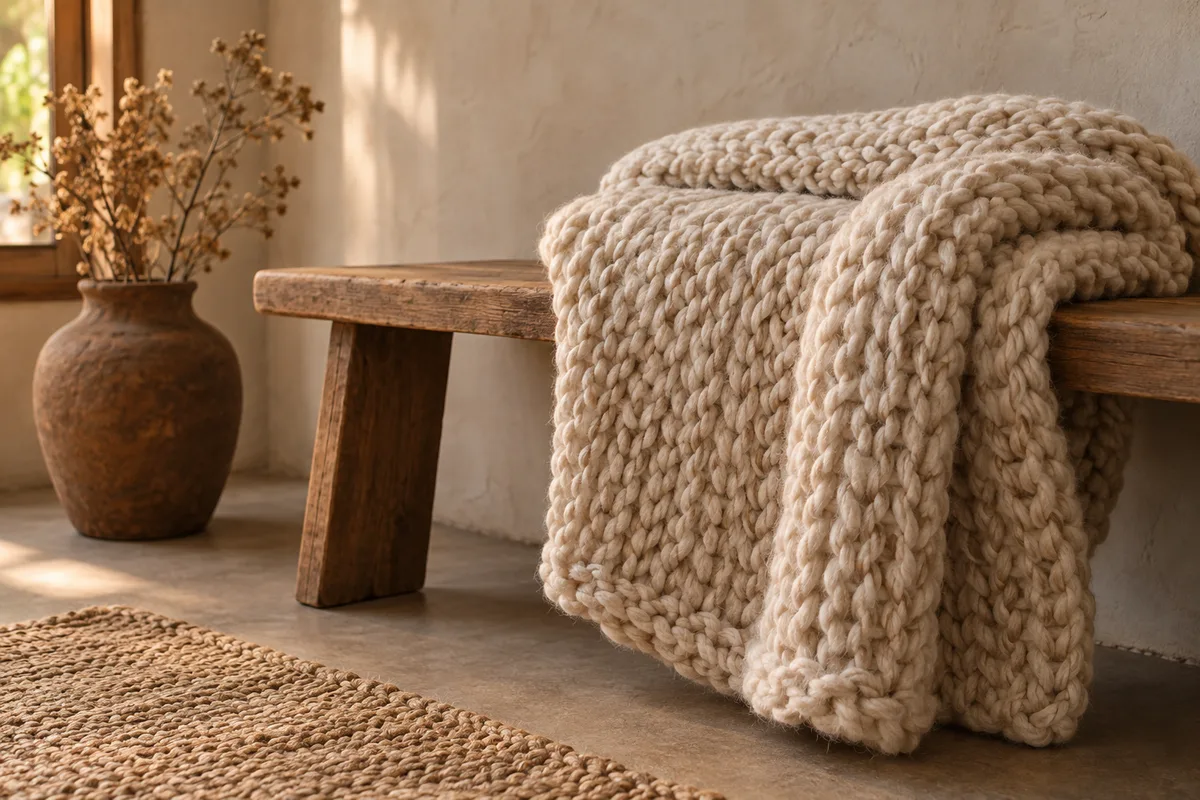
The carded-wool listing recommends cold hand washing, avoiding twisting and tumble drying, and drying flat in shade. Read that as the supplier’s care advice for this material and work made from it, not a universal washing rule for every wool product. [4]
Before beginning your own blanket, check the care instructions for the yarn you have actually selected and finish a sample accordingly. Record width and height before and after finishing and note when it is fully dry. In the same notebook, distinguish “looks convincing in a photograph” from “tested with my material.” Neither observation is useless, but they support different decisions.
The 2026 project: recording knowledge as well as objects
A 2026 notice from the Campos do Jordão culture department describes Cartografia dos Saberes Têxteis da Mantiqueira, a project to map regional makers, skills and histories. Its planned sequence includes digital registration, field visits and documentation, followed by a free digital inventory. The municipality identifies Mãostiqueiras as a textile cultural hub and home of the wool museum. [5]
The advertised registration deadline was August 31, 2026, already past at the time of this review. This is therefore a record of an announced initiative, not an invitation to a currently open application. A planned ebook must also be distinguished from a completed publication. The announcement alone cannot confirm final participation numbers or results. [5]
What, then, does preserving a craft involve? Finished pieces matter, but so do the words used to select material, ways to correct a mistake and arrangements for sharing work. When looking at a craft object or making your next sample, place material, technique, maker and source beside the attractive image. That small habit keeps the person and process from disappearing behind the finished surface, and turns inspiration into something another reader can investigate.
Sources and image note
- Mãostiqueiras · Quem somos
- Mãostiqueiras · Museu da Lã
- Museu da Lã · O Beneficiamento
- Mãostiqueiras · Lã Corriedale Cardada
- Campos do Jordão 문화부 · Cartografia dos Saberes Têxteis da Mantiqueira (2026)
Checked October 14, 2026. Five new AI reference illustrations replace photographs for which reuse permission was not established. The caption links lead to authentic official images. Illustrations are not evidence of the actual premises, products or techniques, and are not usable knitting patterns.