Knitting in Malaysia: Joanne Loh, Summer Tops and the Work of Writing Patterns
Research and writing: DDUJA KNIT
If knitting makes you think first of cold weather, begin with a summer top made by a Malaysian parent for her daughter. On the same website are winter hats, a textured scarf and a small crochet ornament inspired by lion dance. Their coexistence suggests a better question than whether a hot country “needs” knitting: who will use an object, where, and with what materials? This article follows Joanne Loh’s published work rather than proposing a single origin story for all Malaysian knitting.
A textile history is not one maker’s biography
The Department of Museums Malaysia’s National Textile Museum guide lists weaving, embroidery, batik-making, knitting and beadwork among the techniques represented in the Pohon Budi Gallery. These are neighbouring categories, not interchangeable processes. Its description of songket identifies a woven textile incorporating gold thread. Treating its motifs as ancient knitting patterns would change the structure of the object being discussed.
This distinction also matters when looking at contemporary work. Decorating an existing cloth, interlacing threads and building a fabric from connected loops pose different questions. A museum overview provides a starting vocabulary; it does not by itself date the first knitting in Malaysia or establish one route by which it arrived. A collection history and a blog publication date are different kinds of evidence.
Craft Passion’s account of its founder describes Joanne Loh learning through family craft, books and the internet, and places the website’s beginnings in 2008. That date belongs to her online publishing history, not the beginning of a national tradition. The account also discusses photography and written instructions as part of making a project available to others. Producing an object and explaining it are related but distinct forms of work. Both deserve attention.
A summer halter: measurements before age labels
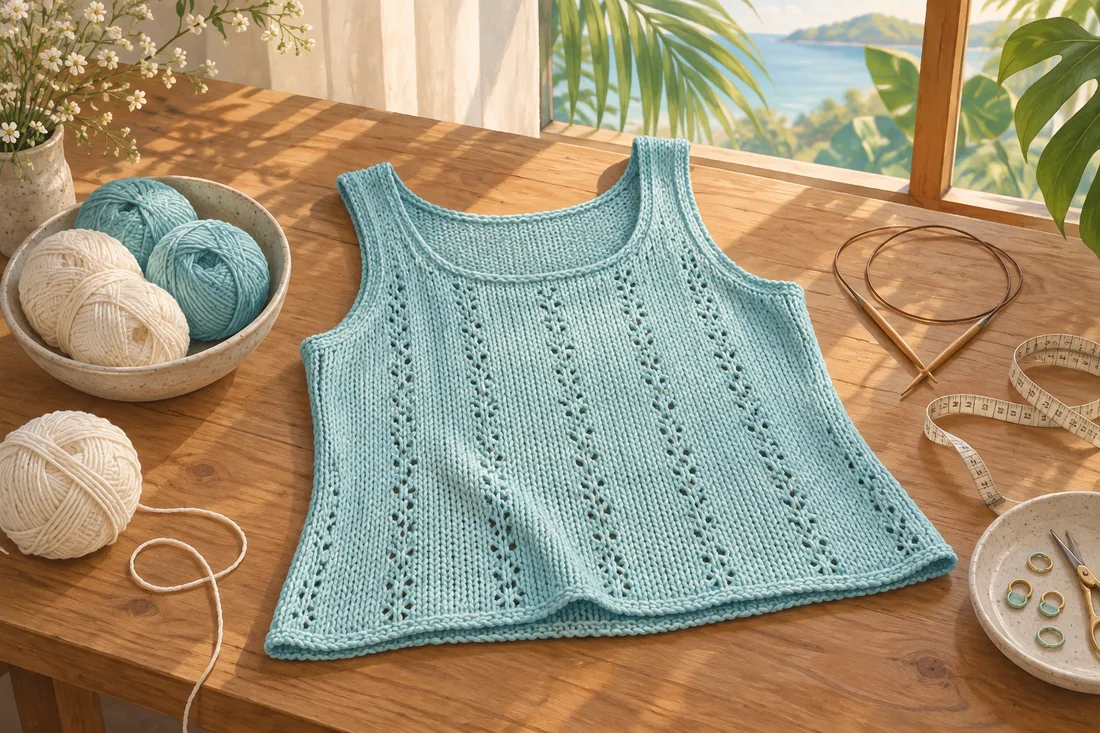
In her halter-top post, first published on 15 April 2010, Loh relates the project to her daughter and Malaysia’s warm weather. The pattern specifies Adriafil Floris Classic Cotton, a gauge of 22 stitches and 31 rows per 10cm on 4mm needles, and a chest to fit of approximately 57cm. The page’s 2024 update is separate from its original publication. These are conditions for one pattern, not universal values for cotton or children’s clothing.
Before choosing matching colours, determine what each measurement describes. An age range cannot replace circumference and length. A substitute yarn may give a different width from the same stitch count; straps and fastening positions also matter to the wearer. The complete instructions, finishing details and sizing should be read together at the maker’s page, then checked against a swatch. This article is a reading guide, not a reproduction of the row-by-row pattern.
Why the same stitch count can produce different hats
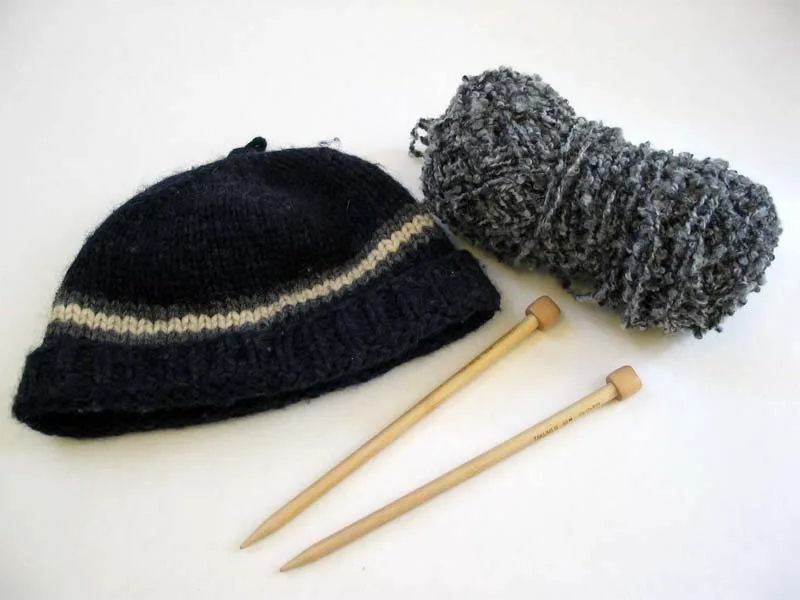
The two beanie versions published in 2017 make the material relationship visible. They use the same circumferential stitch count but different yarns. On 4.5mm needles, their stated stockinette gauges are 18 stitches and 29 rows, or 17 stitches and 28 rows, per 10cm. Loh also describes wearing a hat during a trip to Hokkaido. A Malaysian maker’s winter garments need not be explained solely by the climate at home.
Consider an editorial example: 90 stitches at 18 stitches per 10cm give about 50cm; at 17 stitches per 10cm, they give about 52.9cm. This is an invented calculation to explain gauge, not the pattern’s cast-on instruction. When choosing a hat, compare head measurements, desired ease and edge elasticity rather than relying on the gender label attached to a version. Substituting yarn changes more than colour.
A pom-pom scarf: visual complexity is not stitch difficulty
The pom-pom scarf first published in 2009 combines garter stitch with pom-pom yarn. Its material note describes Rapunzel as manufactured microfibre and marks it as discontinued. “Mink” in the project title does not identify actual mink fur. Read fibre information before taking a tactile comparison or product name literally.
A richly textured surface need not result from elaborate stitch manipulation: here much of the effect comes from the yarn. For a replacement, examine the spacing of its raised elements, the connecting strand and the eventual fabric weight rather than assuming that any bulky yarn is equivalent. This example invites a useful distinction between the simplicity of a stitch and the practical experience of reading that stitch in an unusual material.
A lion-dance charm: design through the placement of parts
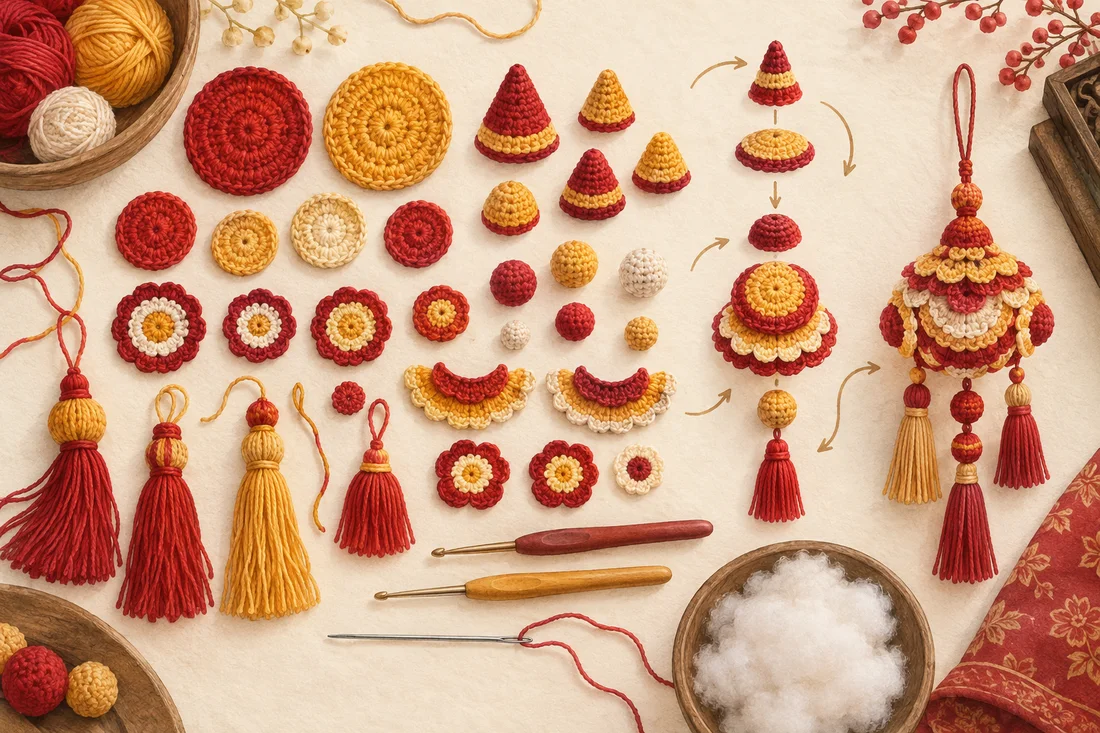
The 2026 Pocket Lion Dance Keychain pattern presents FuFu, a roughly 10cm crochet design inspired by Chinese lion-dance costume. Several components are made separately and assembled. Familiar stitches do not automatically make the whole project simple: the positioning of facial features and decoration changes its expression and balance. This is a contemporary design example, not evidence for the origins of lion dance or a uniquely Malaysian crochet technique.
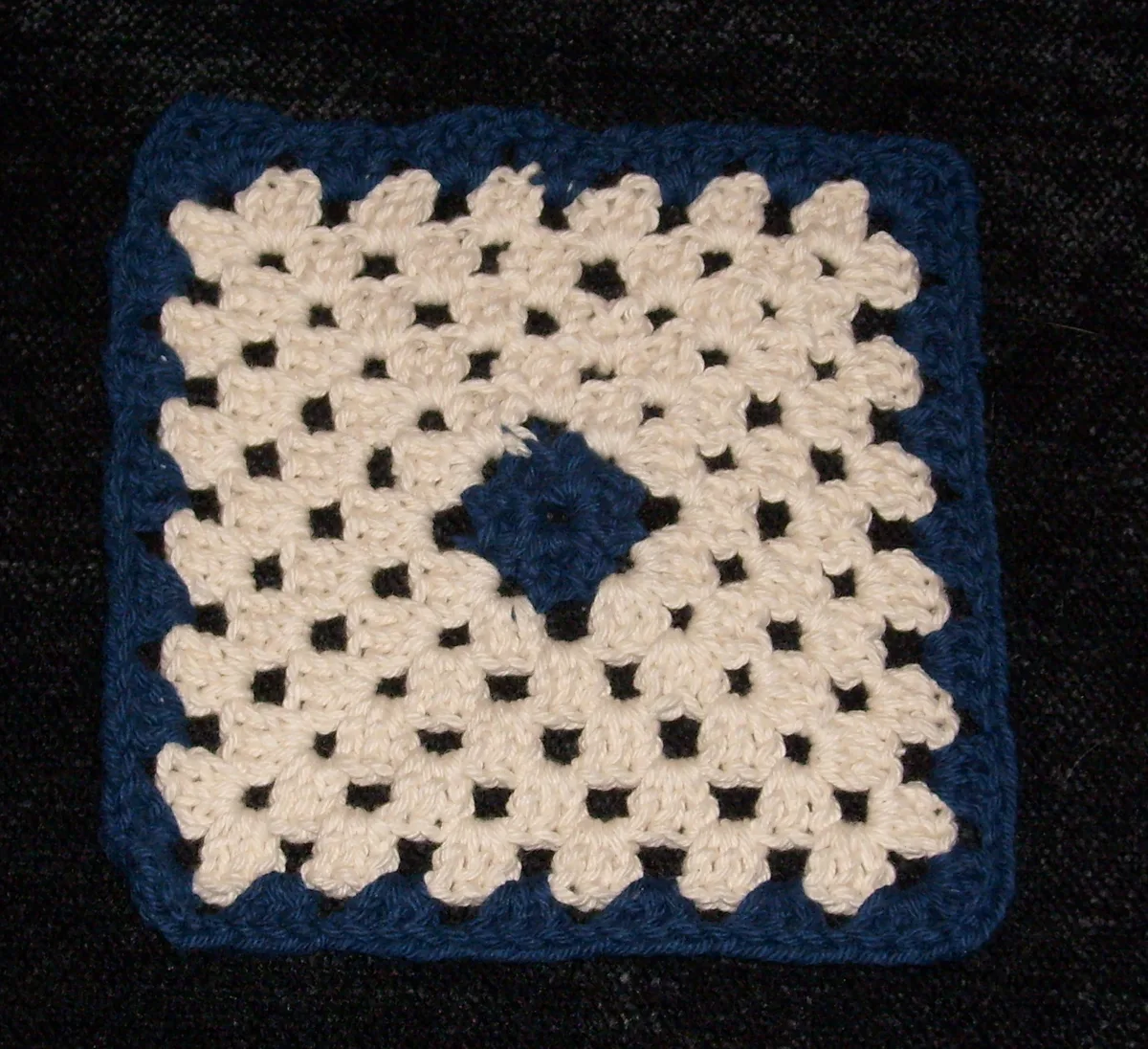
Read the assembly sequence separately from the stitch abbreviations. Notice where each part ends, which face is meant to show, and where positioning can be compared before sewing. The illustration below helps frame those questions with imaginary components. It does not reproduce FuFu’s actual parts, measurements or construction. Use the original instructions to make the project.
What remains after the finished object
These records reveal several purposes rather than one national style. A summer top directs attention to the body and climate; hats to material and size; the scarf to the yarn’s surface; the crochet ornament to assembly. On opening your next pattern, record the author, publication date, wearer, gauge and finishing sequence separately. That small practice turns an attractive photograph into a more useful understanding of how an object is made.
Free access to instructions is separate from permission to republish photographs. We reviewed Craft Passion’s terms, including its main-photo sharing statement and commercial-use restriction, and link to the maker’s actual project photographs instead of reproducing them here. Reusable contextual photographs carry individual credits, while original explanatory illustrations are labelled as AI-generated.
Primary sources
- Department of Museums Malaysia · National Textile Museum
- Craft Passion · About Joanne Loh
- Joanne Loh · Halter Top Knitting Pattern (2010; updated 2024)
- Joanne Loh · How To Knit A Hat (2017; two versions)
- Joanne Loh · Pom-Pom Mink Scarf (2009; updated 2024)
- Joanne Loh · Pocket Lion Dance Keychain (2026)
- Craft Passion · Terms & Conditions
Sources checked 14 October 2026. Three licensed contextual photographs and two labelled AI illustrations are used. The contextual photographs do not document Joanne Loh’s projects or Malaysian workshops. Follow the maker’s pages for actual project photographs and complete instructions.