KAMA in Czechia: From Domestic Hats to Prague Production
Research and writing: DDUJA KNIT
A winter hat first catches the eye through colour and pattern. Yet its knitted surface may be only one part of its construction. Reading Czech brand KAMA’s history alongside a product specification reveals several layers: domestic making, machinery, yarn supply and the lining against the wearer. This is a study of one documented company, not a claim that it represents every Czech knitting tradition.
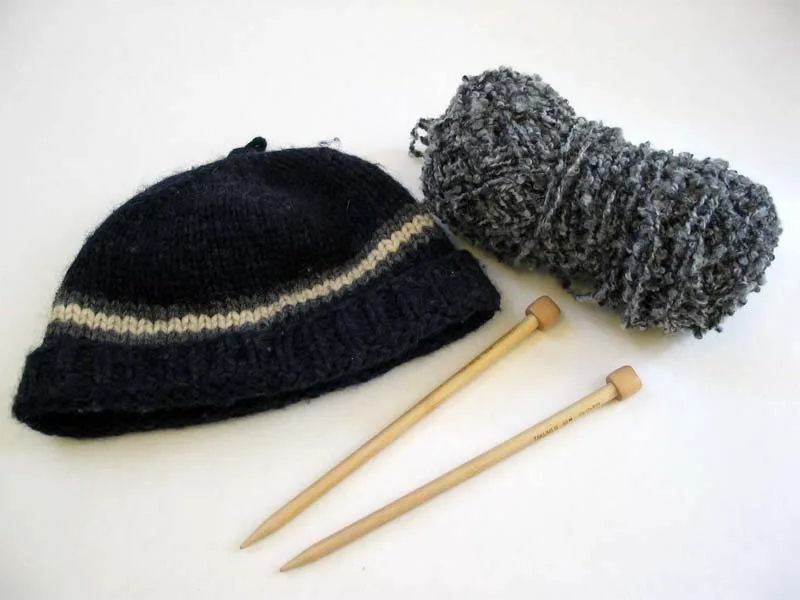
A domestic beginning, with a date that needs qualification
The Czech company history places Mahulena Pertlová’s early hat-making during maternity leave in 1989. Her sister Kateřina joined her, and the account connects the name KAMA with the beginnings of their names. This is a narrative of a family activity expanding into a business, not the origin date of Czech knitting.
The legal chronology requires care. The English history places trademark registration and formation of a limited company under 1990; the Czech version places company formation under 1992. We therefore do not resolve the incorporation date without further evidence. A brand’s beginnings, trading activity, trademark and legal incorporation need not be the same event.
The English account describes a roughly three-tonne CMS 430 industrial knitting machine arriving in 1992, and later an owned building in Prague’s Suchdol district in 2003. Read those details as changes in production space as well as machinery. Equipment requires room, material movement and decisions about what to produce. The photograph below is a domestic-machine comparison, not documentary evidence of KAMA’s equipment.
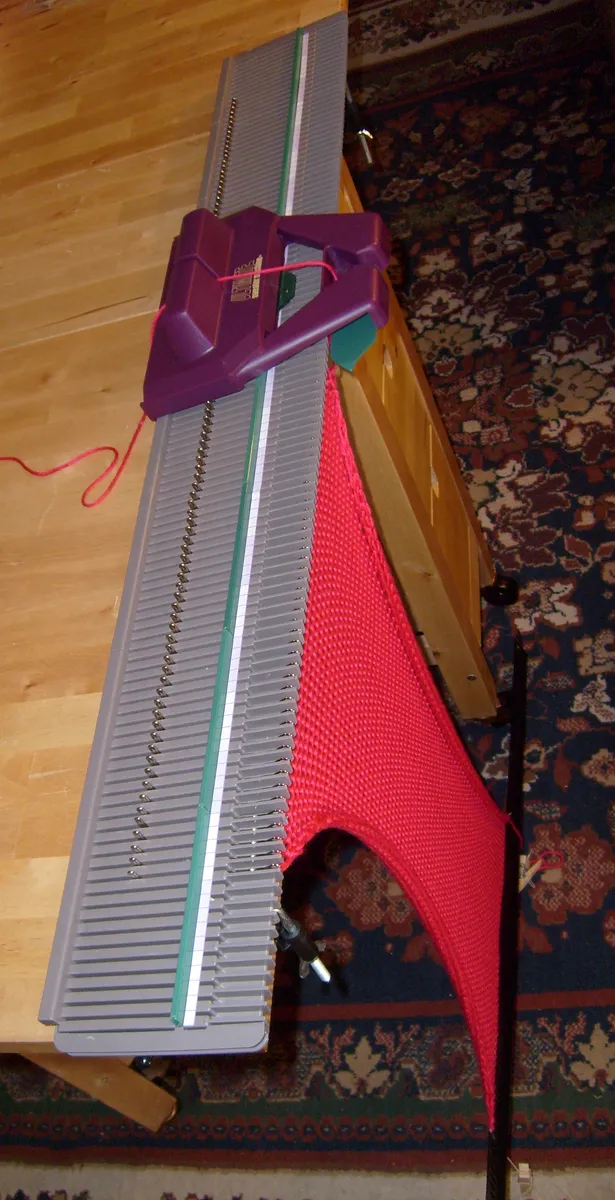
Reading AW41 as outer fabric, membrane and inner band
The AW41 product specification gives Schoeller yarn as 50% Merino wool and 50% acrylic. “Merino” in a product name does not mean pure wool. The description also distinguishes a windproof GORE WINDSTOPPER membrane from a soft fleece inner headband. Calling all of this simply a wool hat conceals different functions.
Observe the outer loops and colours separately from the area touching the head. A membrane’s presence is something to check in the specification, not infer from the exterior photograph. Nor should “windproof” silently become “waterproof.” These are the manufacturer’s stated features, not independent performance measurements by this journal.
The listed height of 22cm and M, L and XL sizes describe a retail product. They do not supply cast-on counts, needle sizes or a knitting gauge for reproducing it. Studying a finished object and distributing a pattern are different activities; dimensions alone cannot reconstruct the yarn behaviour or internal layers.
Fibre composition and knitted structure answer different questions
KAMA’s materials guide describes pure Merino as well as several blends. Read the individual product label instead of assigning one composition to everything made by the brand. The honeycomb photograph below offers a separate structural comparison: relief can come from the knitted architecture. It is not a KAMA pattern or garment.
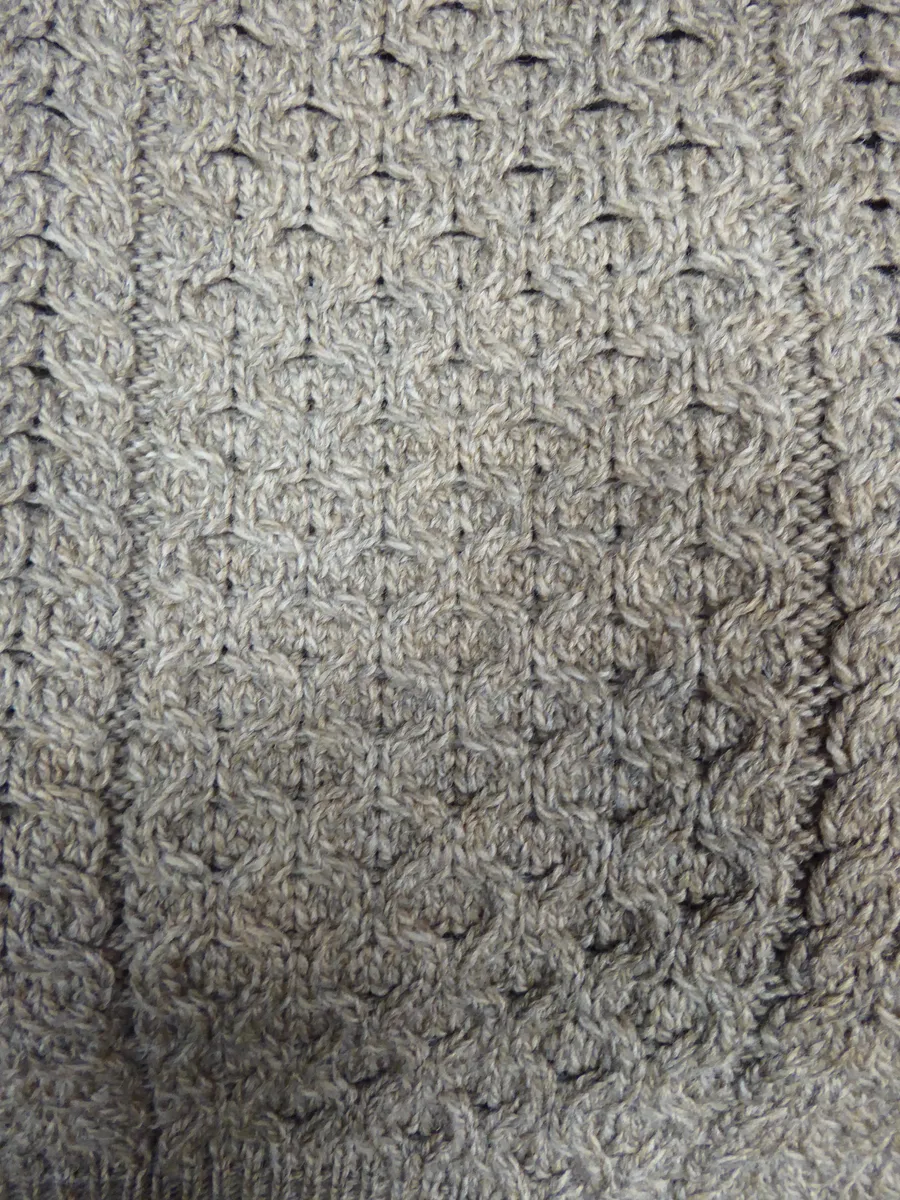
Try three columns in an object notebook: stated fibres and percentages; observed structure and thickness; information still unknown. Similar colours do not prove identical yarn, and visual bulk does not establish a thermal rating. This approach gives manufacturer information a precise role without treating every statement as independently tested.
The company’s sustainability page describes Prague production, changes to building energy use and reuse of heat from knitting machines. These are company-reported practices. Local production does not by itself establish locally sourced fibres, zero transport impact or a complete environmental assessment. Place of manufacture, supply chain and energy use remain distinct questions.
Care information belongs to the object’s construction
The care guide and AW41 page discuss wool washing and flat drying. The actual garment label takes priority. A knitted exterior, mixed fibres, lining and functional layers should be considered together; this article does not replace a product’s care instructions or warranty.
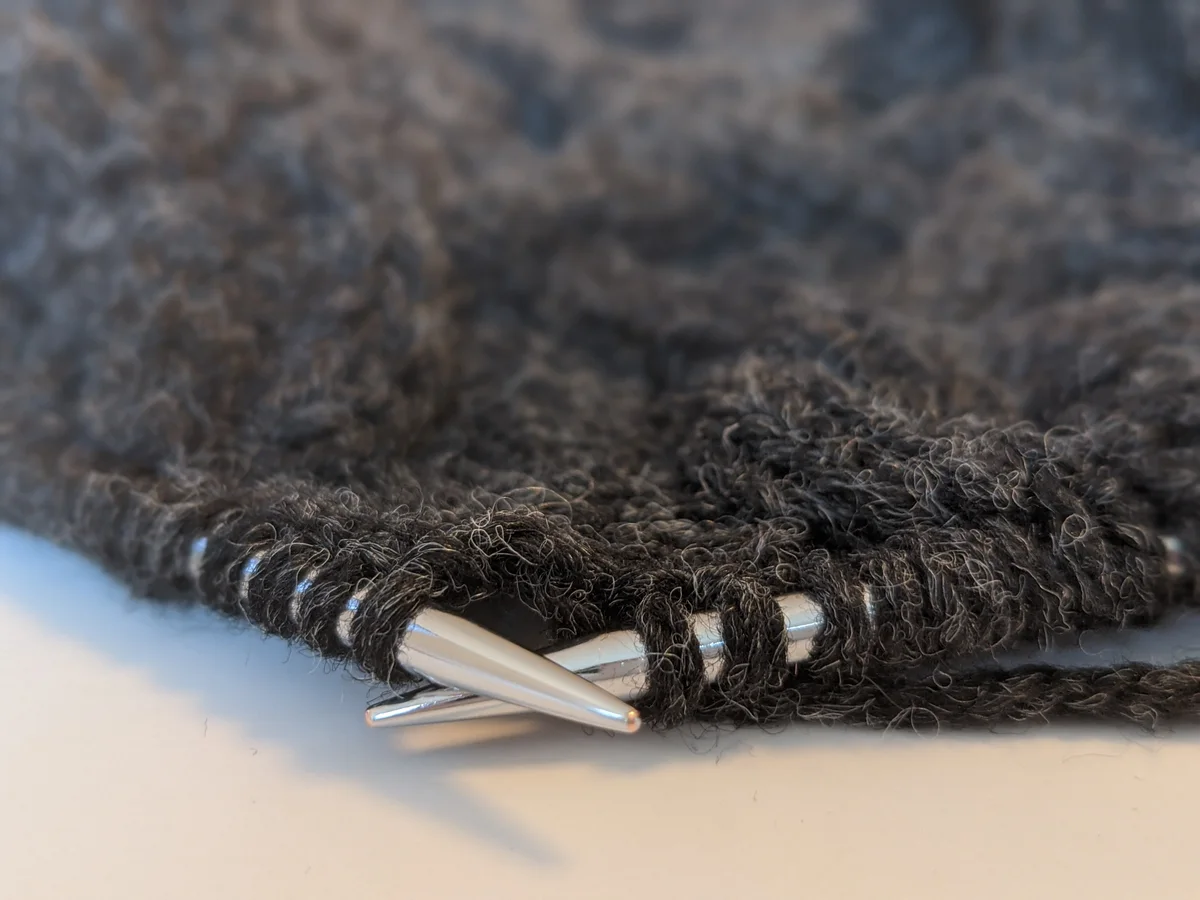
For a hand-knitter, a separate yarn sample can become a useful observation record. Note width, length and surface before and after washing, together with the conditions and date. This is not a method for copying the commercial hat. It is a way to replace impressions such as “soft” or “stretchy” with a more specific account of a particular sample.
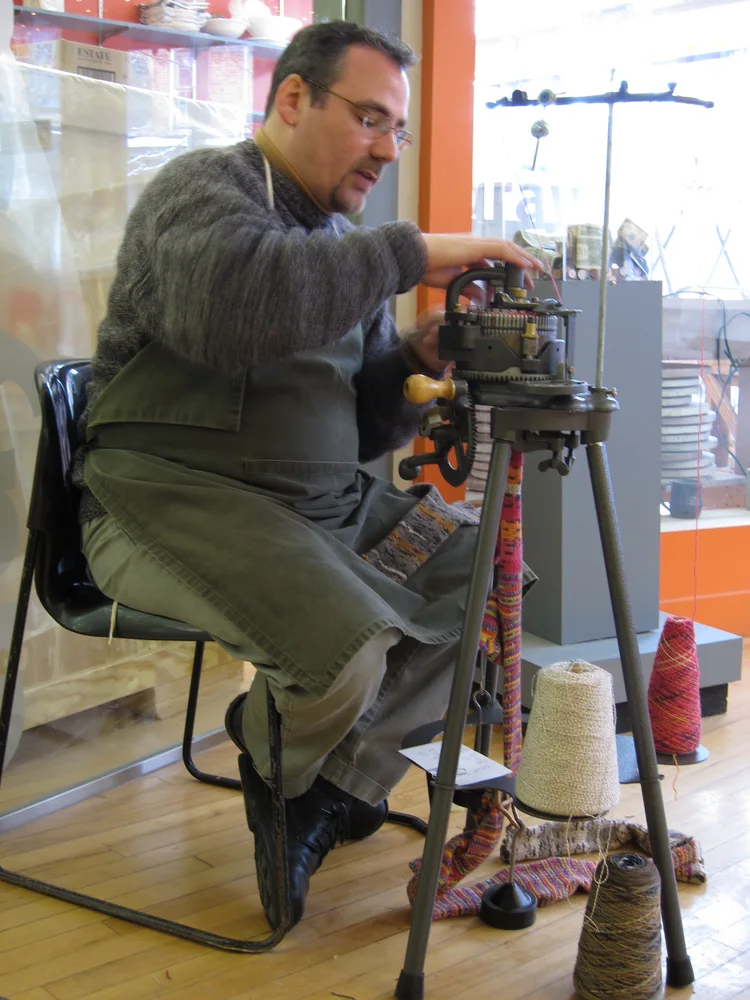
The circular sock machine and the domestic machine shown earlier also ask the reader to distinguish needle arrangement and intended output. Neither photograph establishes the machinery in KAMA’s factory. Brand history belongs to its sources; these images support comparison.
A production map beginning with one hat
This case connects a family activity with production premises, the different jobs of outer fabric and lining, and the relationship between material specification and care. After colour, read the label; after the exterior, inspect the inside. A layered account makes it easier to connect a brand narrative with the actual object in front of you.
Sources
- KAMA · History (English)
- KAMA · Historie společnosti (Czech)
- KAMA · Sustainability
- KAMA · Care & materials
- KAMA · Knitted Merino Beanie AW41
Checked 14 October 2026. Five real contextual photographs. KAMA’s actual products and premises are linked at source and distinguished from the references above.