Knit One Warm One: Community Knitting in Lockdown-Era Australia
In 2020, knitted scarves, hats and other warm items moved from households in Melbourne’s eastern suburbs into a local network of community services. Council reports, a museum object and an oral history allow us to follow that route without turning an individual scarf into a claim about every donation.
Contents
- How the project began
- Diana Pullin and her neighbours
- A scarf in the museum
- From maker to service agency
- What the records can tell us
A community project during the 2020 restrictions
Maroondah City Council launched Knit One Warm One in July 2020 within its broader Be Kind Maroondah campaign. Its invitation asked residents to knit warm goods for people sleeping rough or facing financial hardship. The council worked with local community houses, while pandemic restrictions changed how donations could be collected. Museums Victoria’s account places the project within a period when many ordinary forms of face-to-face connection had been interrupted. Knitting was therefore both a way to make a useful object and a task people could do while physically separated. Those are the project’s stated aims and participants’ accounts, not a measured claim that knitting cured loneliness. Museums Victoria project history · Council retrospective
The council reports an unusually broad response: more than 50 individual knitters and groups contributed hundreds of scarves, beanies, gloves, mittens and blankets. Its annual report places the activity among measures intended to sustain connection and goodwill during isolation. These totals are aggregate figures. They do not tell us how many pieces each person made, the exact composition of every piece, or who received a particular scarf. Keeping those limits visible lets the material record carry its own weight. Council Annual Report 2020/21 · Council achievements 2020/21
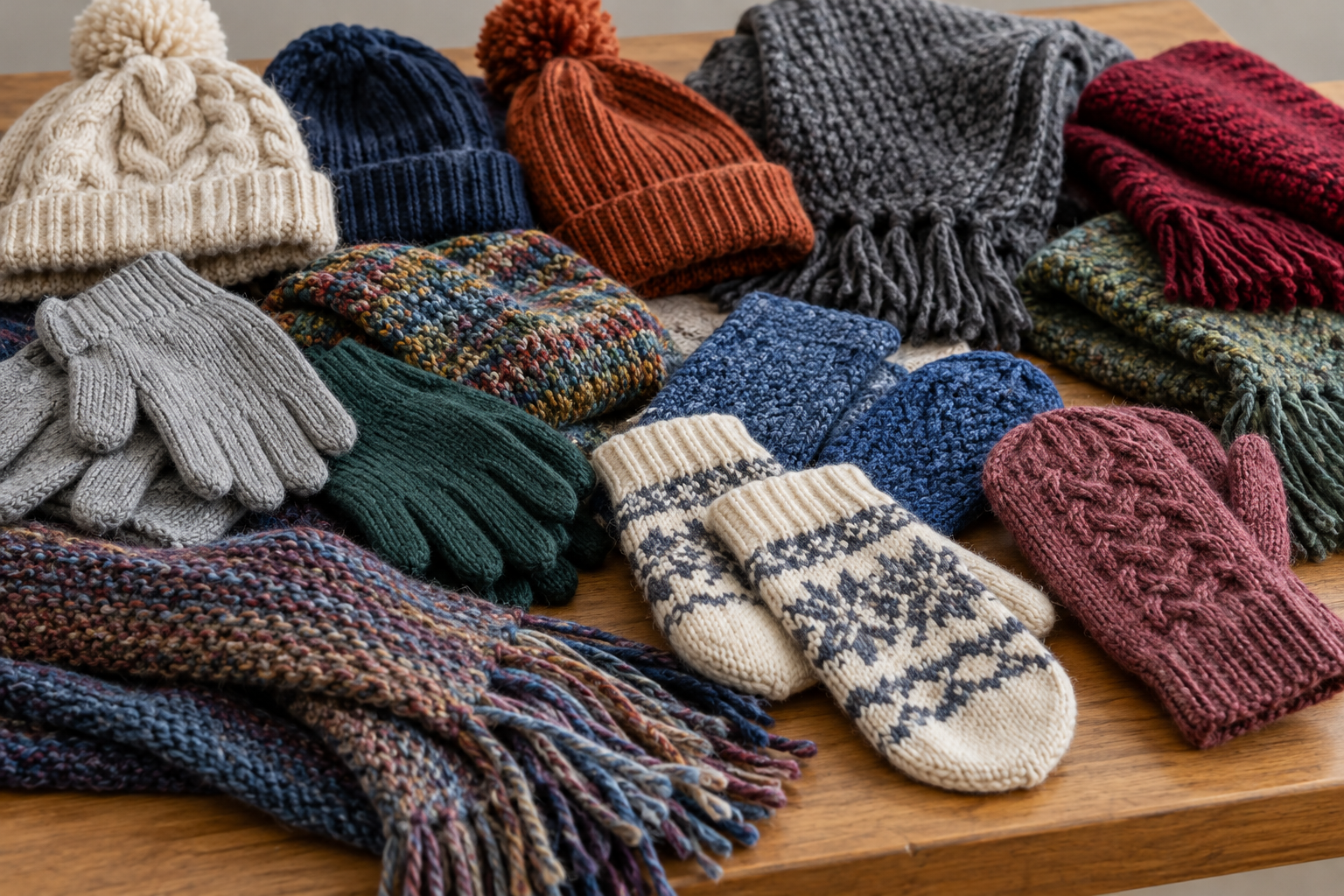
Diana Pullin and a retirement-village network
Diana Pullin, a resident of Cherry Tree Grove Retirement Village in Croydon, encountered the council’s appeal in a community newsletter. Museums Victoria records that she had knitted for much of her life and was already using the craft to occupy some of the hours of lockdown. She drew fellow residents into the effort and knitted scarves and hats herself. Her account matters because it supplies a maker’s voice alongside the council’s organisational totals. It is one person’s experience; it should not be made to speak for every older resident or every participant. Museum story · Oral history HT 57110
Pullin linked the practical warmth of a scarf and beanie to people living outside in winter. She also described knitting as a way to remain active and connected to a purpose during prolonged separation from family. The museum collected an interview, photographs and two scarves from her. Together they join motivation to an inspectable object. They do not establish the total social or health impact of the project, nor do they identify the recipients of her individual knitted goods. The museum object record and interview record provide complementary, rather than interchangeable, evidence. Recorded interview · Scarf record
The scarf that entered the collection
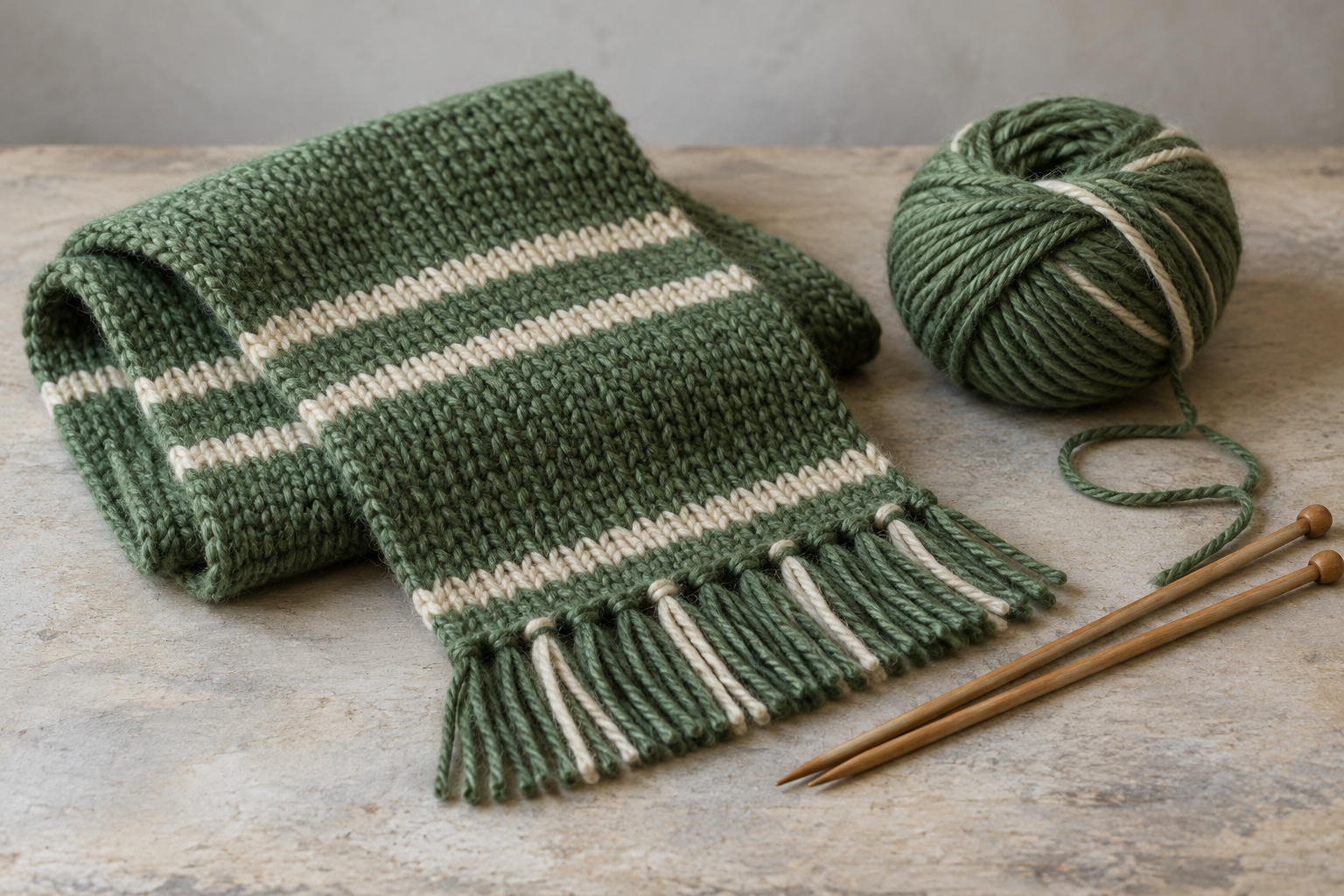
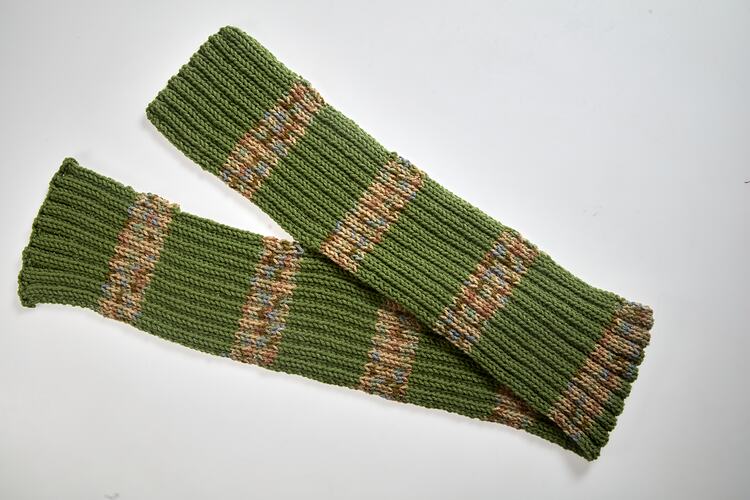
Museums Victoria item HT 57108 is a hand-knitted, light-green scarf with pale stripes. The catalogue specifies a yarn blend of 50 percent acrylic and 50 percent wool. It was one of two scarves Pullin donated after the interview and photoshoot. The object’s surface, colour and material give the history a particular form: a made thing, not merely an illustration of an idea. But the catalogue does not establish a needle size, stitch count or definitive stitch pattern, so none is invented here. Nor can one donated scarf be treated as representative of all the items made by more than 50 participants. Museums Victoria object HT 57108

From household making to local services
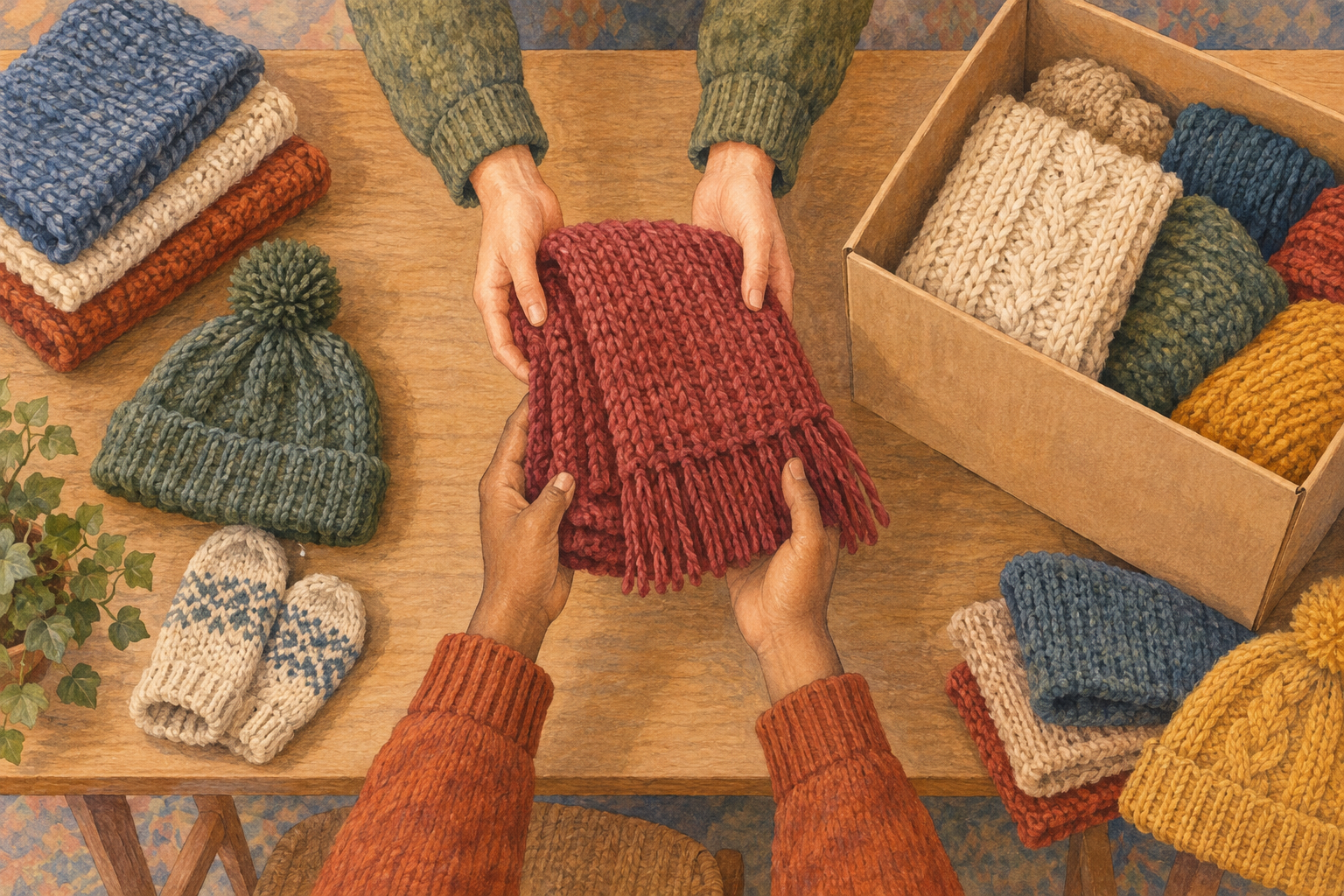
After collection, the donated items moved through organisations named by the council: Wellways, Uniting Crisis & Homelessness Service, Maroondah Community Meals, supported residential services and Safer Futures Foundation. The museum account explains that, when public-health restrictions disrupted the original drop-off arrangement, council staff collected items and worked with agencies on distribution. Wellways staff described carrying material aid during their outreach. The records therefore show a chain of making, collecting and distributing. They do not provide a complete ledger connecting each knitted object to an individual beneficiary. Council retrospective · Museum interviews and story
Reading a community textile archive carefully
The value of this case lies in the way different records illuminate different parts of a process. Council documents tell us why the project was organised, how many people joined and which agencies received donations. Pullin’s interview records one maker’s aims and experience. The museum scarf preserves material and workmanship that a project total cannot show. Reading these together also reveals gaps: recipients were not interviewed for the museum story, and a photographed collection item cannot stand for hundreds of other pieces. A careful history of community knitting can acknowledge both the generosity of the work and the limits of what its surviving evidence proves.
Primary sources and image statement
- Museums Victoria, Knit One Warm One Project
- Museums Victoria, scarf HT 57108
- Museums Victoria, oral history HT 57110
- Maroondah City Council, past initiatives
- Maroondah City Council, Annual Report 2020/21
- Maroondah City Council, Our Achievements 2020/21
Five visuals: two rights-verified photographs of one actual museum object and three clearly labelled AI reference images. AI visuals are neither archival evidence nor photographs of a specific donation.