Learning to Make with Yarn in Vietnam: From Online Crochet Lessons to Textile Engineering
DDUJA KNIT JOURNAL · VIETNAM · WORLD KNITTING EDUCATION
Learning to Make with Yarn in Vietnam: From Online Crochet Lessons to Textile Engineering
Search for knitting education in Vietnam and you will find several very different things under one loose label: learning to knit or crochet by hand, studying knitted-fabric technology and machinery, and training in apparel design and manufacturing. All three belong to the wider world of yarn and clothing, but they do not teach the same skills or lead to the same qualifications. This guide separates the routes, explains what the public course information actually says, and offers practical questions to ask before choosing a class or degree.
1. Three different ways to learn
For clarity, it helps to separate three learning routes. Hand knitting and crochet develop the practical skills used to make garments, accessories, toys, and other objects by hand. Textile and knitted-fabric technology studies yarn, fabric structures, machinery, production conditions, testing, and quality. Apparel and fashion technology focuses on product development, garment patterns, manufacturing processes, production planning, and quality control.
These paths overlap in the materials they use, but their goals differ. A university course called “knitting technology” may be about machine-made fabric, not needles and a hobby project. A person who learns from videos and patterns may build excellent craft skills without earning a textile-engineering degree or vocational certificate. The most useful question is not whether a course sounds “knitting-related,” but what learners make, what tools they use, and how their work is assessed.
The public sources reviewed for this article show a university textile-and-clothing program with a named knitting-technology course, a separate 2026 apparel-technology admissions program, and an individual account of learning crochet through books, videos, patterns, and practice. These examples are not interchangeable, and they are not a census of every class available in Vietnam.
2. HUST’s TX1 program: fabric and manufacturing technology
Hanoi University of Science and Technology (HUST) lists Textile and Clothing Technology (TX1) through its School of Materials. The published program page describes a four-year bachelor’s route and an integrated bachelor’s-to-engineering or master’s route lasting four plus 1.5 years. Treat those figures as information in the posted program outline, not a guarantee of current admissions or an unchanged curriculum; applicants should check the latest intake notice.
The curriculum makes clear that this is a broad textile and apparel program rather than a craft class. The English program page lists Fundamentals in Knitting Technology among its textile courses. It also includes subjects such as yarn and fabric structure, textile and garment materials, fabric practice, textile testing, and production-related study. The Vietnamese program description identifies specializations that include textile-product manufacturing technology and textile-fabric design. Course names and credits can change as programs are revised, so the current course plan for the intended cohort is the best source for details.
In this setting, “knitting” means more than completing a sweater by hand. Students may study how a machine forms fabric structures, how yarn and construction affect fabric properties, and how production requirements connect to design and quality. HUST presents TX1 as preparation for work across the textile and apparel supply chain. That makes it relevant to learners interested in knitted fabrics, materials, manufacturing, testing, or product development. It does not, by itself, grant a hand-knitting or crochet-teaching credential.
Curriculum and degree details: HUST TX1 official program page (English) · HUST textile and clothing technology program (Vietnamese)
3. HaUI: what an apparel-technology degree covers
The Faculty of Garment Technology and Fashion Design at Hanoi University of Industry (HaUI) published a 2026 admissions notice for Công nghệ May, or apparel technology. It gives program code 7540204 and a quota of 180 places for that intake. The same notice describes four admissions routes: direct admission under ministry rules; a route combining academic or international-achievement criteria with school results; the 2026 national high-school examination; and the 2026 competency assessment run by Vietnam National University, Hanoi. The notice is specific to the 2026 intake. Applicants should use the next year’s official notice for current requirements.
HaUI’s stated learning outcomes and career paths include technical product design, pattern and sample development, garment-production technology, production-line design, order management, production planning, quality assurance and control, product development, teaching, and research. This is a substantial apparel-manufacturing curriculum. The 2026 page does not, however, establish that learners take hand-knitting lessons or a dedicated knitted-fabric-machine course. It would be inaccurate to turn a broad apparel degree into a “knitting school” simply because both sit within the textile and clothing sector.
The distinction matters when choosing a career. If you are interested in product development or manufacturing for a knitwear brand, apparel technology may be relevant; check whether knitted structures and machinery appear in the actual course plan. If you want to make garments by hand, ask whether the class teaches hand knitting or crochet directly, includes individual feedback, and ends with a finished piece. The institution’s name alone cannot answer those questions.
2026 source: HaUI admissions, learning outcomes, and career paths for apparel technology
4. Learning independently: Khuc Cay’s crochet journey
Not every path into a fibre craft begins in a classroom. Khuc Cay (Hoang Thi Ngoc Anh), a designer born and raised in Vietnam who later moved to France, has written openly about teaching herself crochet. Her account describes using books and video tutorials together, starting with small projects, practising repeatedly, and then moving from copying a video to reading a pattern and understanding why its instructions shape the work as they do. It is a personal learning story, not a survey of Vietnamese schools or a nationally representative curriculum.
That sequence offers a practical model for a beginner. Start with a reliable book or lesson that explains how to hold the hook and yarn and where to insert the hook. Watch a short video to see the hand movements. Choose a small project—a hat, a simple bag, or a decorative piece—and finish it once. Then slow down and read the written or charted pattern: what does each abbreviation mean, where does the stitch count change, and how does an increase or decrease alter the shape? Unpicking a mistake and trying again is part of the learning, not evidence that the lesson failed.
Khuc Cay’s professional work also shows how craft practice can develop into design and pattern writing. She studied economics before becoming a full-time crochet designer, creating original patterns and books. Her own biography says she lives in south-west France with her family, so she should not be presented as an instructor based in Vietnam. A 2026 interview with Hobbii confirms that she was born and raised in Vietnam, later moved to France, and now designs crochet patterns and books. She describes translating a two-dimensional idea into a three-dimensional character by adjusting increases and decreases, combining colours, and adding embroidery. For a learner, that is a useful invitation to study construction rather than judging a piece only by its finished appearance.
Keep a small notebook as you practise: record the starting ring, stitch counts by round, where shaping happens, how pieces are joined, and how much stuffing changes the silhouette. If the finished object differs from the pattern, trace the difference back to a specific round or seam. Over time, that record turns repeated practice into knowledge you can reuse. When working from a designer’s paid pattern, follow its licence and do not redistribute the pattern or an unauthorised translation.
First-person learning sources: Khuc Cay, “How I taught myself to crochet” (Vietnamese) · Her biography and tutorial channel · 2026 designer interview
5. How to read a course outline
Look past the course title and read the subjects in four layers:
- Materials: Does the course cover fibre and yarn properties, yarn count or thickness, fabric structure, and testing?
- Construction and tools: Will you practise with hand needles or a crochet hook, study knitting-machine structures, or focus on garment sewing and pattern engineering?
- Making and assessment: What do students produce—a swatch, a knitted fabric, a garment, or a portfolio? Are gauge, measurements, defects, and finishing assessed?
- Application: Does the learning lead toward fabric design, product development, manufacturing, quality work, teaching, or research?
HUST’s published TX1 plan brings together textile materials, fabric structure, practice, testing, and knitting technology; that combination signals industrial textile education. HaUI’s 2026 notice describes garment-product design, manufacturing processes, planning, and quality. A beginner’s crochet pattern, by contrast, depends on stitch abbreviations, repeats, shaping, assembly, and finishing notes. Comparing these layers makes the learning goals visible even when course titles use similar words.
6. Choosing a route and questions to ask
If you want to finish a few projects for fun, look for a beginner hand-knitting or crochet class, or a well-tested beginner pattern. Ask whether an instructor demonstrates the hand movements and helps troubleshoot mistakes. If you want to read patterns and design your own, look for stitch notation, stitch-count maths, gauge, shaping, finishing, and revision assignments. If you want a career in apparel or knitwear manufacturing, check the degree plan for textile materials, fabric construction, knitting machines, production, testing, quality, and industry placements. If you hope to teach, ask who issues the certificate, what assessment it represents, and where it is recognised; a course title that includes “teacher” is not enough.
Before enrolling, ask the provider to confirm in writing:
- What is the exact name, schedule, language, and total contact time of the course offered this year?
- Will I practise hand knitting, crochet, machine knitting, garment sewing, or only study these topics in theory?
- What will I make, and how will the work be assessed? Is feedback or reassessment available?
- What document is awarded—a degree, state vocational credential, association certificate, or course-completion record—and who issues it?
- What are the tuition, materials, equipment, and refund costs? Does the program lead to a next level or a placement?
If you are choosing a hand-knitting class, bring a small swatch and note the fibre, yarn weight, needle size, stitches and rows per 10 centimetres, and measurements before and after washing. You will be able to ask concrete questions about gauge and fabric behaviour. If you are comparing university programs, check whether “knitting,” “knit fabric,” “textile structure,” or “production technology” is a required course, an elective, or simply part of the department’s wider subject area. One course should not be used to rename an entire degree.
Our companion article, “Knitting Qualifications in Vietnam” (Series 06), examines public vocational credentials and private course certificates. This education feature focuses on what learners study. A university degree, an online self-study path, and a private certificate are different forms of learning and recognition.
7. Visual references: context, not proof of a course
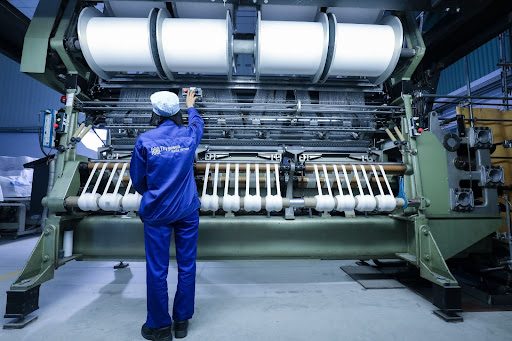
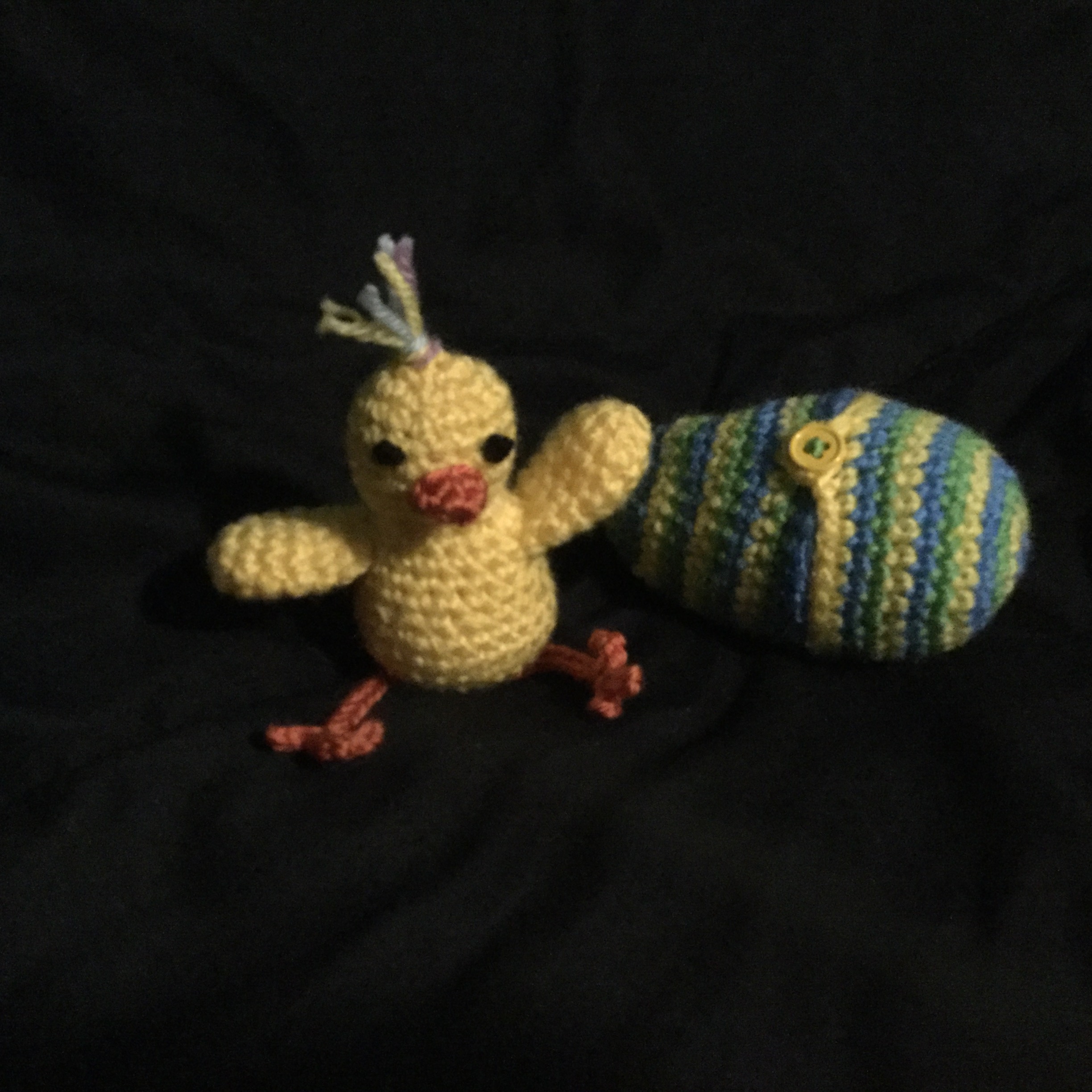
The images below help illustrate industrial knitting and three-dimensional crochet. They are not photographs of the named universities’ classrooms, students, or credential assessments. Each caption identifies the creator and the licence recorded with the image.



Sources and image credits
- Hanoi University of Science and Technology, Textile and Clothing Technology TX1 — published degree structure, program areas, and course list.
- HUST, Chương trình Công nghệ Dệt May TX1 — Vietnamese program overview and specializations.
- Hanoi University of Industry, 2026 Công nghệ May admissions — 2026 intake details, learning outcomes, and career paths.
- Khuc Cay, “How I taught myself to crochet” — first-person account of books, video lessons, patterns, and practice (Vietnamese, 2020).
- Khuc Cay, About Me — biography, location, and tutorial channel.
- Hobbii, “Meet the Designer: Khuc Cay” — designer interview, 24 February 2026.
- Thygesen Textile Vietnam, Knit-fabric-machine.jpg — CC BY 4.0.
- Thygesen Textile Vietnam, Knitted-clothing-factory.jpg — CC BY 4.0.
- Eric Wolfe, Clothing Factory Workers at Thuan Phuong Garment Company — CC BY-SA 4.0.
- Zuos08, Crochet amigurumi — CC0 1.0.
- Lskbrown, Amigurumi Chick — CC BY 3.0.
Research limit: this article reviews publicly available university programs and one designer’s personal learning account. It is not a complete directory of private hand-knitting classes or short courses in Vietnam. Confirm current availability, fees, entry requirements, and certificate recognition directly with the provider. The images are contextual references and do not verify a school or credential.