Knitting Education in Norway: Vocational Training, Industry and Duodji
07 · WORLD KNITTING EDUCATION / NORWAY
Norway does not have a single classroom or licence that represents every way to learn knitting. A local craft workshop, the Vg3 knitting trade, industrial knitting, Sámi wool-and-yarn duodji, and a university textile-design course each teach different things and assess different outcomes. This guide follows official curricula and institutional pages to show what those routes actually mean.
1. “Learning to knit” can mean several different things
The same yarn and loops may appear in very different classrooms. A weekend workshop may focus on one technique or a finished project. Vocational training can include material selection, calculating an order, product development, making, repair and documenting a process. Industrial knitting centres on machines, production, quality and safety. A university textile-design course may use knitting as one material practice within a broader design brief.[1][4][11]
It is therefore misleading to imagine one national “knitting class” or one licence that covers the whole country. The formal vocational curriculum Vg3 Strikkefaget is one route. Alongside it are community courses run by local craft associations, a distinct industrial-textile pathway, a separate Sámi wool-and-yarn duodji curriculum, and higher-education textile subjects. A national curriculum establishes learning aims; it does not prove that every county offers the same class every year. Always distinguish the existence of a curriculum from a current intake or available apprenticeship place.[2][9]
2. Vg3 Strikkefaget: from knitting technique to product development
Udir describes the current Vg3 Strikkefaget curriculum as vocational learning in the development and production of knitted textiles for clothing, interiors and decoration. It includes practical manual and digital techniques and connects new design with knitting traditions and textile heritage. The curriculum is broader than following a hand-knit pattern: it links materials, technique, products and the responsibilities of work.[1][2]
The competence aims make that breadth concrete. Learners plan, carry out, assess and document their own work; take measurements; calculate gauge and material needs for projects, customer orders and products for sale; and use digital resources in production. They explore shape, colour and material, relate fibre properties to intended use, and consider sustainability, repair, finishing, tools, safe work and ergonomics.[3]
That is why the course cannot be reduced to “making a pretty garment from a chart.” The same motif behaves differently with different fibres, yarn twist, needle size and gauge. A learner needs to compare the planned size with a swatch, record why a material or structure was changed for a customer’s use, and explain the decision. Hand and machine knitting and digital tools can all form part of the professional process. Utdanning.no describes knitting artisans as making clothing as well as interior and decorative products; its apprenticeship-company links draw on Vigo data. That database is useful for finding current leads, but it is not a guarantee that a named employer is recruiting today.[10]
Assessment is part of the education. Udir’s subject code STR3004 and assessment rules identify a final trade test, the svenneprøve. Candidates who have not followed the normal training route may also have to pass a written examination based on the curriculum. The practical test is normally scheduled within a period of 7–10 working days. These are vocational-test rules, not the duration of a hobby class. Candidates should confirm the current county arrangements and exam cycle before applying.[5]
3. Industrial knitting: when a stitch becomes part of a production system
Industrial knitting is related to the knitting trade, but it is not the same course. Udir’s Vg3 Industritekstilfaget, trikotasje curriculum covers production history and processes, fibre properties, machinery and production control, maintenance, inspection of raw materials and finished products, and corrective action when quality deviates. Learners calculate material needs from an order, select and inspect yarn, describe basic knitted structures and machine components, identify machine types, and adjust pattern, gauge and colour for a production run.[4]
Here a swatch is more than a small sample. The learner must understand how stitch structure and gauge relate to machine settings, yarn feed, colour changes and finished dimensions. Finding defects, correcting them and recording quality throughout a process are also part of the job. Safe handling, maintenance, ergonomics and reuse of surplus material matter too. This is not simply “knitting faster on a machine”; it is vocational training in production and quality. The photograph of circular machines at Salhus Tricotagefabrik is historical industrial context, not a picture of a current school class.[4]
4. Sámi wool-and-yarn duodji: learning technique with cultural responsibility
Sámi textile knowledge should not be folded into a generic story of “Norwegian knitting.” Udir presents Vg3 ull- og garnduodjifaget as a distinct vocational curriculum for making and developing traditional Sámi products. It works with wool, yarn and other fibres, materials and tools, and teaches learners to understand tradition, form, technique, style and regional difference. The curriculum asks apprentices to refer ethically to Sámi traditional knowledge and Indigenous culture, use local and regional expressions and methods, and identify the sources that inform their work.[6][7]
Its learning aims also include digital tools and pattern construction, material selection, the relation between quality, colour and function, repair and reuse, pricing and copyright. Technical skill sits alongside responsibility for how knowledge is sourced and used. Udir provides versions of the curriculum in North Sámi, Lule Sámi and South Sámi as well as Norwegian. Duodji should therefore be treated as a craft education rooted in its own knowledge systems, languages and communities—not as an exotic variation of a national knitting style.[6][7]
5. Short courses with local craft groups and university study
Norges Husflidslag and its local husflidslag groups run craft courses and learning activities for people with different ages and experience levels. A national course calendar points learners to classes hosted by local groups. A course on a particular technique—such as twined knitting—can be an effective way to learn one skill or complete a project with other makers. It is short-form craft learning, not automatically part of the national vocational qualification. Dates change, so check the organiser’s own calendar before booking.[8][9]
Ullveka 2026, held in the Bergen region from 25 September to 4 October, connected local craft groups, wool and public learning events. The dates have passed; this is not an open-registration announcement. It is a recent example of learning that also takes place through local festivals, workshops and association meetings rather than in one national classroom. A Halden Husflidslag page about a twined-knitting course likewise illustrates how a specific technique class is described; it should not be read as proof that registration is open now.[9][12]
University study has a different purpose. USN’s Design og kunsthåndverk i tekstil page described a 15-credit, one-semester, part-time bachelor-level subject for spring 2026 and stated that applicants could seek the subject without being admitted to a bachelor’s programme. It is a textile design and craft subject, not a degree in knitting. Since the listed term has ended, current admission, prerequisites and the next offering must be checked in USN’s latest course catalogue.[11]
NDLA’s public learning material on strikkehåndverker notes that the work may combine traditional hand techniques with computer-programmed hand-knitting machines. Such material helps explain vocabulary and the range of work, but it is not a current recruitment notice or an admissions decision. Treat learning resources, the national curriculum and an open course listing as three different kinds of evidence.[10]
6. Questions to ask before you enrol
Start by deciding whether you want a hobby class, vocational training, industrial skills or academic design study. For a short course, ask about the project, required experience, materials, feedback, teaching language, cancellation terms and whether a completion record is issued. For formal vocational education, confirm the exact subject name and code, curriculum, approved workplace or apprenticeship contract, final assessment and the precise name of the document awarded. For industrial knitting, look for machinery, process control, quality and safety content. For a university subject, check credits, assessment, prerequisites and the actual intake for that term.
- If you want to finish a project: confirm the class level, expected result, gauge and finishing skills covered.
- If you want a trade route: ask Udir or the county vocational office about the curriculum code, local availability, apprenticeship and exam procedure.
- If you want industrial work: distinguish hand knitting from machine-based production and review the materials, machine, quality and safety modules.
- If you want to study duodji: ask how the course respects Sámi knowledge, language, community and source practices.
- If you want university study: verify credits, assignments, prerequisites and the current term directly with the university.
Even a small swatch can become a useful learning record. Note the fibre and yarn weight, needle or machine settings, stitch structure, gauge and dimensions before and after washing, and why you changed a choice. That record is not a certificate, but it becomes a portfolio showing how your judgement developed. The most useful question in Norway’s learning landscape is not simply whether a class is “higher” or “lower”; it is what you will learn, who will assess it, and what evidence of learning you will receive.
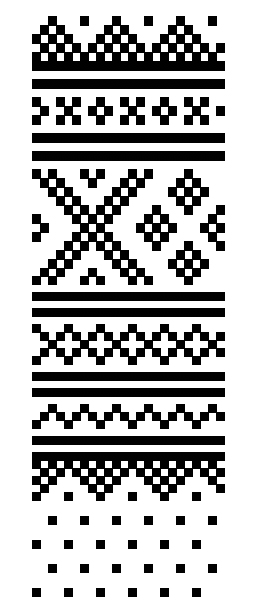
The images below show distinct learning contexts rather than curricula: women knitting and reading in Hammerfest around 1887; a 1954 adult craft-course record at Elingaard; industrial knitting machines at Salhus; Selbu mittens; and a Setesdal punch-card pattern. They cannot establish that a course is currently offered or that anyone holds a qualification. Each image’s creator, holding institution and reuse terms are linked in its caption.


Sources
- Udir, Vg3 Strikkefaget STR03-02: relevance and values.
- Udir, core elements: hand and machine knitting, materials, product development and technology.
- Udir, competence aims and assessment in Strikkefaget.
- Udir, Industritekstilfaget—trikotasje competence aims.
- Udir, final assessment and the Strikkefaget svenneprøve.
- Udir, Vg3 wool-and-yarn duodji: relevance and values.
- Udir, wool-and-yarn duodji competence aims and assessment.
- Norges Husflidslag, local course calendar.
- Norges Husflidslag, courses and craft-learning activities.
- Utdanning.no, knitting artisan profile and Vigo-based apprenticeship information; NDLA, Strikkehåndverker learning material.
- USN, Design og kunsthåndverk i tekstil (page lists spring 2026).
- Halden Husflidslag, twined-knitting course example; Norges Husflidslag, Ullveka 2026 event record (25 September–4 October).
This article is an editorial guide, not an admissions or examination decision. Check each school, employer, county office or local association for the current course opening, cost, language, prerequisites and assessment rules. A craft-course completion record, a vocational trade certificate and university credits are different outcomes.