Xeem Noor’s Balai Di Balai: Crochet, Space and Participation
Research and writing: DDUJA KNIT
Textile art can invite us to stand before a wall or sit beside a rug and talk. Malaysian artist Xeem Noor’s Balai Di Balai (Tatemonologue 2.0) makes that distinction worth considering. Crochet becomes a way to examine remembered places and the conduct of welcoming other people. This article separates the exhibition record from the material specification of a smaller work.
From a Yokohama residence to a Kuala Lumpur exhibition
Bernama’s on-site report and interview of 11 February 2026 connects the installation with Xeem’s 2025 Koganecho residency in Yokohama and a full-scale version of her living space at Yamamoto Apartment. It gives the exhibition dates as 8 January–8 April 2026. This is a retrospective account of an ended exhibition, not a current visitor listing.
DBP’s Dewan Budaya report describes pillars, printed fabric, photographic documentation and reflective letters. Printed textile walls and an evolving crocheted rug should not be collapsed into a claim that the entire room was crocheted. The reports describe the letters differently, so their direction of address is not asserted here.
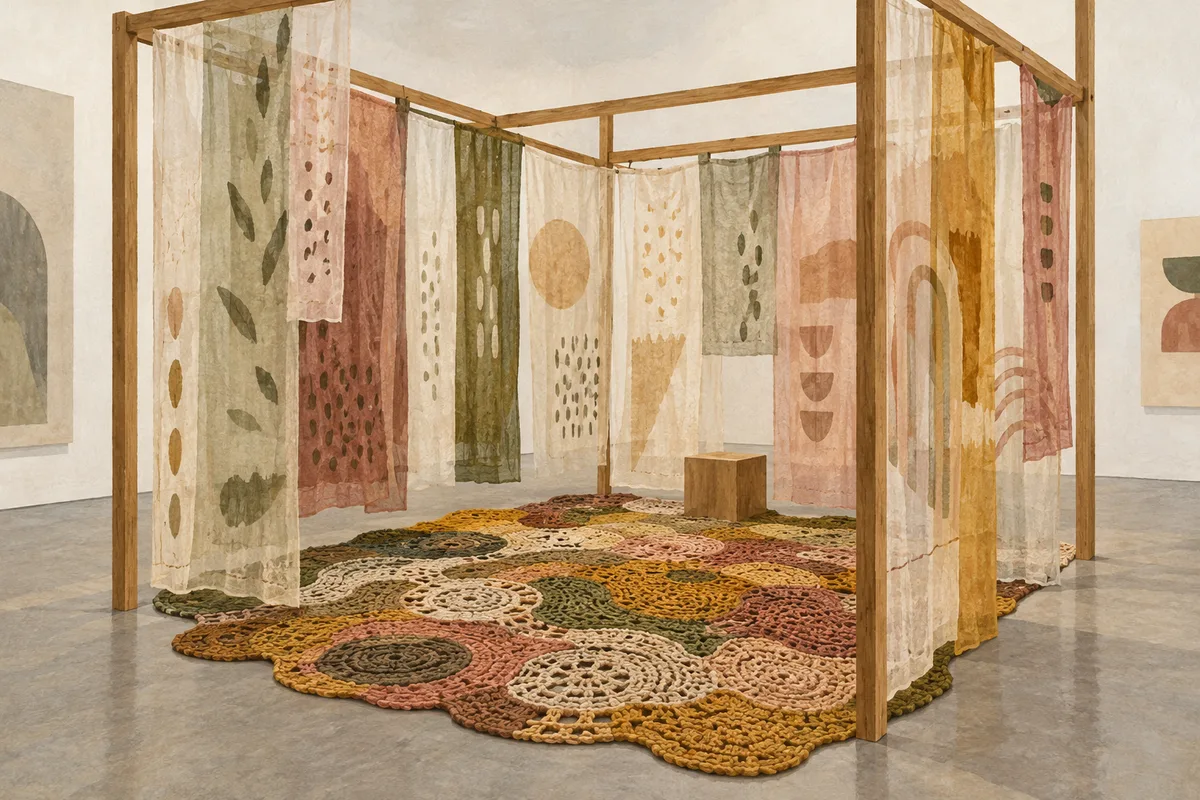
A full-scale boundary relates to the visitor’s body differently from a model viewed from above. That is an interpretive observation, not a reconstruction of the apartment’s dimensions or furniture. The illustration is deliberately imaginary. The linked reports provide actual exhibition photographs and the artist’s explanation.
Watching a finished object or staying with its making
Bernama describes Wednesday, Saturday and Sunday on-site work during the exhibition, with a freeform crochet rug developing as visitors could sit, converse and participate. This is a historical programme, not a promise that the artist can still be met on those days. The rug can be considered through its making time and encounters as well as its eventual outline.

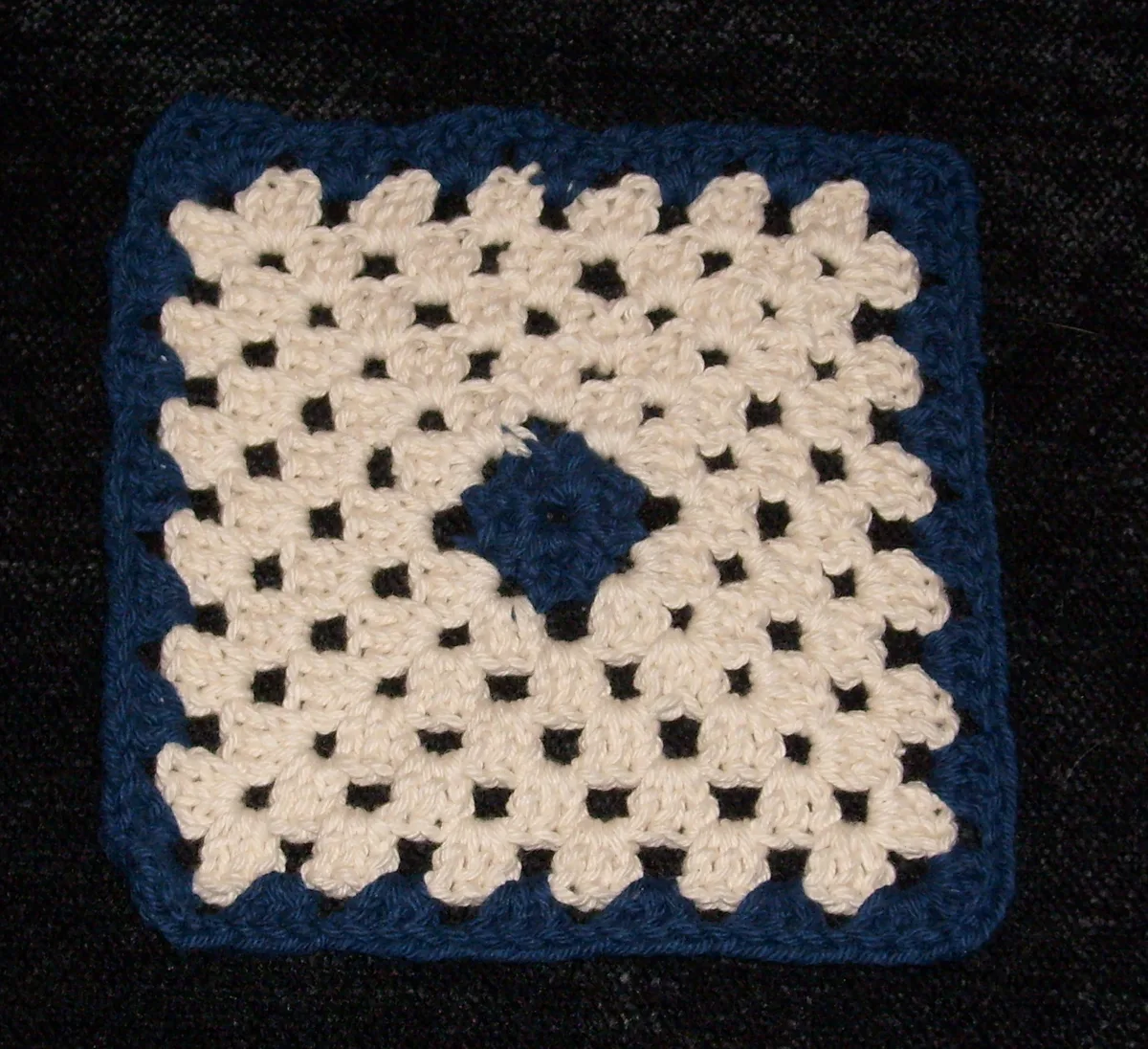
The expanding blanket above provides a scale-and-use comparison. It does not document the installation or prove that a regular granny square and Xeem’s freeform rug share a construction. Ask who uses an object, where it is placed and what role another person can take while it is being made.
Freeform work invites attention to joins and changing outlines rather than an assumption of identical square repeats. Freedom of form does not mean an absence of decisions. The sources describe an artistic approach; they provide no row counts or instructions for reproducing the artist’s work.
Distinguishing cross-stitch and crochet in a 42cm work
CULT Gallery’s object record lists Lifeworld: Come Closer Let It Take Over (i), 2025, at 42×42cm. It identifies cross-stitch cotton threads and crocheted cotton yarns on black aida cloth. A general label such as “crochet picture” would conceal the relationship between ground cloth, embroidery and formed yarn.
Ask what supports the surface, what is worked onto it and what creates a separate edge or volume. These questions organise observation; they are not a verified sequence of the artist’s process. A photograph alone should not lead us to assume that every visible thread underwent the same operation.
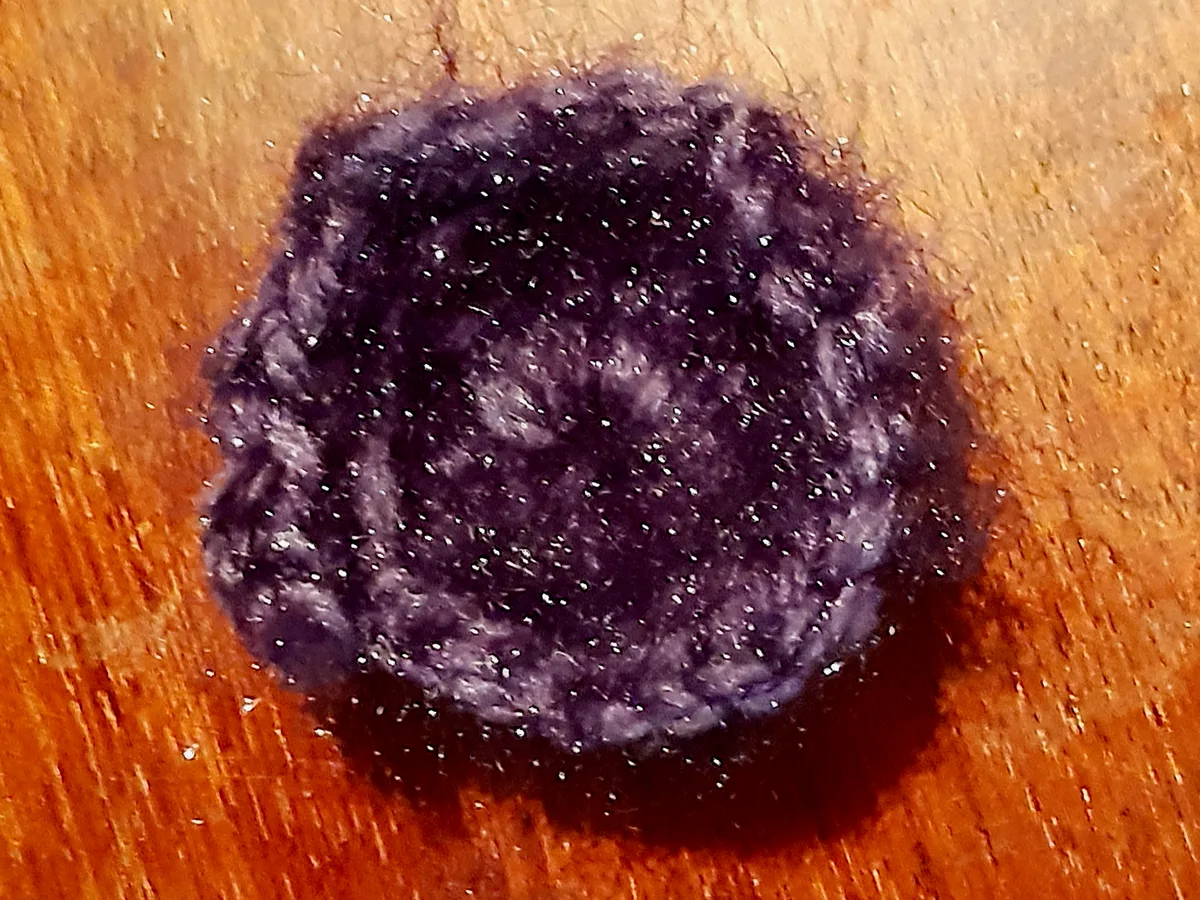
The purple motif is a contextual comparison of edge and repetition, not a detail cropped from Lifeworld. The original work is linked at the gallery, which attributes copyright to the artist. Public visibility is not republication permission.
A body of work rather than a single isolated object
CULT’s 2025 7 Ways of Seeing description names Xeem Noor and explains a group-show format presenting a body of work by each artist. This encourages comparison across works. It does not establish that Lifeworld was a preparatory study for the National Art Gallery installation merely because the dates are close.
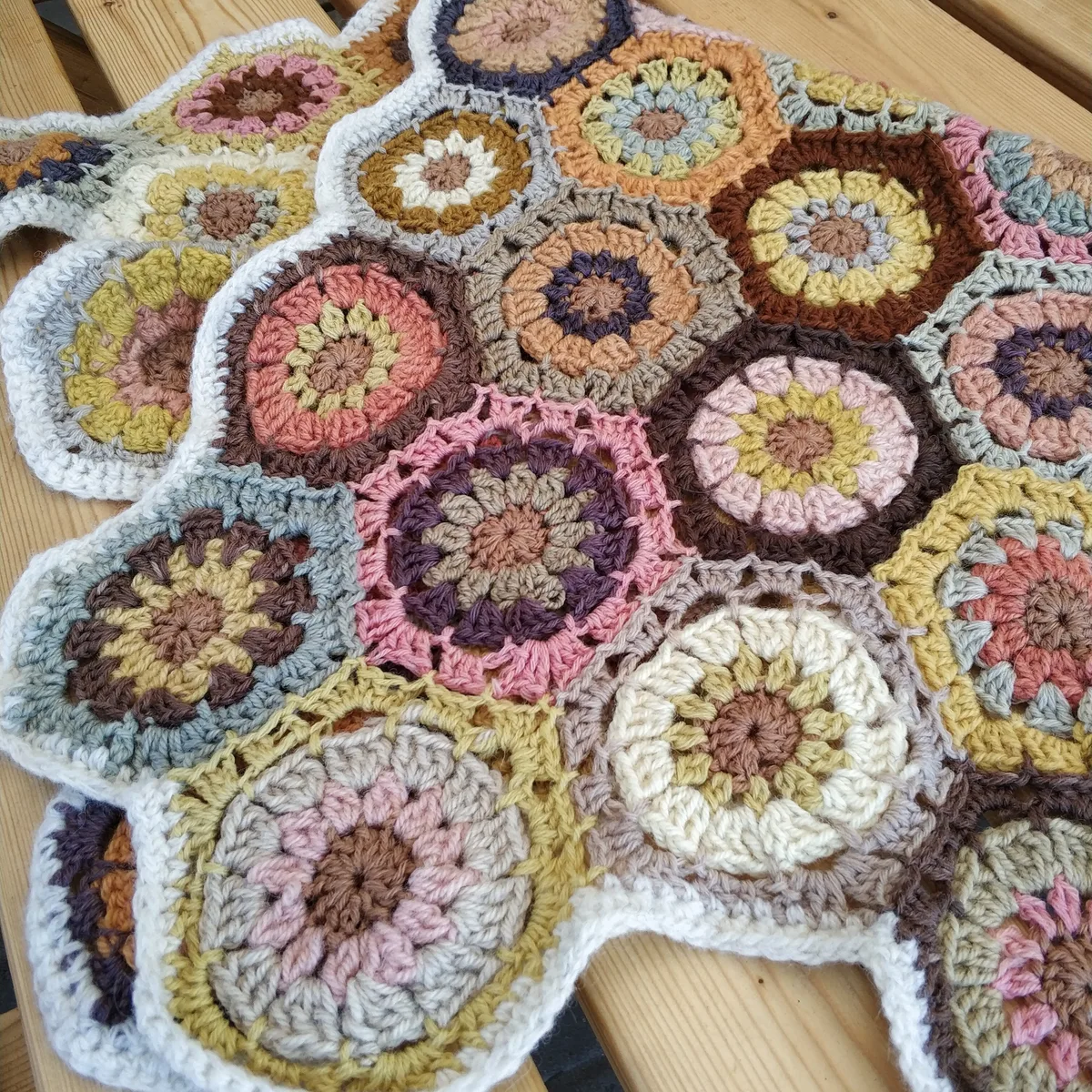
The naturally dyed blanket offers another contextual comparison, focused on colour across yarn and repeated areas. It does not document Xeem’s dyes. Keeping these limits visible prevents a resemblance in colour from merging different makers and objects. Original-work materials and reference-photo permissions are separate records.
The National Art Gallery’s official press release frames the exhibition through respect and conduct within another person’s space. This reading need not erase hand technique: it asks how a made surface invites someone to sit, remain or interact. Participation alone does not establish every visitor’s authorship or ownership of the resulting work.
Four notes for the next textile exhibition
Record the materials, compare the work’s scale with your body, identify what visitors are invited to do, and distinguish those actions from the records left afterwards. “I saw a crochet artwork” can become an account of cloth, yarn, surface, space and time. The useful question is not how to duplicate a particular rug, but how making can extend into remembering a place and receiving other people.
Sources
- Dewan Budaya / DBP · Balai Di Balai, 13 February 2026
- Bernama · Exhibition report and artist interview, 11 February 2026
- CULT Gallery · Lifeworld: Come Closer Let It Take Over (i), 2025
- CULT Gallery · 7 Ways of Seeing, 24 May–8 June 2025
- Balai Seni Negara · Official Balai Di Balai press release
Checked 14 October 2026. Four real contextual photographs and one AI illustration. The official press release was available in the search index, but its server blocked direct reading during this check. Exhibition details were cross-checked against DBP and Bernama reporting.