Why Was a Jumper Part of a Dress Ensemble? Reading Five Prue Acton Knit Garments
Published · Updated

How to read an outfit in layers
Imagine a white polo-neck jumper. It could seem like a winter garment complete in itself. In Museums Victoria’s records, however, this one belongs with a lime-green linen pinafore dress and a coat. Prue Acton designed the outfit in Melbourne in 1969. The jumper is accessioned as SH 942291 and the dress as SH 942014. There is a small catalogue difficulty: the first sentence of the jumper record’s summary calls it a dress. Its title and physical description call it a jumper, and the separate dress record identifies SH 942291 as the white acrylic jumper worn with that dress. Reading the two records together makes the layers clear. Here knit fabric is one part of an outfit assembled with another textile. [1][2]
The question is not how many stitches Acton knitted by hand. The records do not establish that she knitted these garments herself. Instead, five garments let us ask what knitted fabric does in different designs: where does it provide the body of a garment, where does it meet a fastening or another fabric, and where does it become a ground for applied decoration? A bonded-knit dress from about 1967, two garments from around 1969, a sheep-appliqué jumper from about 1975 and a machine-knitted jumper from about 1987 do not all have the same construction. We can examine those differences without inventing a gauge, machine model or production total. [1][3][4][5][6]
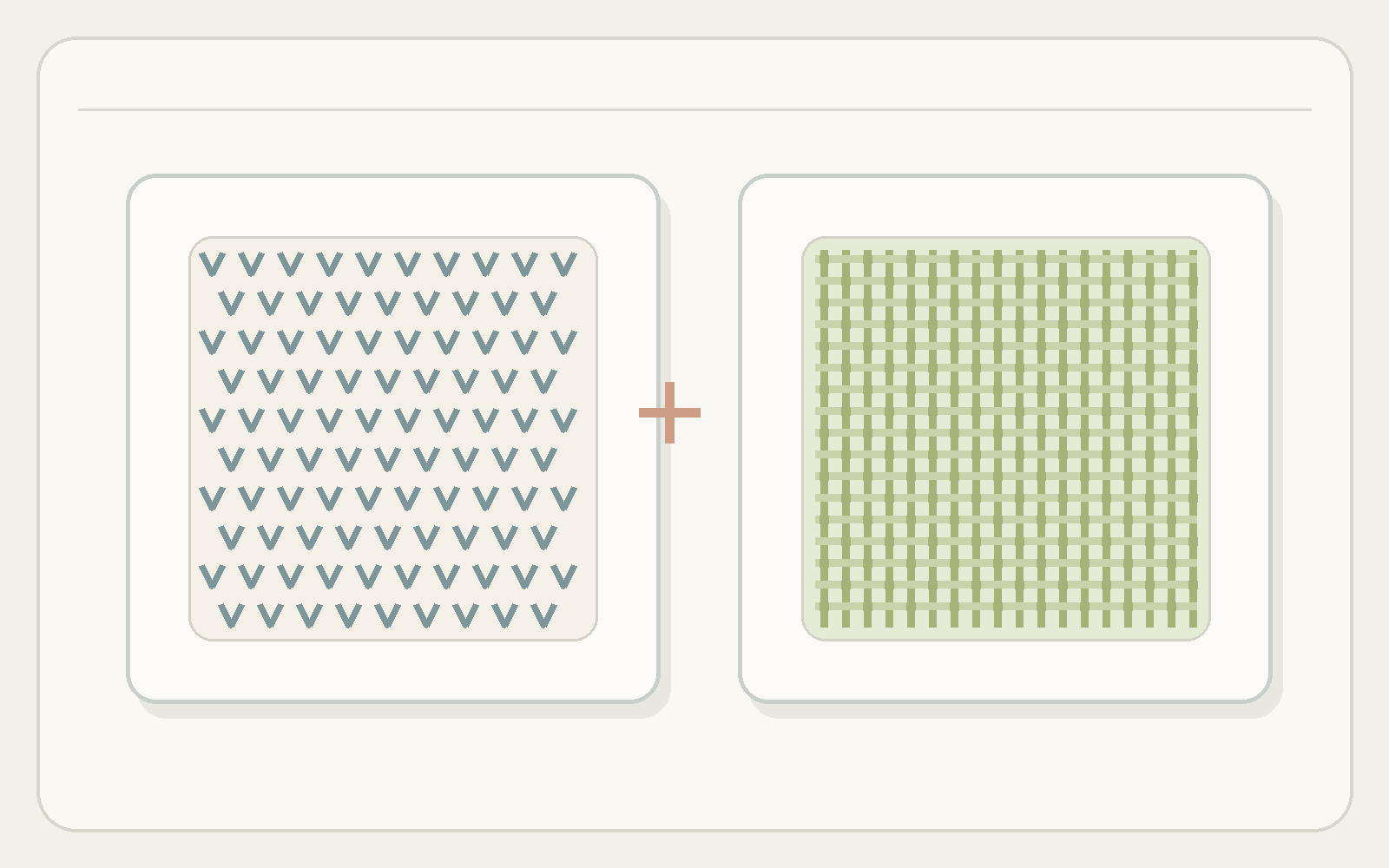
AI-generated illustration (conceptual). It explains separate knit and woven layers, not the appearance of the museum outfit. Jumper record, linen dress record, illustration file.
A designer trained in textiles, and the limits of one collection
Museums Victoria’s biography says Acton graduated from RMIT in textile design in 1962 and started her business in Melbourne’s Flinders Lane the next year. It describes her use of both natural and synthetic fibres, colour and material as features of her work. The biography also records her New York sales activity in 1967. That career account provides context for these clothes, but it does not turn a single designer’s collection into a history of every Australian knitwear maker. [7]
Each of the five garments has its own museum number. All five are nevertheless records from the same institution and designer collection. The entries connect design and manufacture to Acton’s business or its contractors, and repeatedly record her 1994 donation. They do not name every person who worked the fabric or tell us how many hours any one garment required. Acton is identifiable as designer and donor; unnamed production workers should not be replaced by a story invented to fill that gap. [1][3][4][5][6]
About 1967: cotton knit bonded with acrylic
SH 942372 is a pale blue striped mini dress dated to about 1967. The museum describes cotton knit fabric bonded with acrylic. Its summary explains that the bonded fabric was used to hold the body’s shape, reduce a clingy effect and make sewing easier. These are descriptions attached to this design, not laboratory findings about every bonded knit. The record also describes buttons and a hook at a side fastening and a metal zip below the waist. Thinking of the dress as a single knitted piece would hide those closures and the assembly they require. [5]
The record says the fabric was possibly made by John Jacques. That qualifier matters: it cannot become a confirmed maker credit or a claim about a particular bonding process. When a pattern or garment description says “bonded knit,” a useful next question is what the knit base has been bonded to and how the closures and seams help control its shape. No pattern for reproducing this museum dress is offered here. [5]
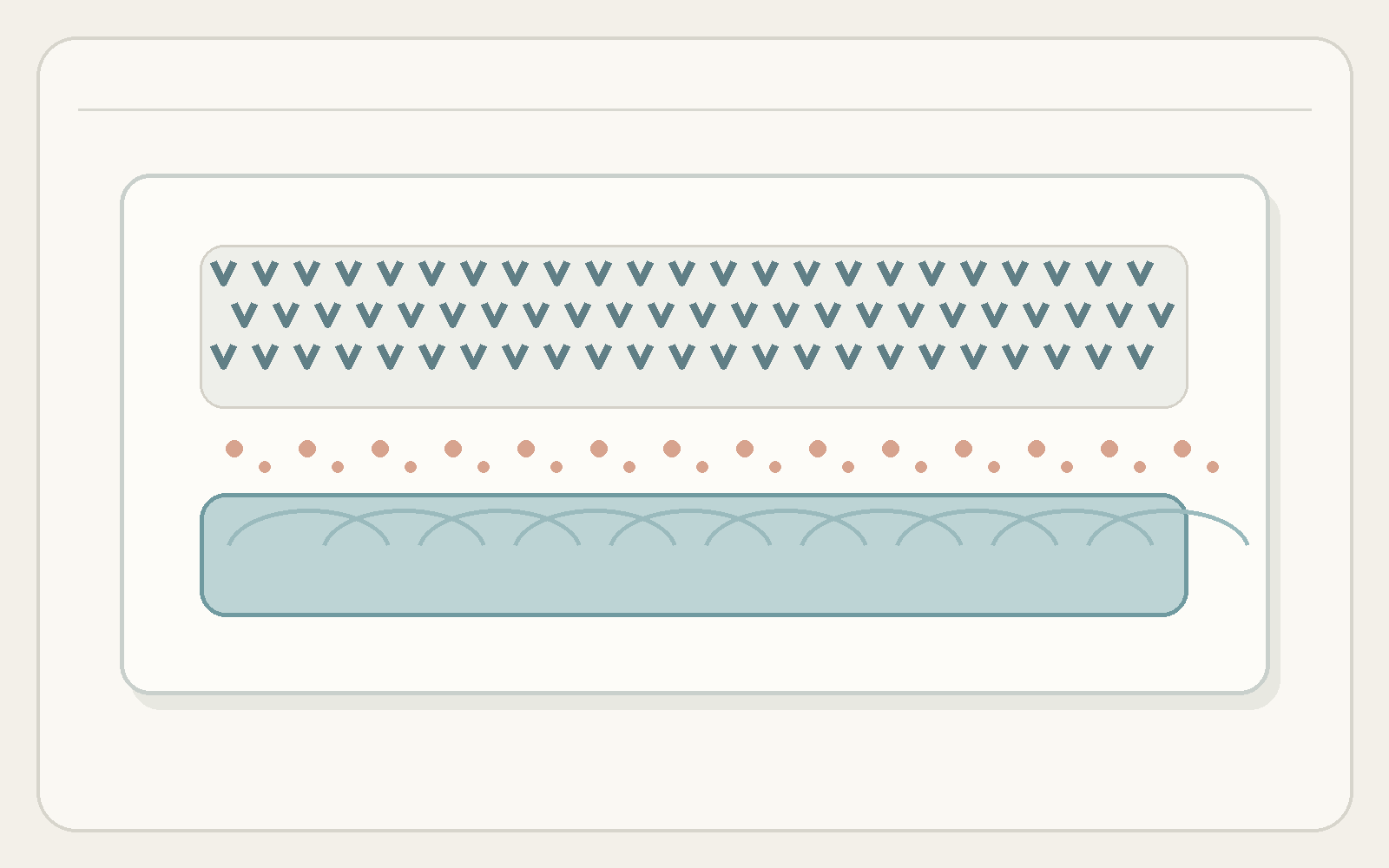
AI-generated illustration (conceptual). This is not a photograph of a fabric cross-section, evidence of the bonding process or a replica of the dress. Bonded-knit dress record, illustration file.
Around 1969: an acrylic jumper and a ribbed bodice
The white SH 942291 is a long-sleeved acrylic knit polo-neck jumper. Read alongside the card for the lime-green linen dress and coat, it shows a knit layer deliberately combined with linen. The jumper’s care label says 100% acrylic, hand wash and dry flat. That is information from this particular object, not a universal instruction for acrylic clothing from the 1960s. The museum also gives flat measurements for areas including shoulders, chest and sleeves. They are measurements of the surviving object, not a period sizing standard or a knitting gauge. [1][2]
SH 942017, from roughly the same time, is catalogued under both “Hotpants” and “Romper.” Its cream bodice is described as ribbed knit; short sleeves, shoulders, a Peter Pan collar and shorts are described as pale blue. The card also notes a front zip running down from the neck and a fastening at the waist with the appearance of a belt. Calling the whole garment “knit” does not explain every part of its assembly. A reader can distinguish the ribbed area, the differently coloured areas and the path of the fastening. The record does not by itself establish that every differently coloured area is a different material. [6]
According to the museum card, the claim that this was among the first bonded-knit designs made in Australia comes from the donor. It is not an independently established “first” for the country. The recorded selling price of $26 likewise belongs to this design; it cannot stand for the price of the clothing market as a whole. [6]
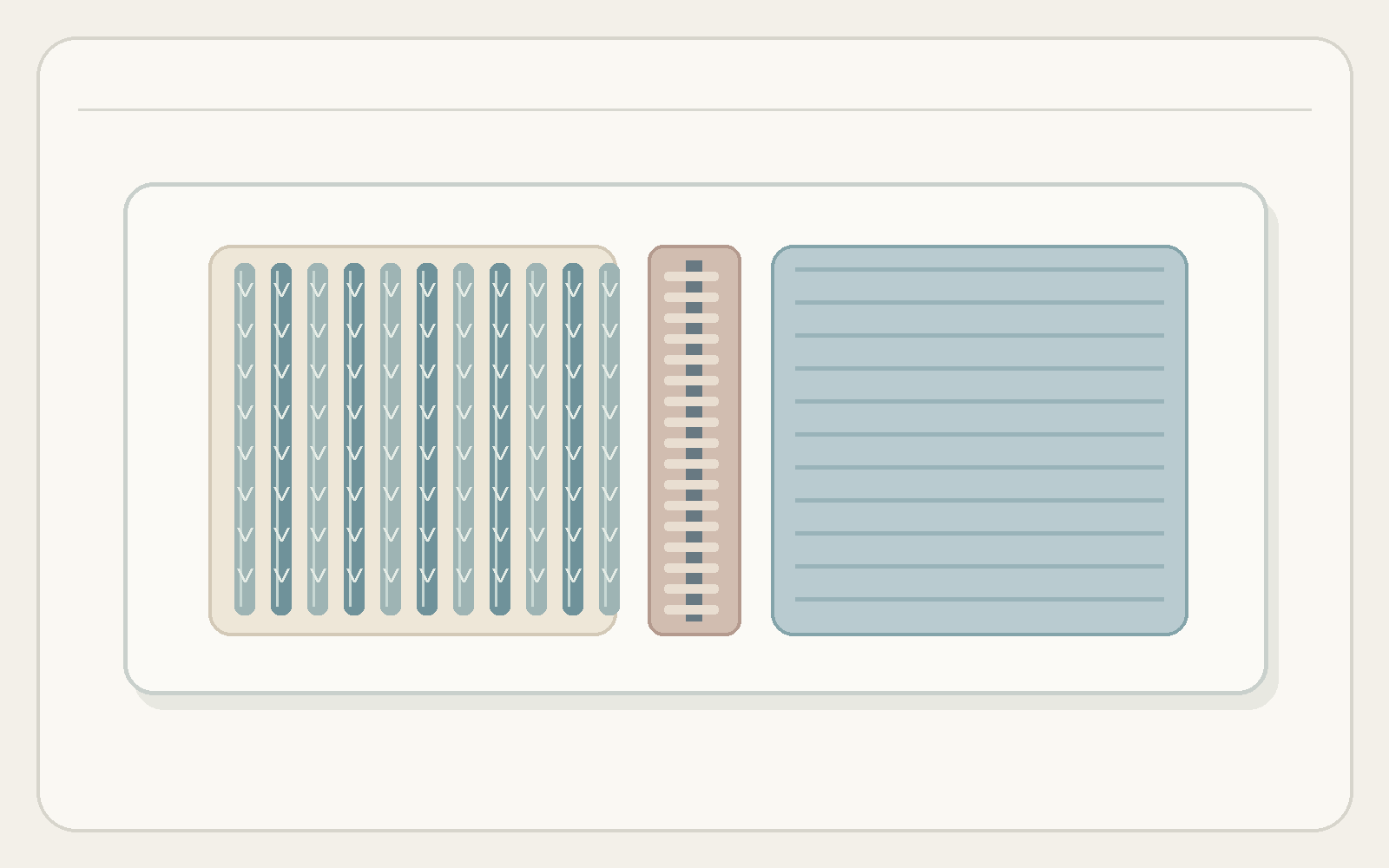
AI-generated illustration (conceptual). This shows general component roles, not a cutting plan for the museum outfit. The record does not identify the material of every differently coloured area. Hotpants outfit record, illustration file.
About 1975 and 1987: decoration on the surface or colour in the stitches?
The cream wool jumper SH 942146, dated to about 1975, carries an appliquéd sheep wearing a blue sash. The card calls this appliqué. It does not say that the sheep was produced by changing yarn colour while knitting the base fabric. Its broad dolman sleeves and single pearl button at the back neck are other clues to shape and dressing. The museum records a width of 129 cm and a height of 60 cm, measured with the garment laid flat and its arms extended. That width is a measurement of the spread object, not a chest circumference or knitting gauge. Here the useful reading is to distinguish the knitted ground, the applied decoration and the space occupied by the sleeves. [3]
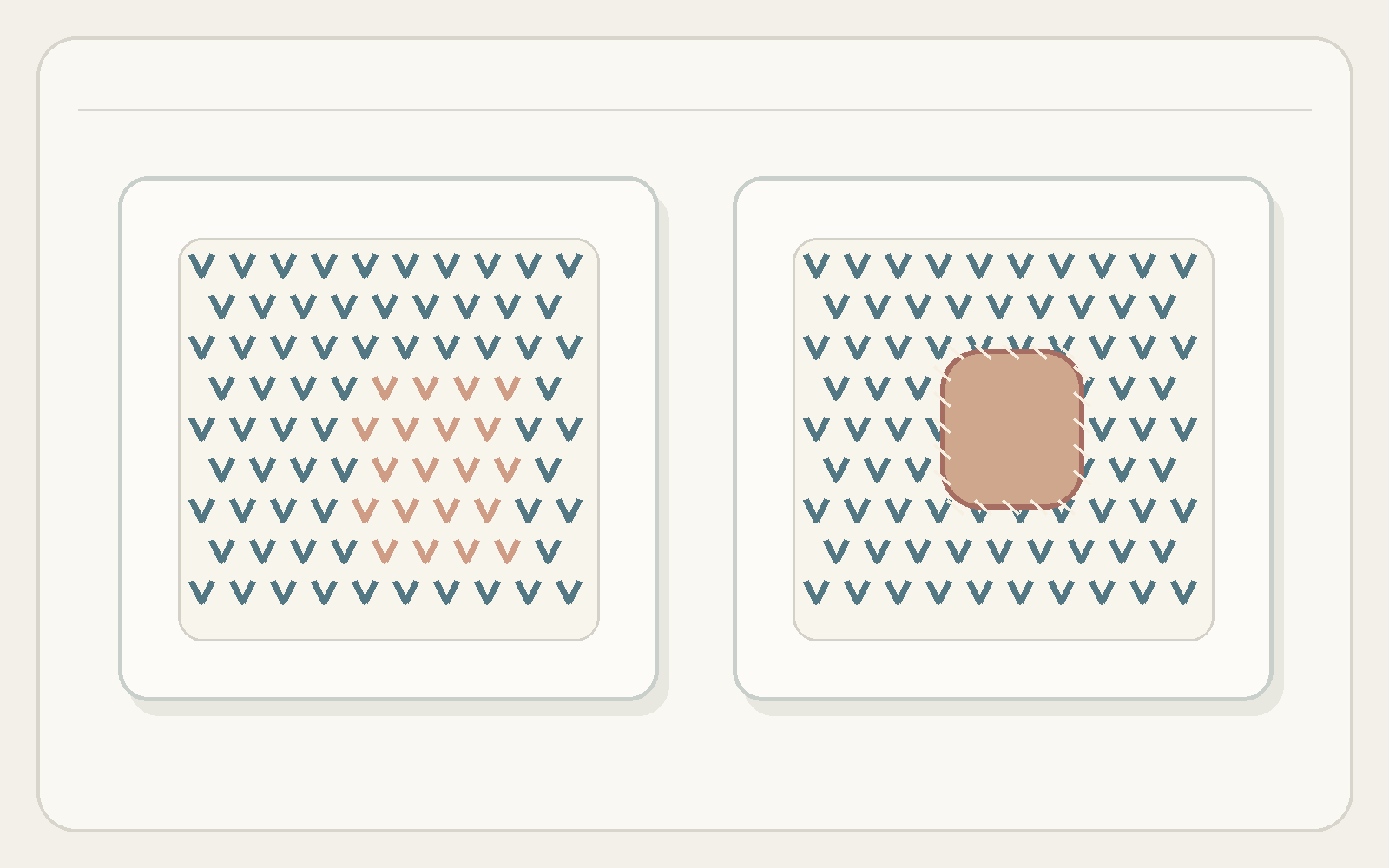
AI-generated illustration (conceptual). Colour in the stitches is a general comparison; the museum describes the sheep motif as appliqué. This does not reproduce the museum design. Sheep jumper record, illustration file.
For the pale ice-blue wool jumper SH 942064, dated to about 1987, the museum explicitly says machine knitted. It records a broad ribbed waist and cuffs, satin trim at a round neckline, grey satin appliqué and Lurex sewn on the front, and shoulder pads. “Machine knitted” describes this item. The other jumpers in this group cannot be assigned the same machine or method merely because they sit in the same designer collection. The museum card also reports that seeing David Bowie in a pale blue suit inspired the look; the card does not independently document the encounter. [4]

AI-generated illustration (conceptual). It explains component types, not a machine model or a pattern for the historic jumper. 1987 jumper record, illustration file.
Both the sheep on the earlier jumper and the satin forms on the later one are described as appliqué. Only the 1987 record explicitly calls its knitted ground machine-made. A shared word for the surface decoration does not establish a shared method for producing the ground. When looking at the two garments, separate the edge of an applied form from the loops of the fabric beneath it. These museum records do not supply yarn counts, stitch counts or machine specifications for both jumpers, so neither should we. [3][4]
What to ask of the next garment
Five objects do not make one straight line of fashion progress. The dress from about 1967 uses cotton knit bonded with acrylic; the white jumper from 1969 is an acrylic knit worn with linen; the shorts outfit from that period gives a ribbed bodice a place among closures and other components; the jumper from about 1975 has appliqué on wool; and the jumper from about 1987 is explicitly machine knitted and decorated with satin. Together they show several ways Acton placed knit fabric within a garment. They do not represent the whole history of Australian knitwear. [1][2][3][4][5][6]
When looking at another historic garment or a present-day pattern, start with three questions. Which parts are knitted? Is a motif formed by the stitches or attached to their surface? What gives the garment shape: stitch structure, a bonded fabric, a closure, lining or padding? The original museum photographs are linked through their object records below, but their reuse terms do not permit us to treat them as photographs ready to publish on this site. The new diagrams above are conceptual references, not pictures of these exact objects or working patterns.
Original records and scope
- Museums Victoria, SH 942291, white acrylic jumper, 1969. Note the conflict between the title and physical description and the summary’s first sentence.
- Museums Victoria, SH 942014, lime-green linen dress, 1969. A non-knitted comparison object worn with the jumper.
- Museums Victoria, SH 942146, sheep-appliqué wool jumper, about 1975.
- Museums Victoria, SH 942064, ice-blue machine-knitted jumper, about 1987.
- Museums Victoria, SH 942372, bonded-knit mini dress, about 1967.
- Museums Victoria, SH 942017, outfit with knitted bodice and shorts, about 1969.
- Museums Victoria, Michael Reason, biography of Prue Acton. Used for the designer’s education and business context.
Image rights: the object photographs are marked Prue Acton / CC BY-NC 4.0, permitting noncommercial use only. The biography portrait is marked All Rights Reserved. No photograph from those pages has been copied into this manuscript.
If you enjoyed this story, please leave a warm greeting.
No name or email is needed. Greetings are published immediately, and your country and a masked IP address may be shown. The original IP address and browser information are stored with your greeting for comment management, spam prevention and security. Privacy policy and deletion requests
This product includes GeoLite Data created by MaxMind, available from https://www.maxmind.com.