 HISTORY & ARCHIVES
History & Archives
Trace knitting through museum catalogues, pattern books, factory records and surviving garments.
History & Archives
Trace knitting through museum catalogues, pattern books, factory records and surviving garments.

What Does “Knitting Hats” Leave Out? Public Making at Buenos Aires’s Costume Museum
Read Buenos Aires costume museum gatherings from 2016 to 2022 through six rights-checked photographs. Distinguish needle knitting from crochet, and planned donations from reported…

What Can a Small Knit Tell Us? Reading Amsterdam Foundling Clothing Records
Amsterdam Museum foundling garments reveal what an old knit records—and what it cannot. Five original object records and six individually CC0-identified photographs separate a…

Two Pairs of a King’s Stockings, One Knitted: Reading Seventeenth-Century Swedish Dress
Two pairs associated with Gustav II Adolf reveal different construction: silk loops, gauge and fastening holes around 1620; plain-woven linen cut on the bias…

Was the Name on the Stocking or on Its Label? Reading American Knitting Records, 1782–1809
Can a 1790 New York stocking tell us who knitted it? Compare Cleveland, Colonial Williamsburg and Met records to see what technique, fiber, initials…
How Did a Printed Pattern Teach Its Reader? Butterick Knitting in 1891–92
A close reading of Butterick’s 1891–92 knitting serial and 1892 book shows how abbreviations, hand diagrams, stitch samples, edgings and stocking tables guided readers…

When a Face Opening Froze: Reading Edgeworth David’s Antarctic Knitted Balaclava
A preserved wool balaclava and David’s 1909 Antarctic diary show where face and neck edges met wind, breath and ice, while the historical pattern…

When a Shawl’s Edge Changes: Reading Orenburg Down Knitting Through Museum Records
Read Orenburg down shawls through a museum collection: the Butovsky family’s 40-gram cobweb, changing fringed and pointed edges, and the named makers behind openwork…
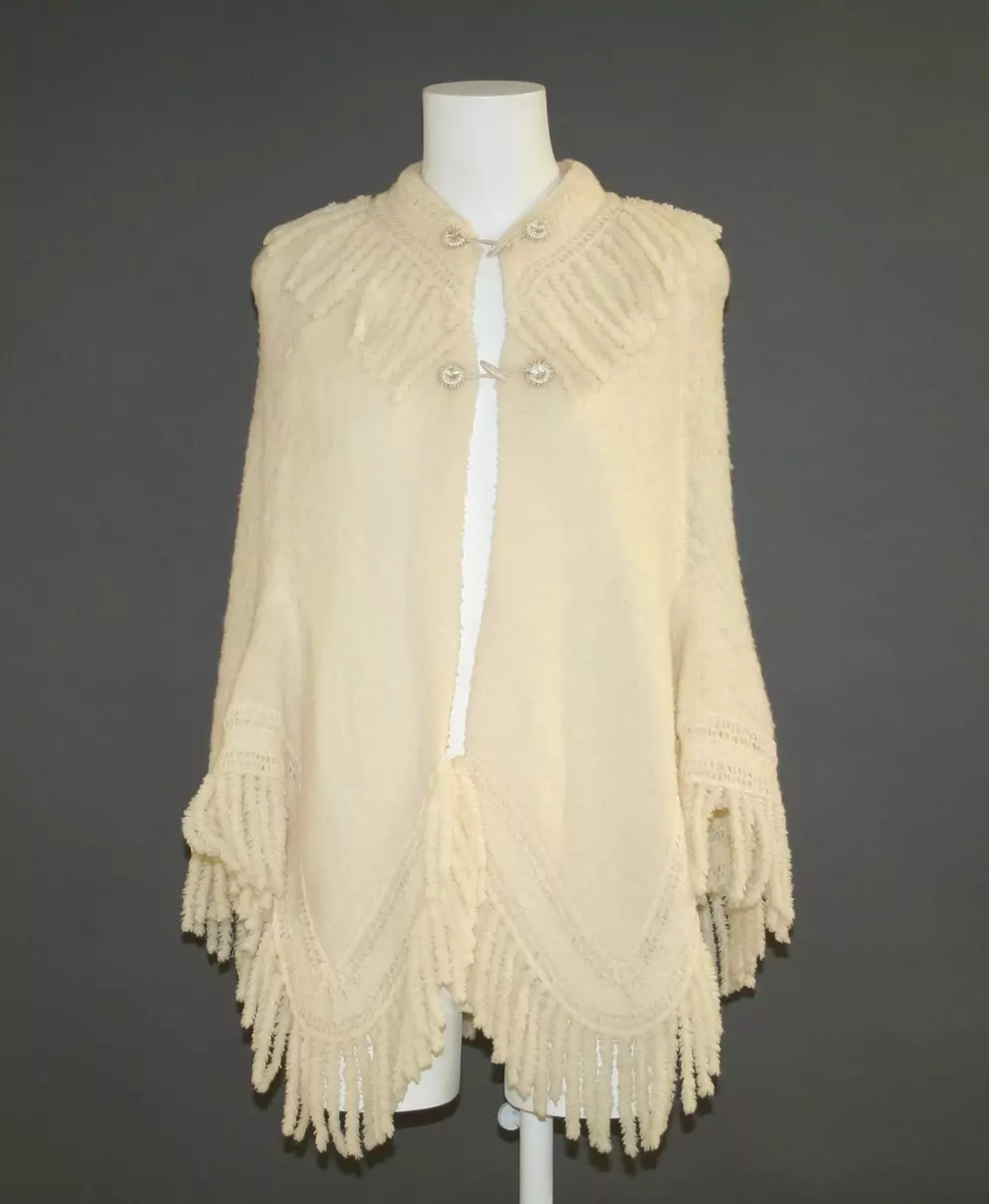
Where Does Knitting Meet the Body? Four Vienna Museum Garments, 1870–1940
Compare a wool mantle, silk waistcoat, 1930s underwear and 1940 dress in the Wien Museum to see how knitted garments cover, shape and open…

Read the Heel Before the Motif: Four Egyptian-Attributed Knitted Socks from the Fatimid Period
Four Egyptian-attributed Fatimid-period cotton sock records reveal what a heel, a toe and a script-like band can—and cannot—tell us. Five licensed museum photographs and…

How Far Should a Sock Cover the Foot? Six Sarakatsani Knits from Thrace
Six Sarakatsani wool socks and foot coverings from Thrace reveal differences in length, ties and geometric layout. DUTH records and six CC BY 4.0…
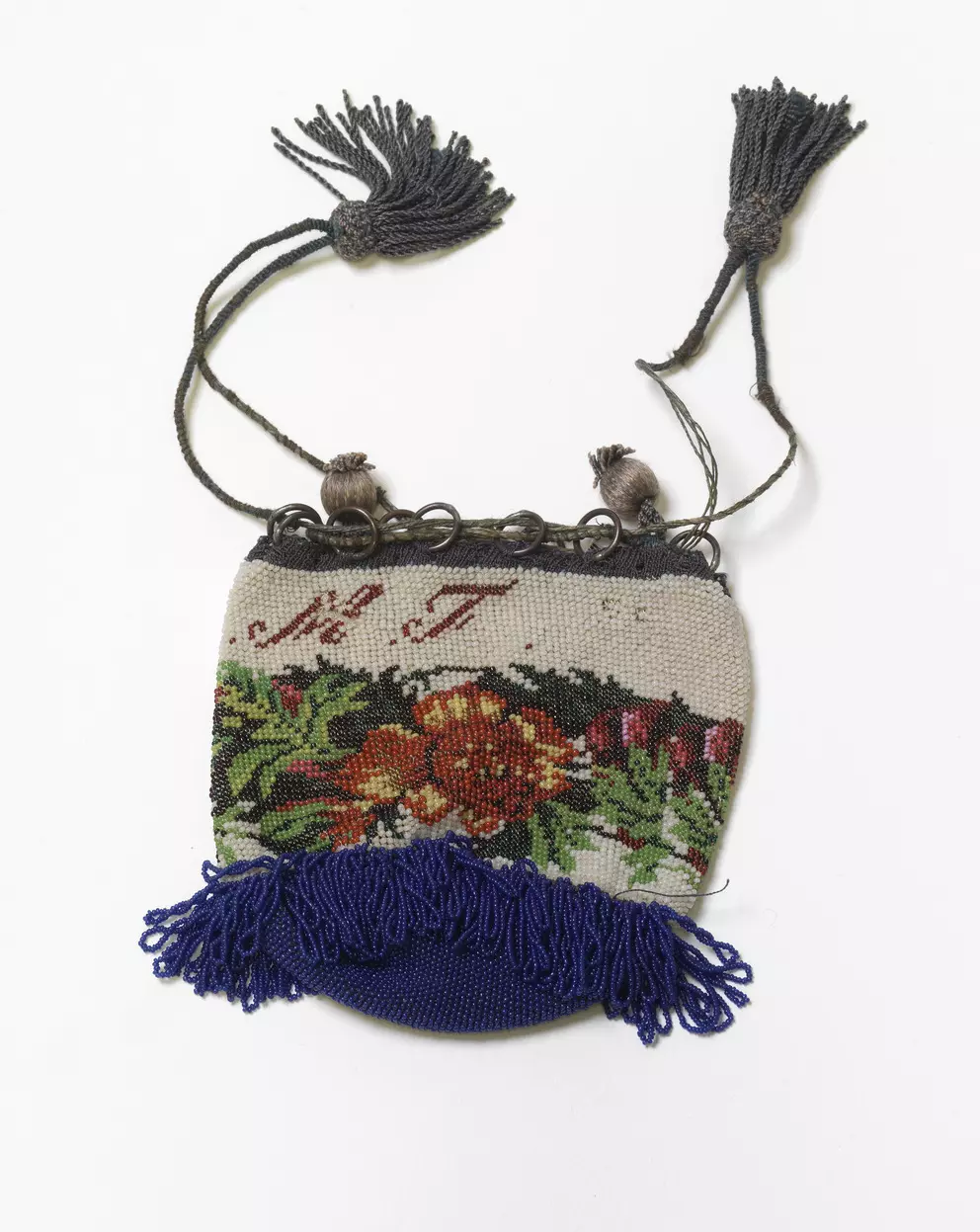
Before the Pattern, Look at the Opening: Vienna’s 1817 and c.1830 Beaded Knitted Purses
Two beaded knitted purses in the Wien Museum, dated 1817 and about 1830, reveal how rings, ribbons, and openings matter beyond the pattern. Five…

Philippine Abacá Knitted Lace Scarf: When Cordage Fiber Becomes Loops
Read a Philippine abacá knitted lace scarf dated c. 1910–23 through museum records, a 1913 craft periodical, and verified photographs of the fiber.

Whose Name Was Knitted In? Two Faces of an 1809 English Silk Pincushion
Read five CC0 photographic views of one 1809 English knitted silk pincushion, from its floral face and MARY WILLIAMSON inscription to its encircling band.

Instep or Leg? Mapping Openwork on Five Cotton Stockings at the Palais Galliera
Map openwork placement, top channels, ties, seams and marks across five nineteenth-century cotton-stocking records at the Palais Galliera.
Before Calling a Sock “Turkish”: Museum Labels and Local Knitting Records
Compare museum socks and patik linked to Türkiye with local Aksaray and Çorum accounts, using three real object photographs and two clearly marked AI…
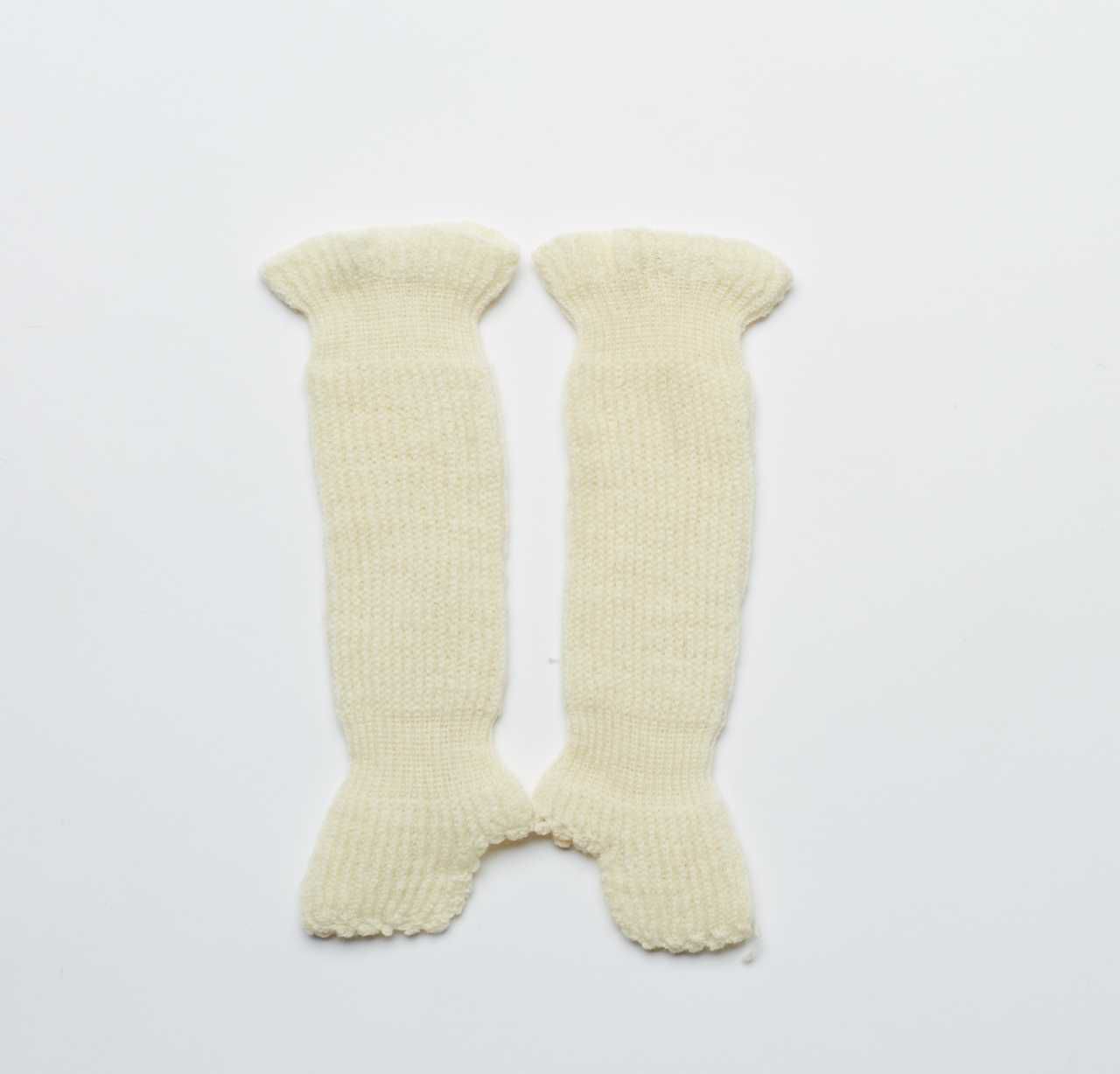
Who Made the Stockings, and Who Kept Them? Five Danish National Museum Records
Five National Museum of Denmark stocking records and six licensed object photographs reveal home knitting, materials, collecting routes and the limits of a museum…

The Fingertips Remain Free: Five Cotton Knitted Mitts and Gloves in a Dutch Museum
Five cotton knitted mitts and gloves in the Rijksmuseum reveal different thumbs, open fingertips, eyelets and edges, while their records distinguish Dutch from broader…

Whose Record Holds a Sock’s Pattern? Knitting from the Livonian Coast
Five photographs of socks from the Livonian coast invite a careful reading of museum records, a field image and today’s pattern-making activity.

Why Begin a Sock at the Toe? Double-Stranded Knitting in Serbia’s Timok Region
Read Serbia's Timok double-stranded socks through its national heritage register, museum records and five licensed exhibition photographs, separating documented technique from what a photograph…

Can a Sock’s Surface Tell Us How It Was Made? Five North Macedonian Museum Records and Five Separate Photographs
Five North Macedonian sock photographs are read alongside five separate British Museum records to distinguish knitting, embroidery, woven soles, and the limits of each…
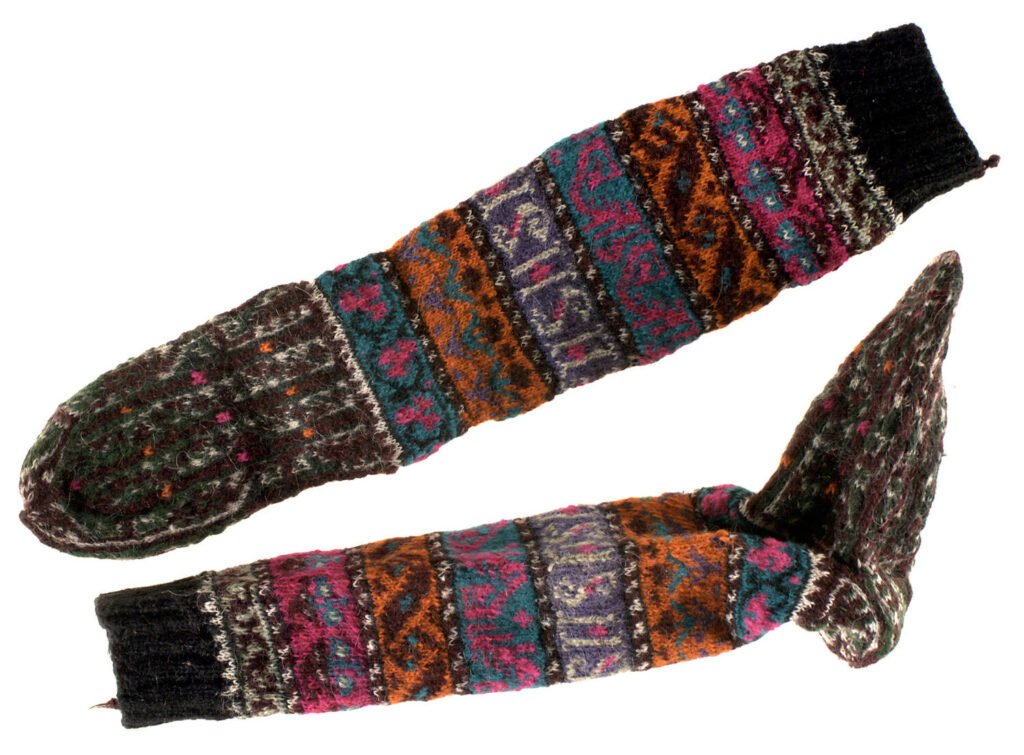
A British Researcher’s Antarctic Socks: What Stripes and Boots Can Prove
A museum record identifies George Rayner’s striped hand-knitted Antarctic socks, but the surviving boots and field portrait answer different questions. Seven primary records and…
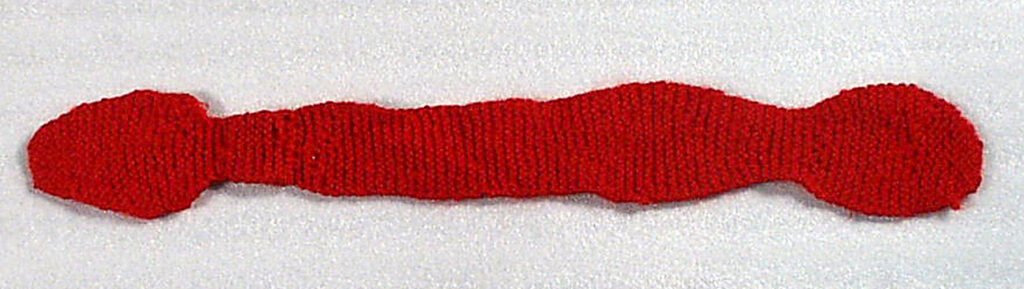
The Red Scarf That Wasn’t in the Suitcase: Knitting After a Family’s 1965 Migration from Argentina
A grandmother's red knitted scarf reached Marie Pregal after her family's 1965 move from Argentina to Australia. Five museum objects reveal what travelled and…
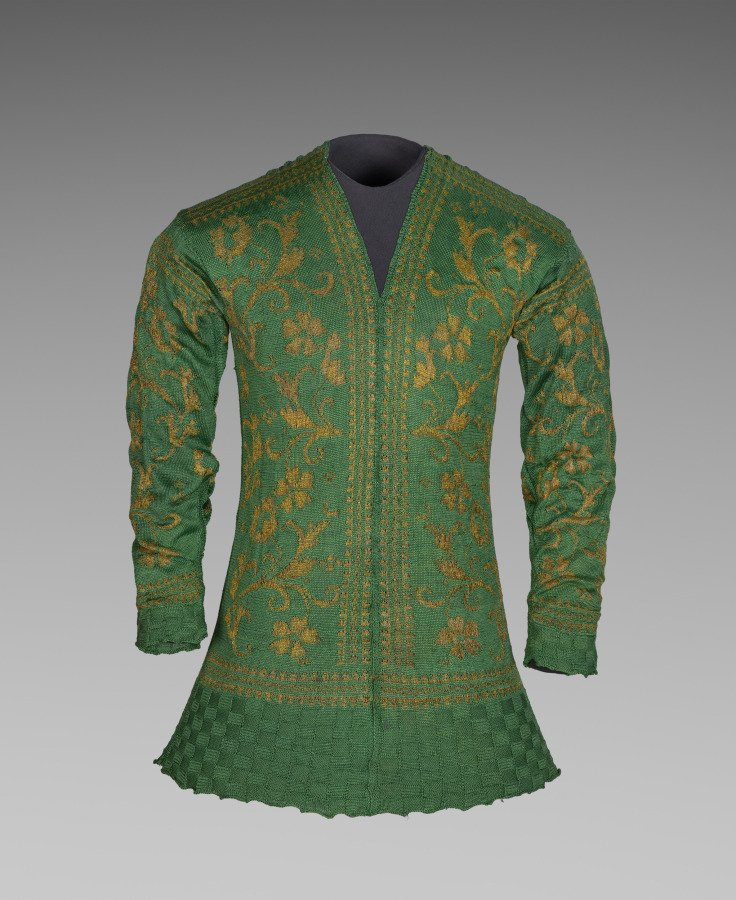
Before the Name “Hunting Jacket”: Reading a Seventeenth-Century Silk Knit from Five Angles
Five views and a conservation report reveal how a seventeenth-century Italian silk jacket was pieced, patterned and seamed—and where its making remains uncertain.

Knitting for Dolls, Not People: Five Different Records from an Australian Museum
Five Australian museum records show how knitting appears in miniature domestic life, football fandom, family craft and occupational therapy—without assuming the same maker, technique…
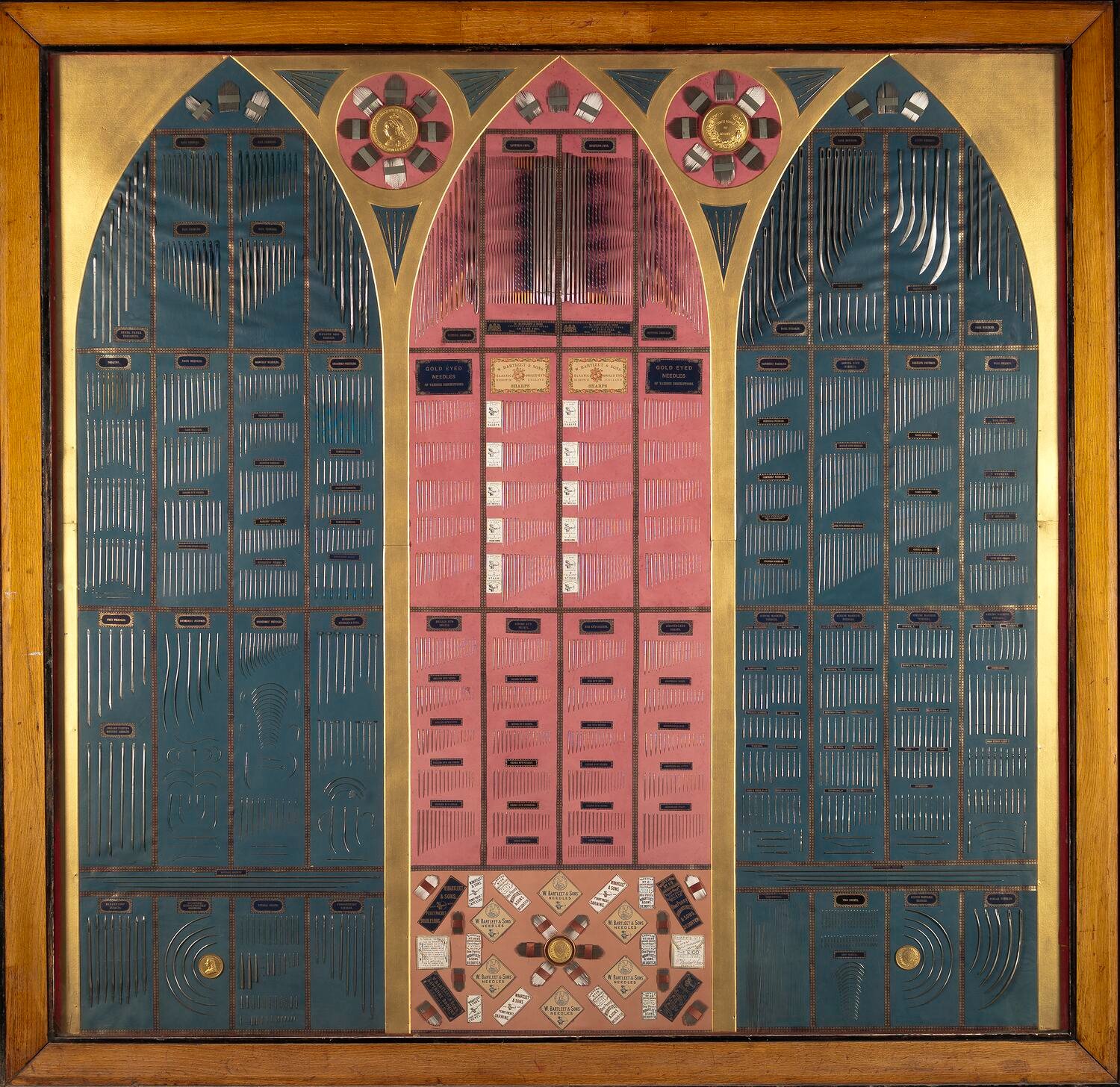
Before Comparing Needle Lengths: Five Museum Records of Knitting Tools
Five museum records show why a needle’s length may describe a pin, a case, a trade display or a cotton bundle. Compare the objects,…

Can a Mitten Be Read from a Machine Drawing? Five U.S. Patents by Isaac W. Lamb
Five U.S. patents by Isaac W. Lamb, dated 1863–1904, reveal different approaches to tubular knitting, mitten blanks and holding loops on inactive needles.

Five Finnish Museum Gloves and Mittens: Reading Cuffs, Thumbs and Decreases
Five Craft Museum of Finland glove and mitten records reveal distinct cuffs, thumb gussets, yarn and decreases, with clear limits on dates, techniques and…

The Name on the Box, the Team on the Knit: Auckland Museum’s 2000 Red Socks
A pair of red socks sits inside a card box. The record for object 2018.17.1 at Auckland War Memorial Museum Tāmaki Paenga Hira calls…

Four Knits Beside a Uniform: Reading Herbert Golder’s New Zealand Wartime Clothing
Four hand-knitted garments associated with New Zealand gunner Herbert Golder, photographed and documented by Auckland Museum, read beside his woven service tunic.

Knitted Doll Socks and an Uncertain Beret: Reading an Auckland Museum Wardrobe
Eight pairs of knitted doll socks and three berets with conflicting knitting and crochet labels reveal how to read an Auckland Museum wardrobe through…

A Cot Blanket from Circa 1945 New Zealand: Reading Its Victory Message and Knitted Ground Separately
Auckland Museum’s circa-1945 New Zealand cot blanket combines a knitted ground with embroidered victory messages. Five licensed photos and primary records reveal what the…

Nicky Winmar’s 1993 Knitted Football Jumper: Reading One Garment as Historical Evidence
Museums Victoria’s knitted wool jumper HT 31972 shows how Nicky Winmar’s 1993 garment became historical evidence. Five licensed museum views, the object record, and…
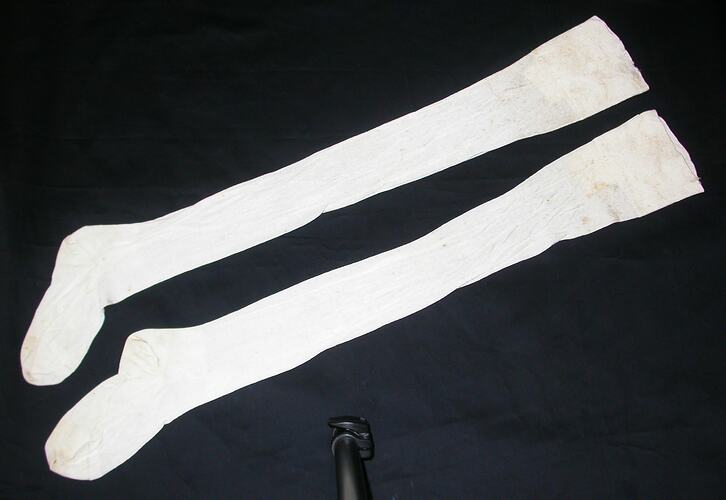
From Factory to Home: Four Australian Hosiery Objects and the Work Behind Them
Four Melbourne hosiery objects reveal factory knitting, domestic drying and darning, and layered wool and nylon socks. Five licensed collection photographs and six original…

A Hand-Knitted Aircrew Scarf: Graham Conning and Two Different Wartime Textiles
A navy hand-knitted aircrew scarf worn by Graham Conning is read alongside its museum photographs, service record and a separate painted commemorative scarf.

Lydie Leymann’s Sock: From Swiss Hand Knitting to Melbourne Needlework Lessons
A Swiss hand-knitted sock made around 1910, Lydie Leymann’s migration to Melbourne, and the sewing folio and certificates that document a different needlework education.

Steinberg Drapery in Carlton: Mended Swimwear and Knitwear Left in Stock
Four knitted garments from a Melbourne immigrant family shop reveal repairs, fibre changes, garment construction and the history of unsold stock preserved by Museums…

Three Hands Around a Teapot: Australian Knitted Cosies, Shows and Making Do
Three Museums Victoria objects reveal distinct lives for knitted teapot coverings: Violet May Wilson’s prize-winning bird cosy, Kath Davis’s glory-box stripes and Ada Perry’s…

Kodak’s Wartime Comforts Fund: Nell Cameron, Hand-Knitted Socks and Staff Letters
How Kodak Australasia’s 1941–46 staff fund connected hand-knitted socks, letters and bulletins with absent colleagues. Nell Cameron’s role is traced through museum records and…

The Knitted Chook Project: Children’s Drawings after Australia’s 2009 Bushfires
How drawings by children at Strathewen Primary School became knitted chook cushions after Australia's 2009 bushfires, examined through a preserved object, a separate drawing,…
Knit One Warm One: Community Knitting in Lockdown-Era Australia
How a 2020 Maroondah knitting project connected local makers with support agencies: Diana Pullin’s museum scarf, council records, five clearly attributed visuals and the…

Ruby Fisher’s 1910 Knitting Machine: Orders, Instructions and Five Surviving Objects
Explore Ruby Fisher’s 1910 Preciosa knitting machine, manual, sock, mitten and handwritten notes through five licensed Museums Victoria photographs and primary object records.
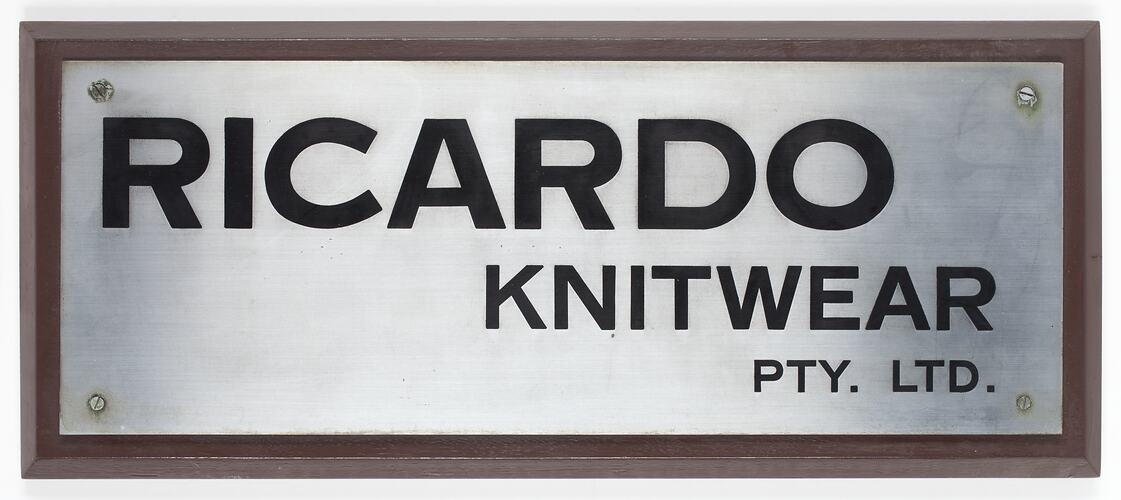
Five Objects of Ricardo Knitwear: From Factory Sign to Wool Fashion Awards
Five surviving objects reveal how Melbourne’s Ricardo Knitwear presented its factory, Australian-made label, shop tag and wool-fashion awards.

Edda Azzola’s Home Knitting Machine: From Friuli to Melbourne
Five Museums Victoria objects reveal Edda Azzola’s hand-operated machine knitting, design notes, samples and garments, and the migrant home labour behind Melbourne’s Ricardo Knitwear.
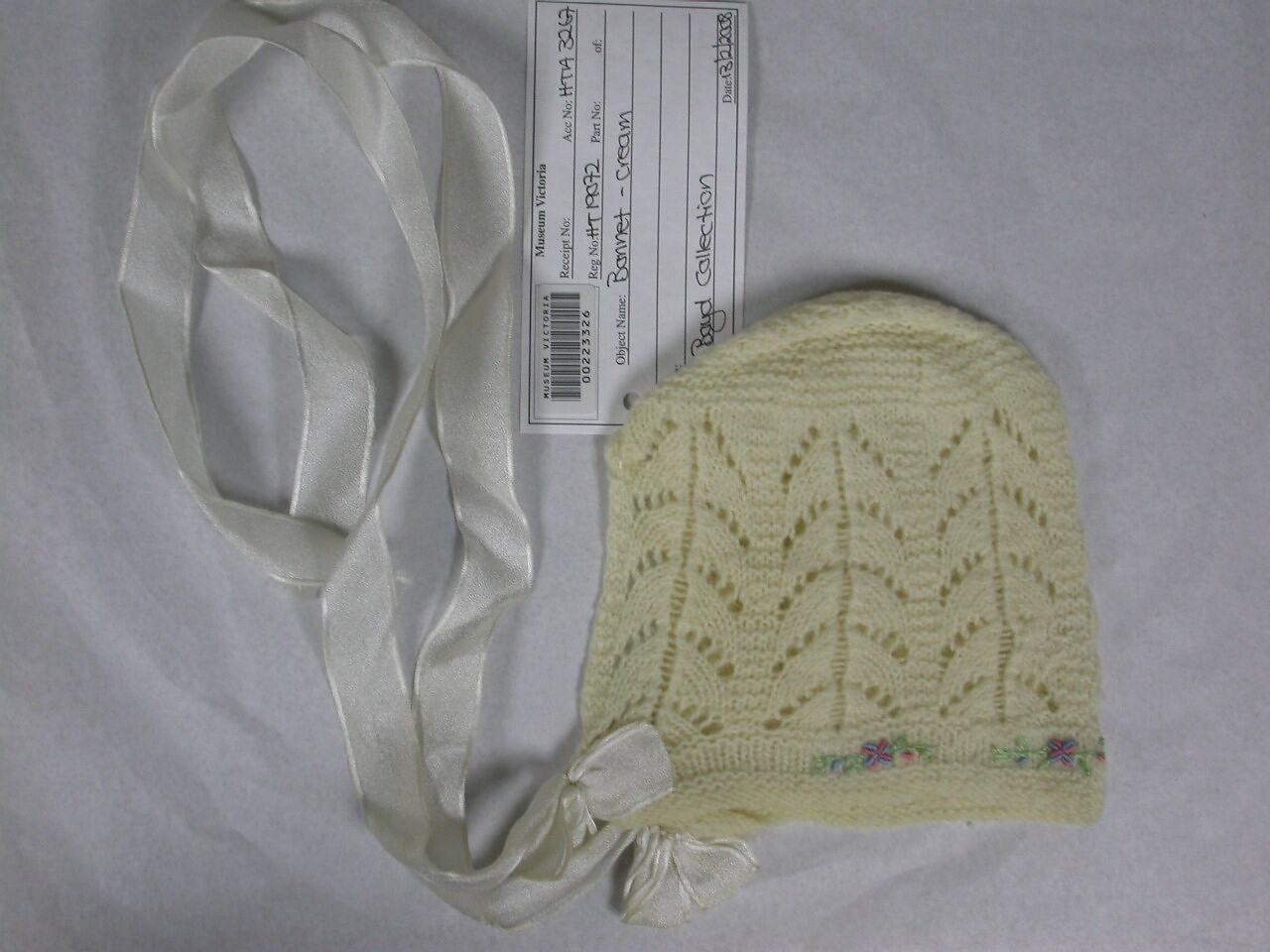
A Child’s Knitted Wardrobe in Postwar Australia: Reading the William Boyd Collection
Five knitted objects in Museums Victoria’s William Boyd Childhood Collection reveal the difference between knit, embroidery and crochet in one postwar Australian family wardrobe.

Two Knitted Socks in a Latvian-Australian Wardrobe: Reading the Apinis Collection
Explore two Latvian-pattern socks knitted in Australia through Museums Victoria’s Apinis family collection, with clear maker credits and comparisons to woven costume pieces.

Learning to Knit in Albert Anker’s Paintings: Between School and Home
Five paintings by Swiss artist Albert Anker reveal knitting between classroom lessons and family care. Museum and collection records separate what the paintings show…
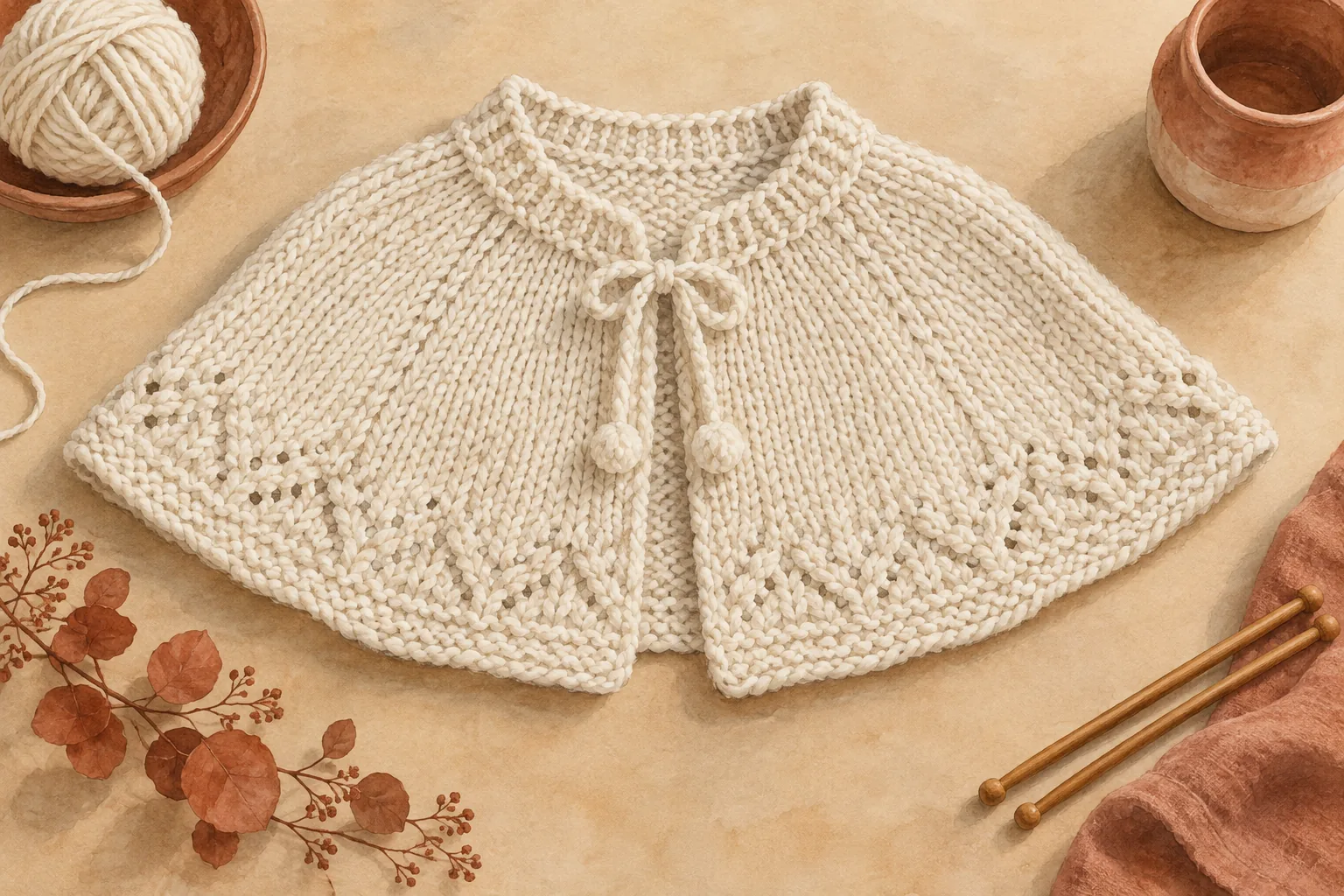
Julia Arévalo’s White Wool Cape: A 1983 Family Gift Beside the Parliamentary Record
Julia Arévalo’s 1983 knitted wool cape appears in a Uruguayan museum record. Read it beside parliamentary sources and five labelled AI reference images.

Schaffhauser Wolle: Knitting Yarn, Posters and the History of Two Factory Sites
Trace Schaffhauser Wolle through its 1868 business split, 1912 move, 1953 trade-fair stand, poster campaigns and 1991 closure using museum and archive records.
Madeira’s Two Caps: A Knitted Earflap Hat and the Carapuça
Are Madeira’s pointed wool carapuça and knitted earflap cap the same object? Two museum records, an 1882 travel account and five licensed photographs separate…
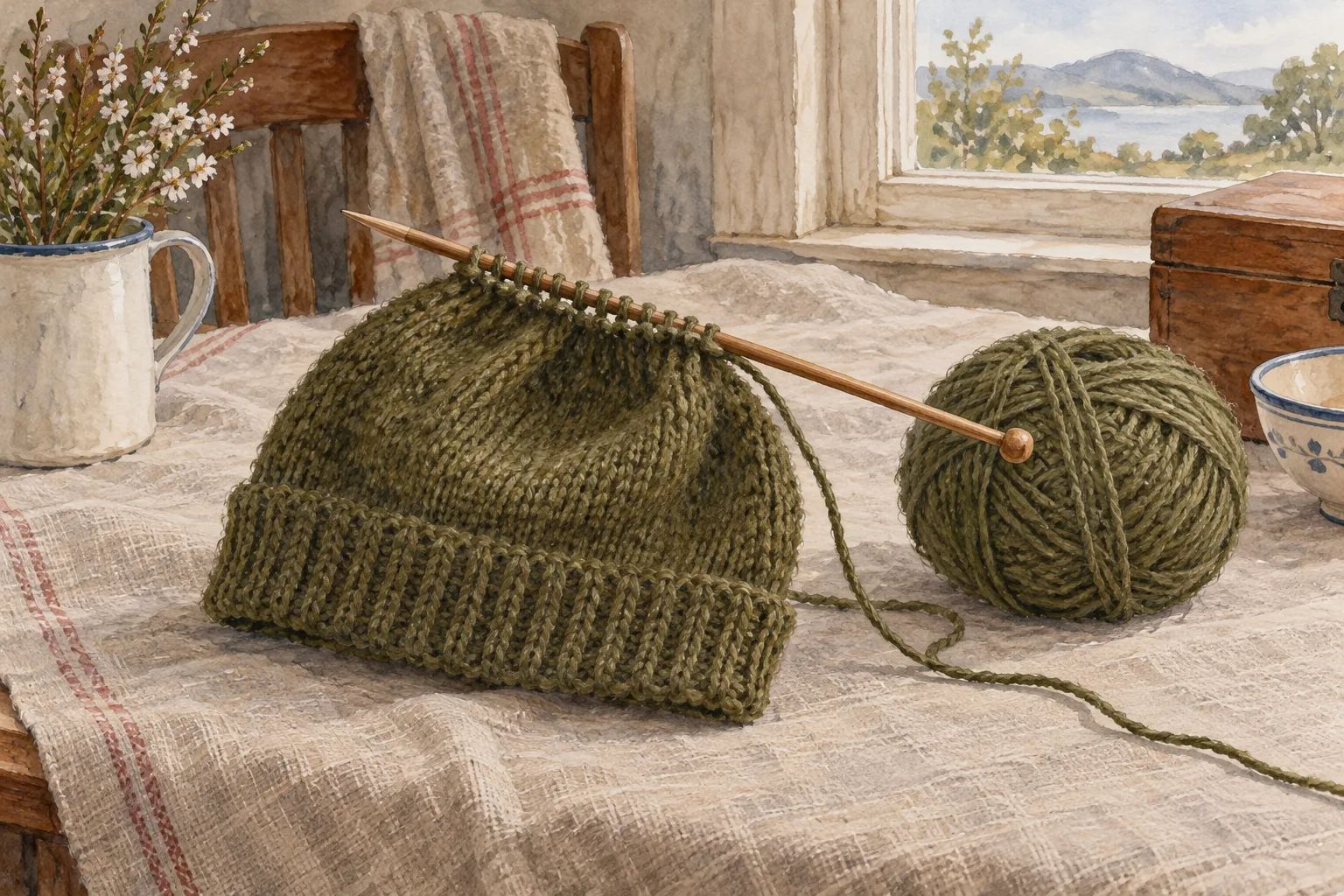
Dorothy and Frances Broad: A Knitted Soldier Doll and a 1915 Raffle
Read Te Papa's soldier doll and 1915 raffle records with care: a knitted cap, other sewn components, West Coast fundraising, and five clearly labelled…

Knitting at Canada’s GECO Munitions Plant: Reading a 1943 Archive
Five Archives of Ontario photographs place a knitting scene beside other GECO workers’ activities. What do the 1943 records prove, and what remains unknown?
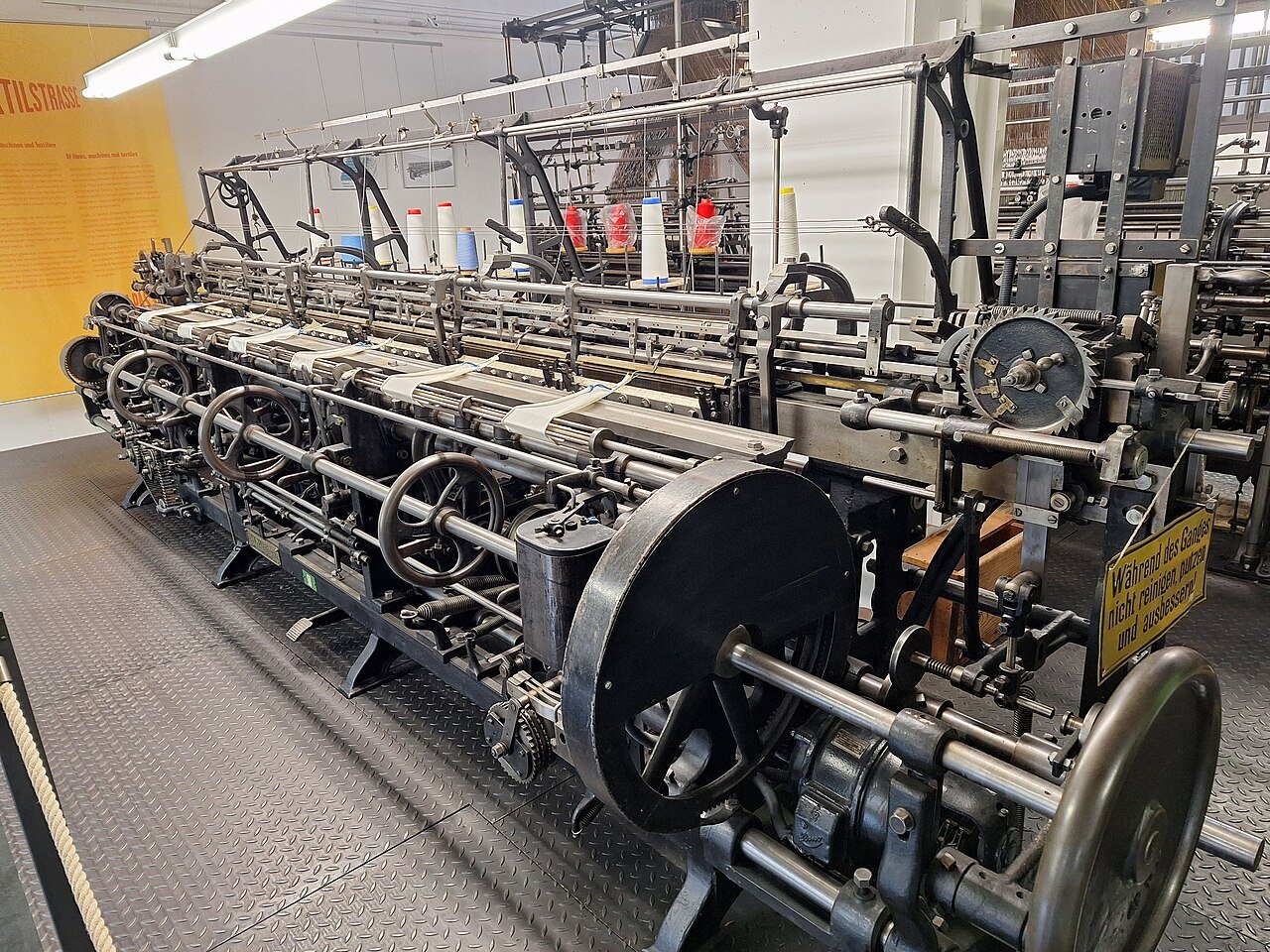
Japan’s Automatic Glove-Knitting Machine: Reading the 1964 Shima Seiki Record
The JSME heritage record traces Shima Seiki’s 1964 automatic glove-knitting machine. Read its production claims and compare clearly labelled licensed images and an AI…
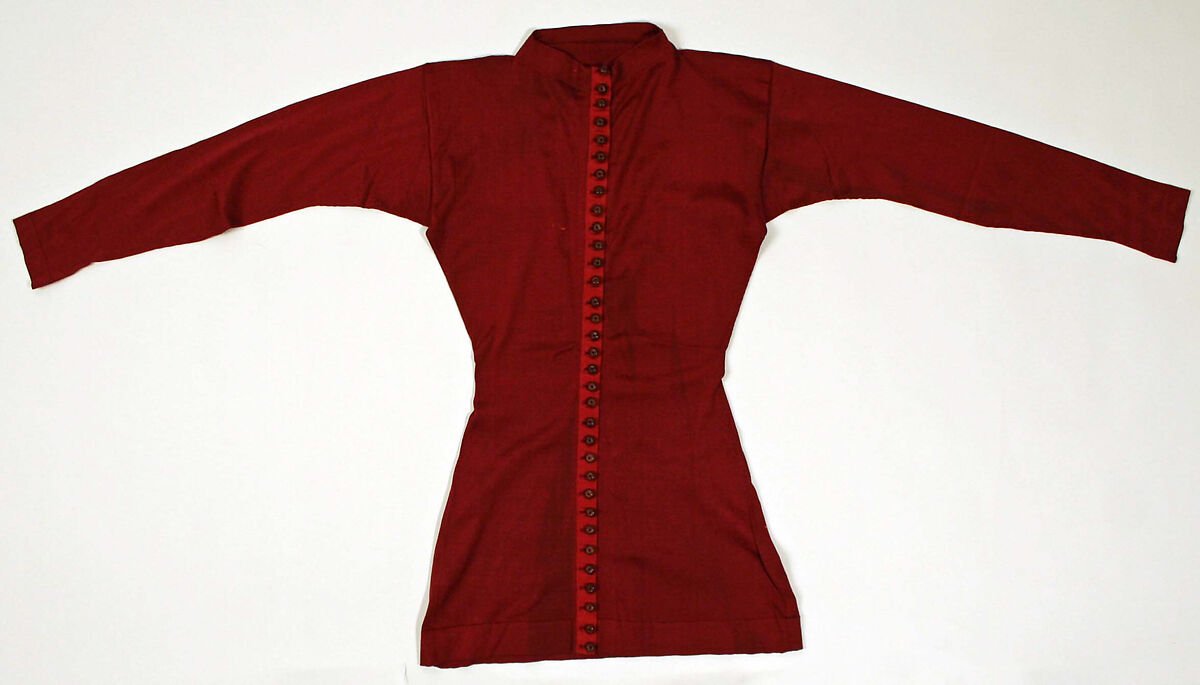
Three Early American Sweaters: Ornament and Sportswear, 1880s–1895
Three early American sweaters in The Met reveal silk, jet-bead ornament and ca. 1895 sportswear. Six public-domain photos trace their differences.
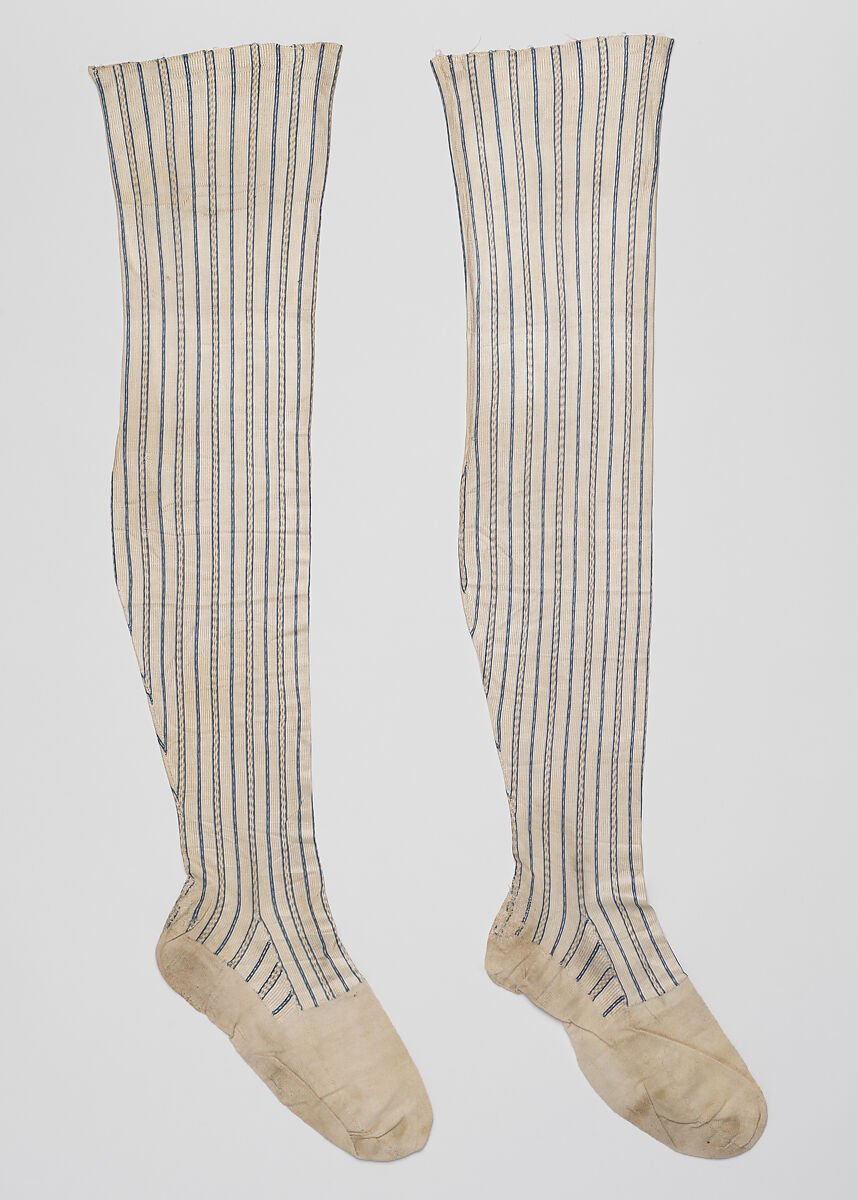
Six British Stockings: Fibres, a Maker’s Mark and a Royal Cipher
Six British stockings in The Met reveal silk, cotton, linen and wool, a maker’s stamp and a royal cipher. Read the object records and…

Five Historic Finnish Stockings: Wool, Linen, Cotton and Construction
Five Finnish museum stockings reveal different fibres, heels, toe decreases and even crochet. Read the object records and licensed photographs without turning catalogue dates…

Knitting in Danish Art: Five Works from Sisters to a Shepherd
Five freely reusable works at Denmark’s national gallery show knitting in portraits, a preparatory study, a Jutland shepherd scene and an 1882 portrait. What…

Spanish Liturgical Knitting: Four Silk Bible Marks and a Bishop’s Gloves
Five open museum records reveal four Spanish knitted-silk Bible marks and an early-17th-century bishop’s gloves. Compare construction, motifs and the limits of attribution.

Dutch Knitted Nightcaps: Birds, Openwork and an Inscription in Three Museum Records
Three Dutch knitted nightcaps in Rijksmuseum records reveal bird motifs, cotton openwork and an inscribed wool brim. Five open images include two views of…
Is All Italian Lace Knitted? Five Museum Records Distinguish Knitting, Bobbin and Needle Lace
Five open-access Italian museum objects distinguish knitted lace from bobbin lace, needle lace, woven linen and embroidery, with source and image links for every…
Tudor Knitted Wool Caps: Objects, Fulling and the 1571 Cappers Act
Two sixteenth-century British wool caps, five public-domain museum photographs and original museum research clarify knitted construction, fulling and the 1571 Cappers Act.
Reading the Ankle: Knitting, Embroidery and Five French Silk Stockings
Five museum objects reveal the difference between knitted grounds, embroidered ankle decoration and production evidence in French silk stockings.
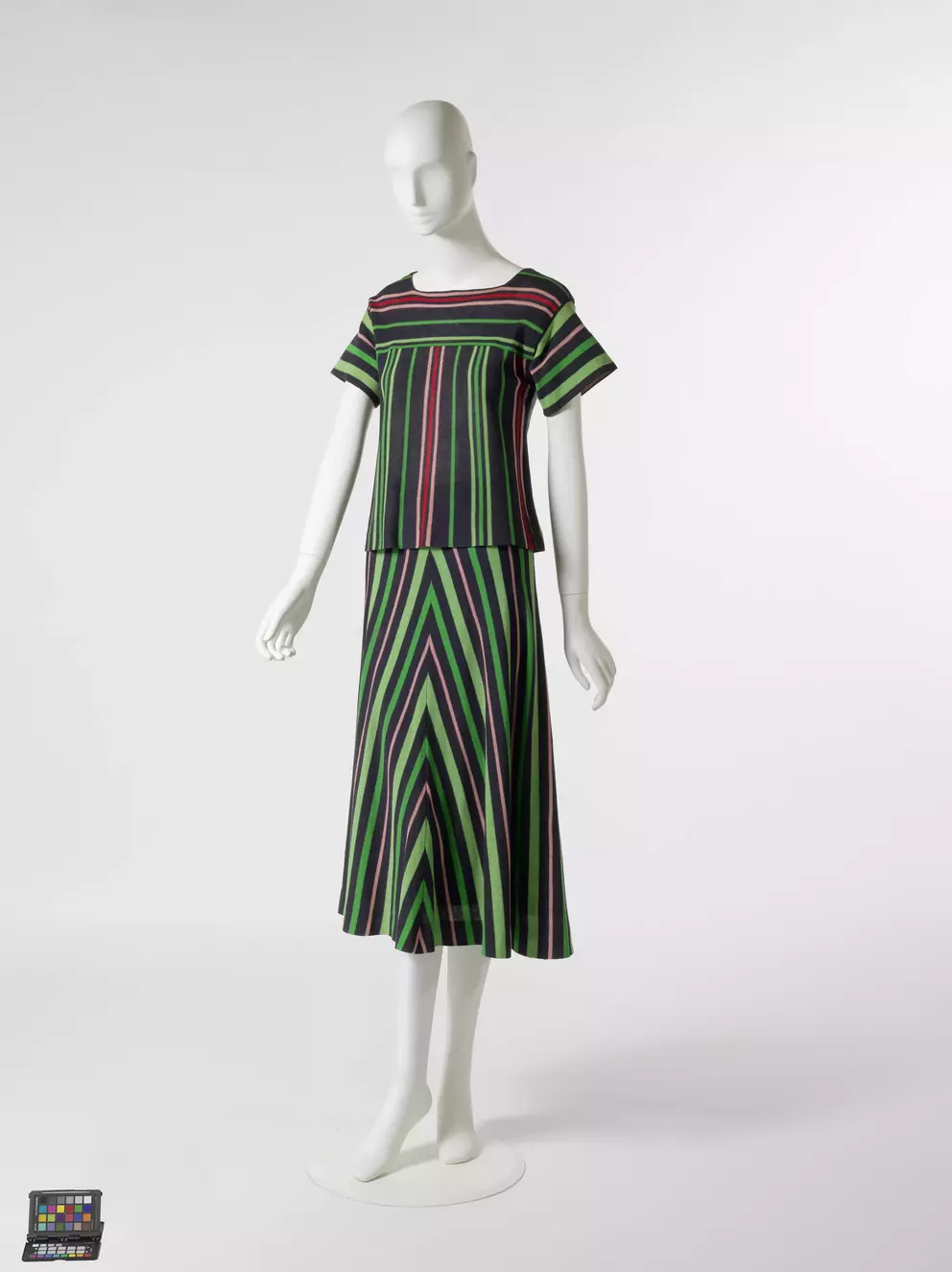
Missoni in Print and in the Archive: Reading Colour Trials and Object Records
Explore Missoni’s 1968–69 colour trials, the 2023 Missonografia exhibition and archive digitisation, alongside licensed photographs and museum garment records.
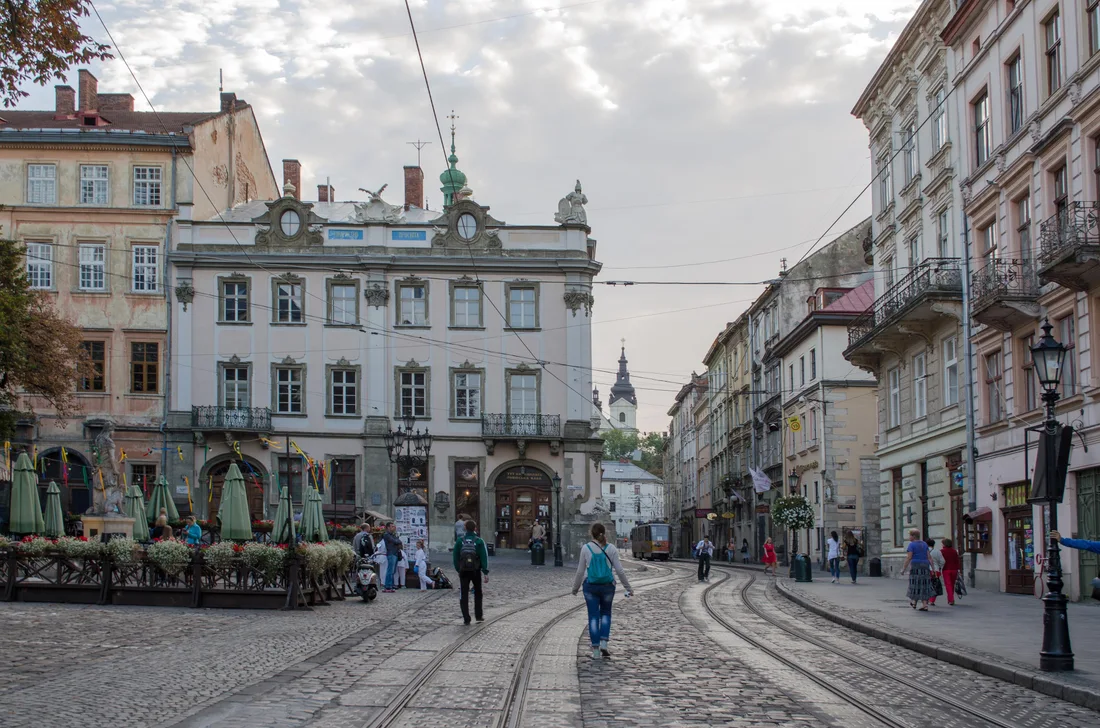
Dodo Socks and Rubizhne: Rebuilding Knitting Production in Lviv
Follow Dodo Socks and the Rubizhne hosiery factory through design, relocation and rebuilding in Lviv, with dated primary records and clearly credited images.

From Steel Crochet Hooks to Circular Needles: The Selter Story in Altena
Explore addi’s German history, from Peter Heinrich Selter’s 1829 steel crochet hooks to Hella Selter’s catalogue and the making of circular needles.

From Hand to Front: Australian Wartime Knitting, Sock Patterns, and the Work of Sending Comforts
Sock rulers, wartime guides and archive photographs reveal how Australian knitters made, checked and sent comforts to service members.

Two Sea Mittens a Week: Children’s Work in Iceland’s Knitting History
Two sea mittens a week: read the records and objects that reveal how child knitters contributed to Iceland maritime work.

Two Pairs of Socks and 193 Pages: Knitting in New Zealand, 1915
A 1915 New Zealand knitting book links pattern instruction with wartime sock relief. Its pages also reveal what the archive leaves unknown.

Open at the Foot, Bright at the Cuff: Reading Four Czech Knitted Objects
Explore four Czech knitted objects through stitch structure, colour and museum records, from stockings to garments worn in daily life.

Five Caps from the Ice: Reading Dutch Whalers’ Knitted Headwear
Five Rijksmuseum wool caps from Spitsbergen reveal different ways to knit for Arctic cold—and what archaeology can and cannot tell us about their wearers.

A Factory Was a Town: Salhus and the Making of Norwegian Knitwear
See how Salhus grew into a Norwegian knitting town through factory labour, company housing, machine production and the workers behind the archive.

Can Marfà: How Mataró Turned Knitted Loops into an Industry
Five machines at Mataró’s Can Marfà museum reveal how fibres became knitted cloth, finished surfaces and garments—and whose work made that process possible.

Five Fingers on a Machine: The Records of Chemnitz’s Knitting Industry
Trace Chemnitz’s knitting machinery from the 1851 Hilscher works to Schubert & Salzer hosiery machines through museum records and surviving objects.