Monarch Knitting in Canada: Factory, Yarn, and Wartime Patterns
What changes when a history of knitting starts at a factory gate instead of a single sweater? The Monarch Knitting Company left traces in municipal legislation, directories, trade advertisements, government statistics and wartime pattern-book catalogues. Together they connect industrial hosiery, balls of yarn sold to home knitters and printed instructions. None of these sources supplies a continuous production ledger. Each gives a different, bounded view of work and commerce.
St. Thomas: a public loan and a proposed hosiery line
Ontario Bill No. 10 says St. Thomas voters approved a by-law on 6 December 1910 authorizing a $30,000 loan to attract a Monarch factory. It records 2,132 votes in favour and 28 against. This establishes a municipal decision, not the later payment of the entire loan or the opening date of a plant. A 1916 city directory then lists Monarch Knitting Co Ltd and Thomas O. Aked as manager. A contemporary trade report said hosiery manufacture was about to begin at St. Thomas and anticipated samples later that year in several yarn types. Its future tense matters: neither samples nor output volumes are established by that notice. The same paper described delays in knitting needles and machinery across the trade, which should not be assigned to a particular Monarch order.
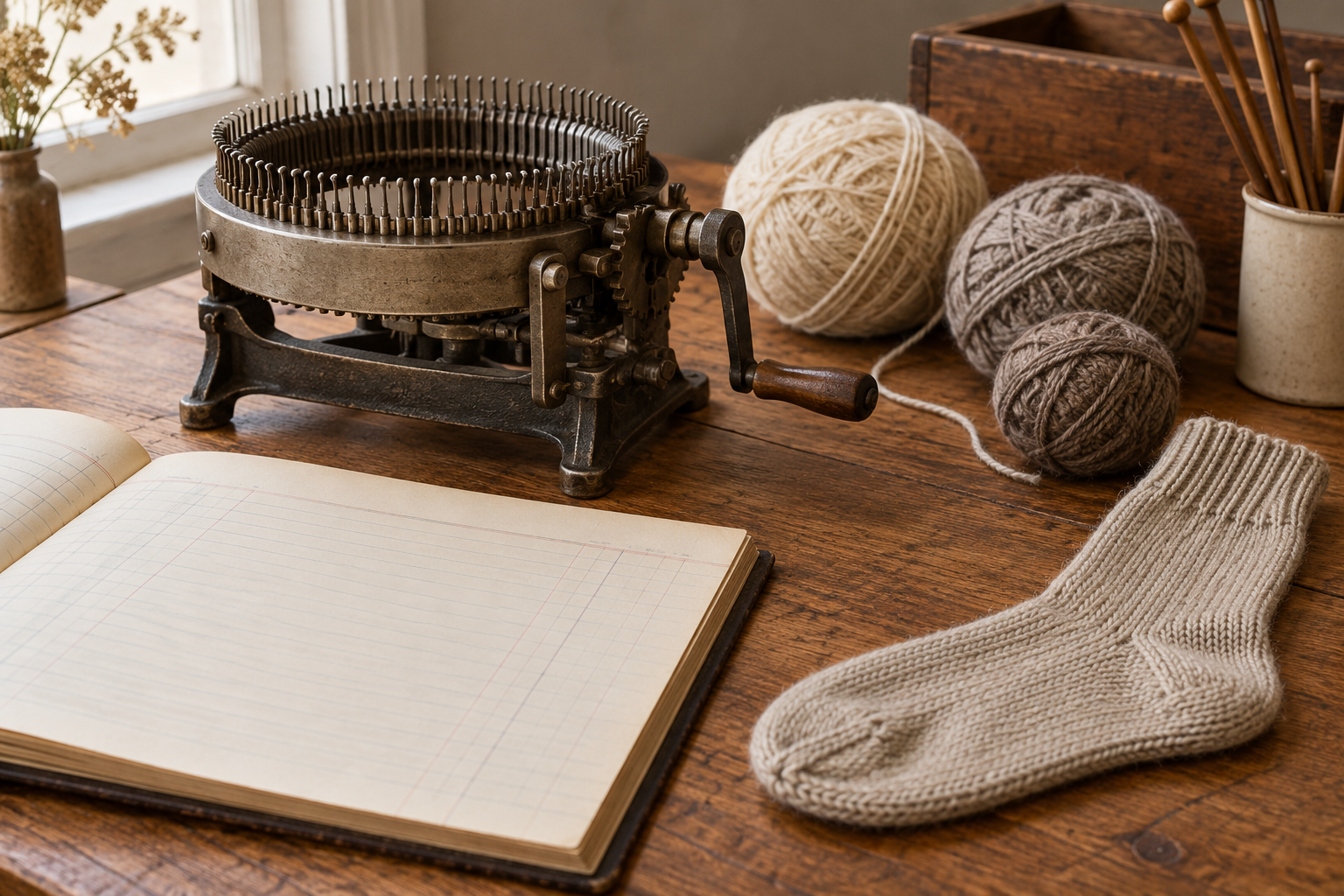
Image file: view the image file
Yarn crossed from the factory into the home
A Monarch advertisement in the 13 May 1918 Victoria Daily Times offered hosiery and sweater coats alongside Monarch Floss hand-knitting yarn in one-ounce balls. It named Dunnville, St. Thomas and St. Catharines in Ontario and Buffalo in New York. That list maps the advertiser’s claimed business geography, not identical operations at every address. A separate 1916 advertisement described raw-wool purchasing, spinning at St. Thomas, dyeing and knitting. These are the company’s claims to buyers; they do not measure output independently or identify a worker’s daily sequence.
In 1919 a retail advertisement offered the one-ounce balls at 35 cents apiece or three for a dollar. That is one shop’s advertised price on 6 June, not a national price series. Another company advertisement grouped Floss, Down and Dove as hand-knitting yarns and promoted 34 shades. Its shade count remains an advertising claim rather than a tally from a surviving colour card. A different trade advertisement pictured the Dunnville factory and warehouses; its illustration is not a measured plan or a documentary photograph.
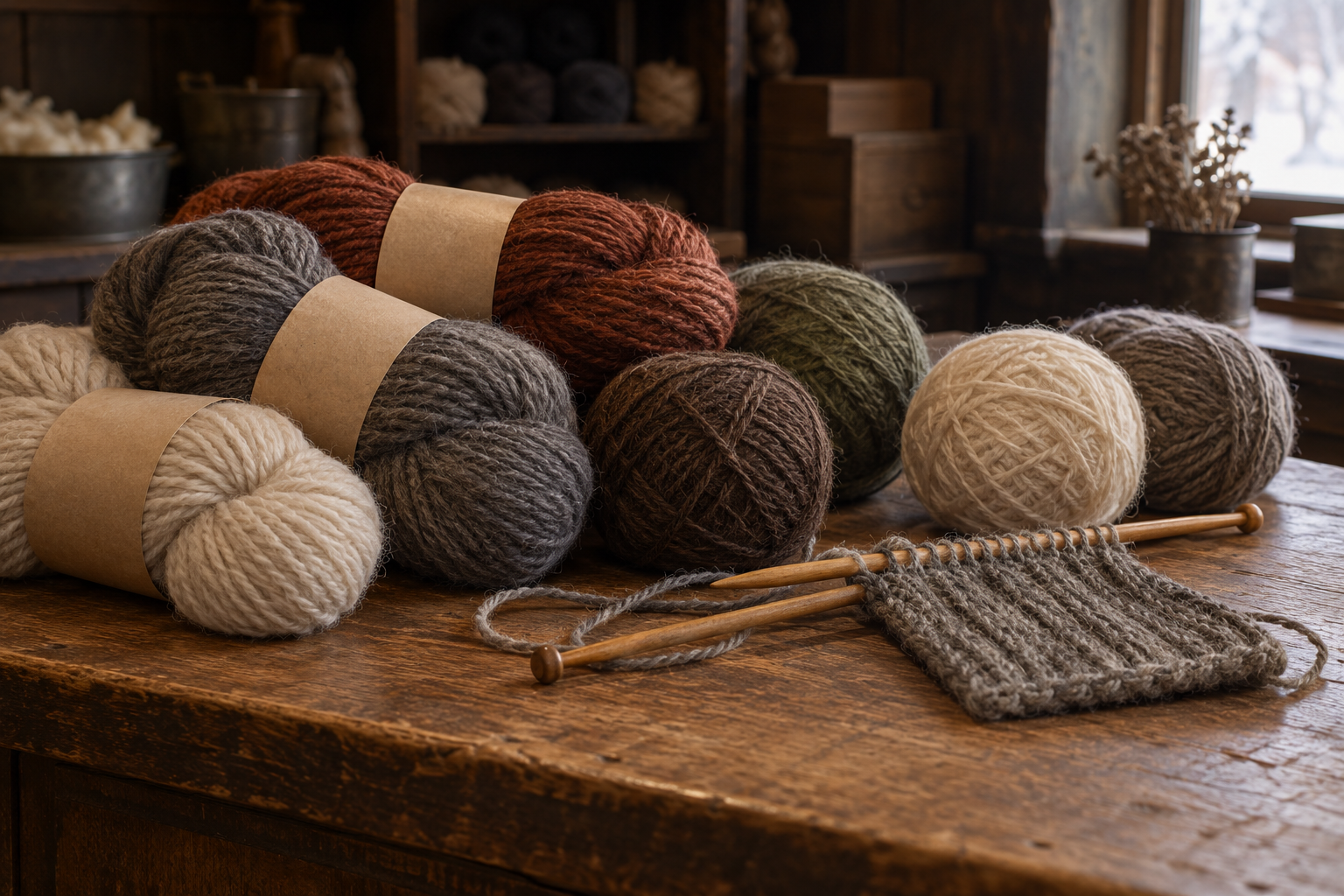
Image file: view the image file
One company, several places—but not one interchangeable factory
Library and Archives Canada describes 209 photographs in the Thomas Oswald Aked fonds, including Monarch premises, equipment and workers, many of them women. This is a fonds-level description. Individual photographs, dates, identities and reuse rights were not checked here, so this article does not reproduce or interpret any of them. The catalogue also contains a priority claim about machine-wound knitting yarn in 1918; without a separately checked product record or patent, it is not presented as an established first.
The Canadian government’s 1938 hosiery and knitted-goods survey lists Monarch in St. Catharines and St. Thomas. It verifies entries in a particular year, not uninterrupted operation from the 1916 notice. Aked & Company’s Toronto spinning site must also remain distinct from the Monarch entries. A later Ontario survey calls Monarch and Dominion Fabrics Dunnville’s two largest manufacturers in 1960 and puts their combined employment at roughly 1,100. That is neither a Monarch-only headcount nor a count of knitters.

Image file: view the image file
A New York State historic-preservation presentation dates the Buffalo branch to 1912–13, says Monarch used it until 1923, and describes wool dyeing and sweater knitting there. The 1919 advertiser’s Buffalo address and the later preservation study are different kinds of evidence. Buffalo was a cross-border branch, not a fourth Canadian mill. The next photograph shows the same building from a later street view, not another Monarch facility.

Image file: view the image file
What the postwar evidence does—and does not—say
In a 1949 House of Commons budget debate, one member quoted a newspaper report in which Monarch vice-president and general manager K. L. Markon attributed layoffs to competition after sterling’s devaluation. A government response in the same debate said no evidence of lost domestic markets or textile layoffs had been reported to it. The parliamentary transcript records competing positions, not an independent payroll audit. Markon’s quoted company-wide figure of 1,100 in 1949 and the Ontario survey’s approximately 1,100 workers at two Dunnville firms in 1960 differ in date, population and source. They cannot be merged.
Two wartime books, two separate catalogue records
Wartime Canada identifies Monarch Book No. 87: Hand Knits for Men and Women in Service as a 46-page Dunnville publication from 1941. It describes knitting instructions for service members and war victims. A separate 32-page Monarch Hand-Knit Styles has the cautious date [1941?]. The catalogues do not establish print runs, how many garments readers made or who received them. They also should not be conflated into one book. Although Wartime Canada describes an intention to make documents available for reproduction, a contemporary copyright notice survives inside a booklet. For that reason no booklet page or cover has been reproduced here.

Image file: view the image file
When reading a knitting pattern today, the same distinction is useful. An advertisement can reveal how yarn was sold; a catalogue can establish a book’s title, pages and tentative date; a surviving garment can reveal construction. None alone proves who knitted every stitch. Monarch’s story is most informative when home work, industrial equipment and the documentary gaps remain visible together.
Primary records and institutional descriptions
- 1916 St. Thomas directory
- 1916 hosiery notice
- 1918 newspaper advertisement
- Thomas Oswald Aked fonds, Library and Archives Canada
- 1938 Canadian industry survey
- 1941 Monarch Book No. 87 catalogue
- Monarch Hand-Knit Styles catalogue
- 1919 Dunnville trade advertisement
- 1919 retail yarn advertisement
- 1916 production-process advertisement
- 1919 yarn trade advertisement
- New York State historic preservation presentation
- Ontario Bill No. 10 (1911)
- Ontario Niagara-region economic survey (1963)
- Canadian House of Commons debate (1949)