Peru’s Q’ero pereti: two triangles sewn to a cap
Published · Updated
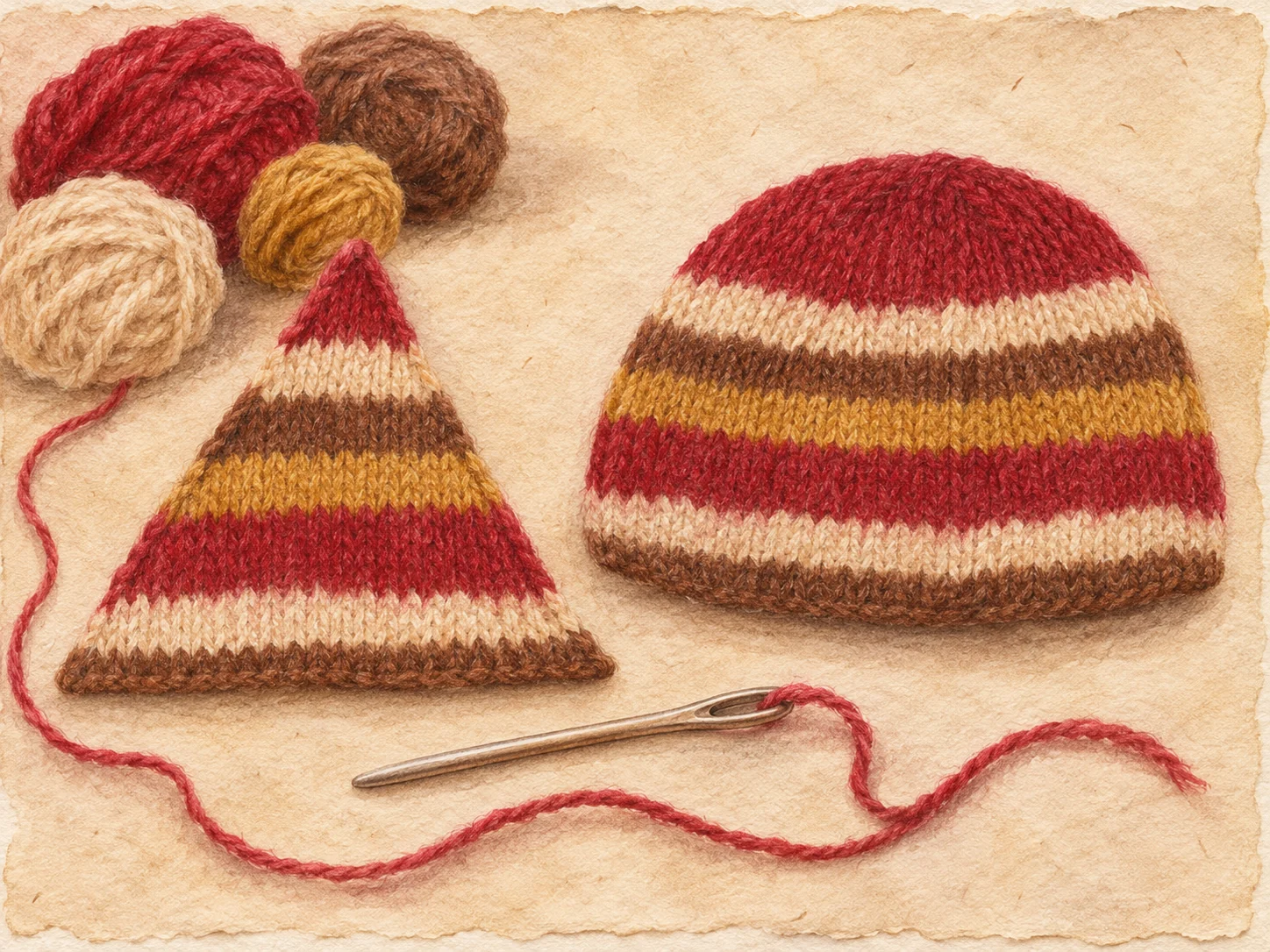
Run a finger along the side of an earflap cap. Does the fabric continue from the crown into the flap, or does a seam mark a separate piece? For a Q’ero cap called pereti, a 2019 book from the Cusco regional culture office describes the latter construction: two small knitted triangles are attached along the wider edge of the cap and finished with tassels.[1] A line that may disappear into a colourful finished garment becomes a starting point for reading the maker’s work.
This is a documented Q’ero practice in the Peruvian Andes, not a history of every Andean ch’ullu. The same publication calls pereti a male garment used from childhood in everyday life and at festivities.[1] The local name, the construction steps, and the people who teach them deserve attention. An earlier DDUJA article examined five Cusco chullos through Smithsonian catalogue records. This article asks how Q’ero makers describe a process and what each source can establish. Taquile knitting belongs to a separate community and is not evidence for this cap.

Five rods, approximately 190 loops
In “Pereti o Ch’ullu,” the Cusco book calls the Q’ero method qhari pallay. It describes five small metal rods holding roughly 190 loops in the making example it records.[1] That is an observation in this account, not a universal cast-on count. The source does not provide full gauge, yarn specification, or finished head circumference from which “190” could safely become a sized pattern. We can describe where stitches sit and how pieces meet, but cannot offer a ready-to-knit replica.
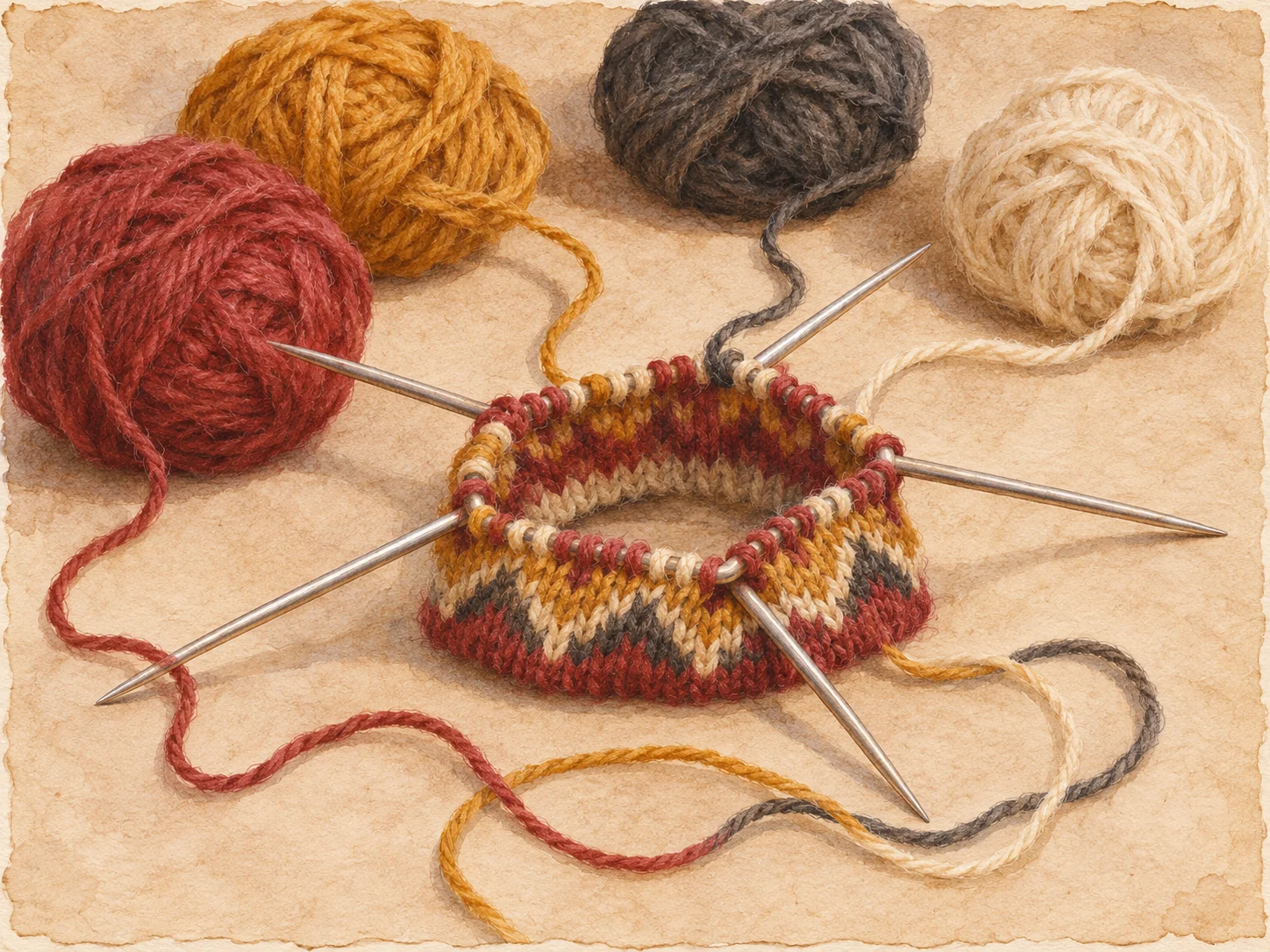
The book distinguishes the cap from its earflaps: each triangular flap is knitted separately and sewn to the broad circumference, with tassels added at the ends.[1] This is why a seam matters. Looking only at the silhouette conceals a decision to make and attach two independent pieces. The account also records Q’ero statements that earlier small rods used hard wood or a resistant bamboo, while its described process uses metal. These are memories of tools, not proof that one material served every household at every earlier date.
A motif study and a construction study
Anthropologist Gaïl P. Silverman-Proust reported Q’ero field research in 1979–80 and 1985. Her 1988 article discusses the Tawa Inti Qocha motif and says that men put it on a needle-knitted, earflapped ch’ullu as well as on another kind of bag.[2] She records men and children of both sexes wearing the cap, whereas the 2019 book classifies pereti as male attire.[1] The accounts do not establish that the two observers described identical wearing practices or constructions. Neither can become a permanent rule for all Q’ero households. Her article concerns spatial symbolism and motifs; it does not count 190 loops or document the five rods in the later book’s example.
Nor can the years between publications be turned into a simple story of a technique changing. The authors did not follow the same named maker, cap, or measurement protocol. One record asks what a motif communicates; the other asks how the cap’s pieces join. That distinction guards against assigning a symbolic meaning to a photographed pattern merely because it resembles one in a study of another object.
A named maker and the limits of catalogues
A 2023 Peruvian Ministry of Culture Ruraq maki catalogue names Q’ero artisan Fermín Quispe Apaza. Its account says that around ten years old he learned from parents and grandparents and made his first chullo for himself. He now teaches his children.[3] A diagram of rods and loops cannot provide this personal history. It places a cap within a family’s transmission of skill. The catalogue does not say that Fermín made the approximately 190-loop specimen described in 2019; his name must not be attached to that example.

The producer-linking organisation Noqanchis-Zusammenstehen currently lists several Q’ero hats separately, including a ceremonial cap, a traditional cap, and one it recommends for the rainy season.[4] The distinctions show how a seller describes its range. They do not establish standard making time, verified waterproof performance, or a maker’s identity for every Q’ero cap. Individual descriptions remain product claims.
Heart Walk Foundation, which describes work with Q’ero communities, wrote in 2016 that men knit ch’ullos with five needles.[5] It is a community-facing account from before the 2019 book, but gives no named observer, particular demonstration, or stitch count. It cannot be cited as an independent measurement of the later book’s “approximately 190” figure. Its comments on beads and courtship remain within that organisation’s account.

What to notice in the next cap
When a cap is labelled ch’ullu, ask where the crown stitches end. Are the earflaps continuous or sewn-on triangles? Where are tassels fixed? Is a claim a maker’s testimony, an ethnographer’s observation, an institutional catalogue, or a seller’s description? The Q’ero pereti becomes more legible when these sources answer different questions. Together they reveal a making sequence and a named path of learning. They do not supply a complete pattern for reproducing an identified historical object.
Original sources and claim scope
- Cusco Regional Directorate of Culture, Tejiendo la vida: Los textiles en Q’ero (2019), printed pp. 91–92: local name, rods, approximate loops, separate earflaps, tassels. The filename contains “2018”; the book’s imprint reads 2019.
- Gaïl P. Silverman-Proust, Anthropologica 6(6) (1988), printed pp. 15–16: Q’ero research, knitted cap, and motif.
- Peruvian Ministry of Culture, Ruraq maki (2023), printed p. 48: Fermín Quispe Apaza’s account.
- Noqanchis-Zusammenstehen Q’ero catalogue: current product descriptions.
- Heart Walk Foundation, “Q’ero Weaving” (2016): statement on five needles; no individual stitch count.
If you enjoyed this story, please leave a warm greeting.
No name or email is needed. Greetings are published immediately, and your country and a masked IP address may be shown. The original IP address and browser information are stored with your greeting for comment management, spam prevention and security. Privacy policy and deletion requests
This product includes GeoLite Data created by MaxMind, available from https://www.maxmind.com.