Where Is the Knitting in a Chechia? Reading the Hidden Stitches of a Tunis Cap
Published · Updated
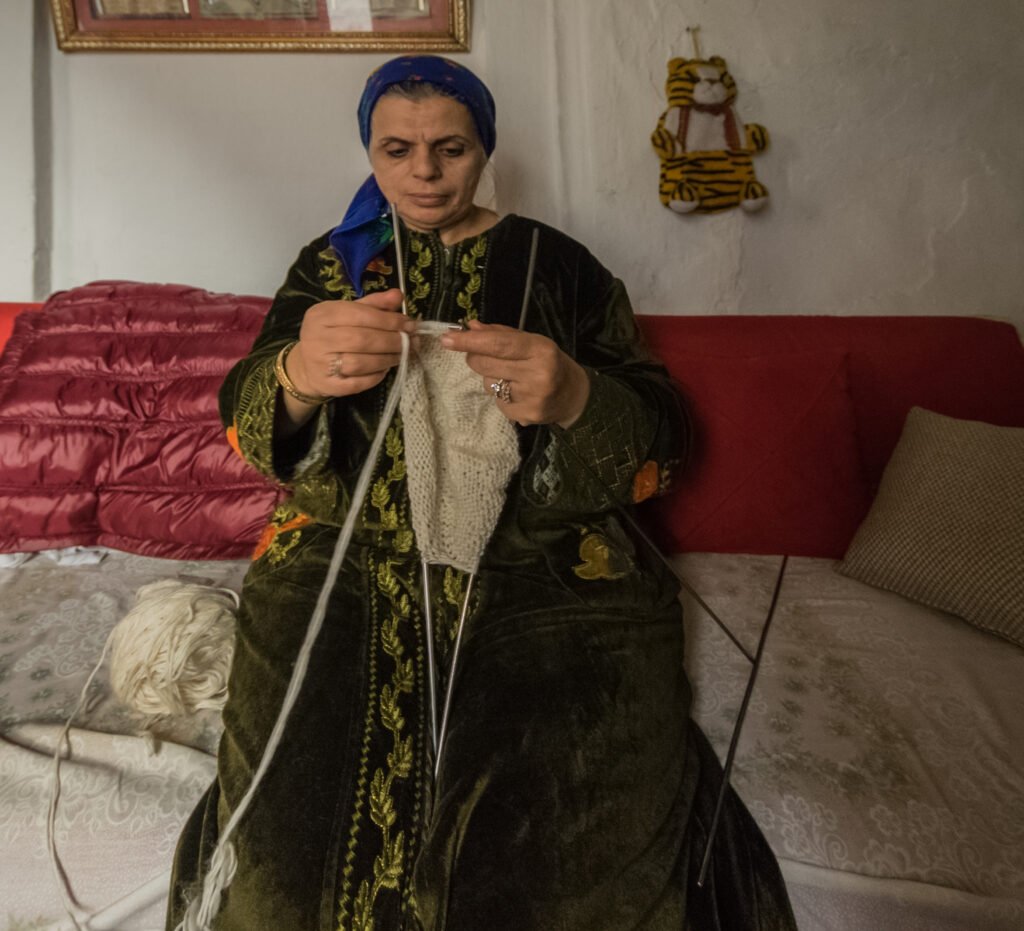
If you cannot see a stitch on a finished cap, should you still call it knitting? A Tunisian chechia makes that question useful. In a British Museum record for one cap made in Tunis in 1997–98, “knitted” appears alongside “embroidered,” “fulled,” and “carded.”[1] The finished surface is the result of several techniques, not proof that one technique was absent. This article follows the museum’s description of that particular object and sets it beside separate institutional records about a named maker’s workshop and the occupations involved. It does not propose a universal recipe for all chechias.
The museum registers the cap and its box together as Af1998,01.108.a-b.[1] It gives Tunis as the place of production, 1997–98 as the date, and records a purchase from Mohamed El-Abassi in 1998. The wool cap carries a trademark embroidered in black cotton; the box identifies the maker in Arabic and English. Its recorded diameter is 19 cm and its height 11 cm. Those measurements describe the surviving, finished object. They are not the dimensions of the loose knitted blank. Without measurements before and after fulling, we cannot work backward from 19 cm to a cast-on count, gauge, needle size, or rate of shrinkage. The box and mark show that the object was identified for sale, but the record alone does not tell us its price or the precise market in which this example was sold.
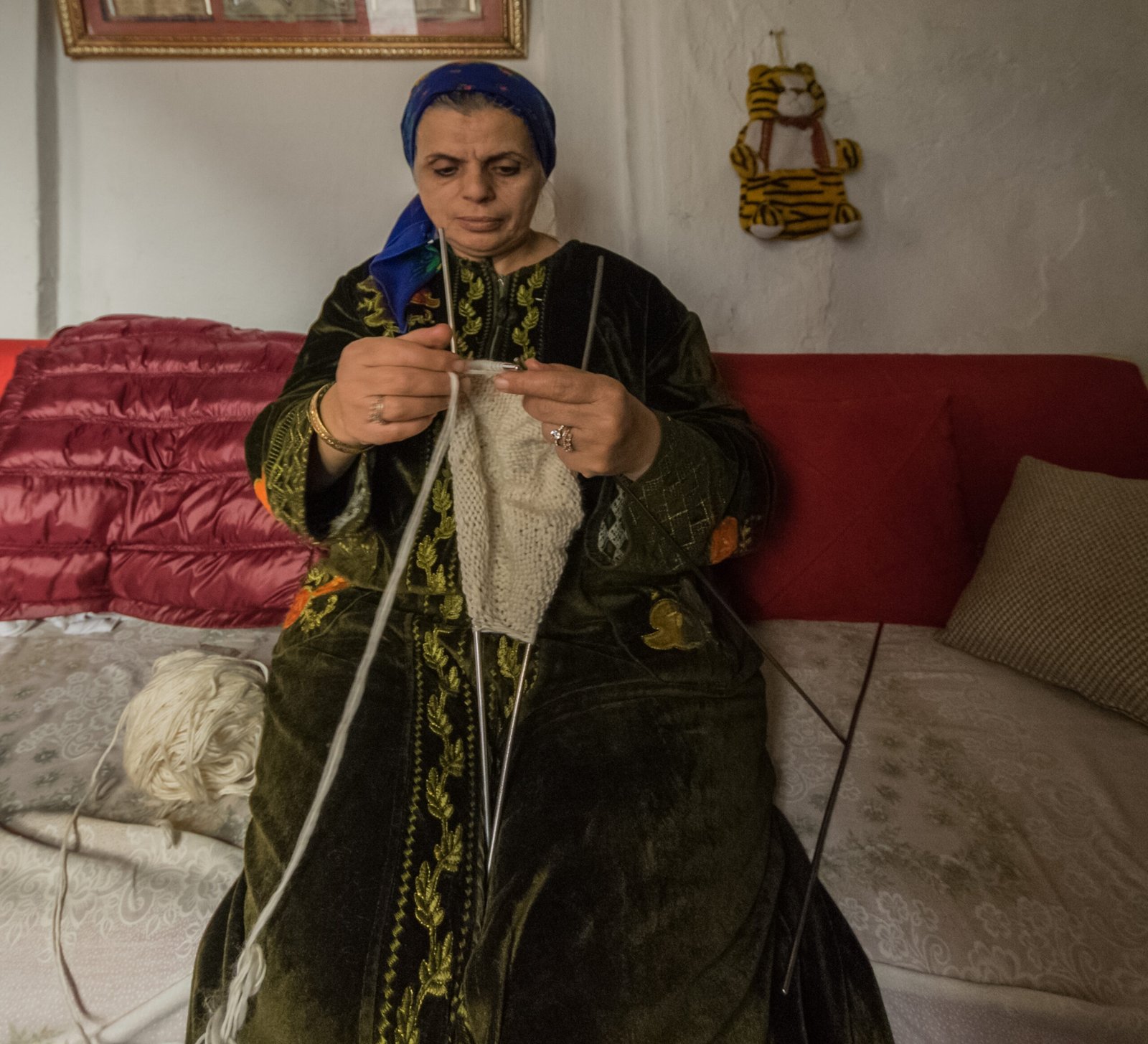
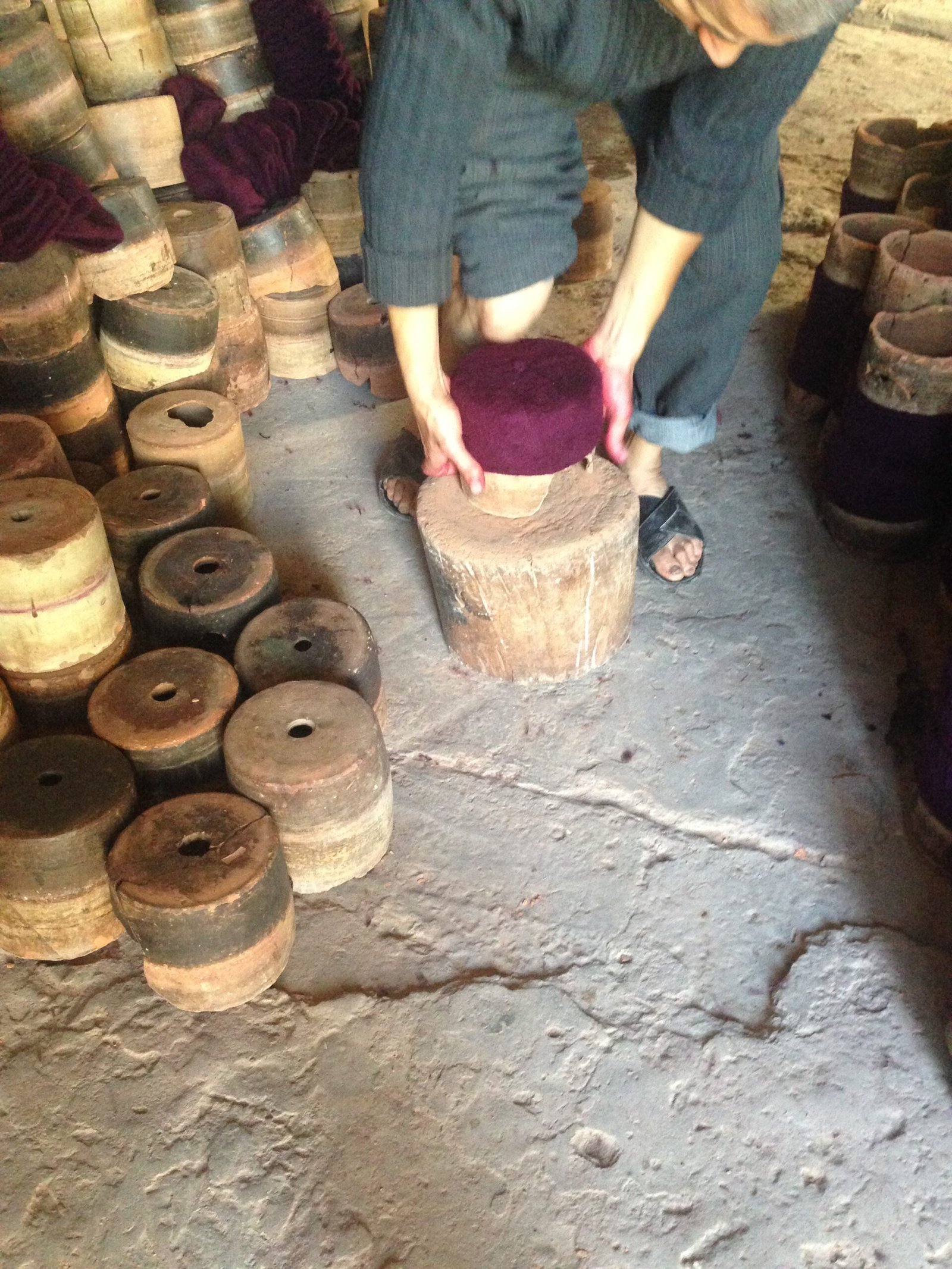
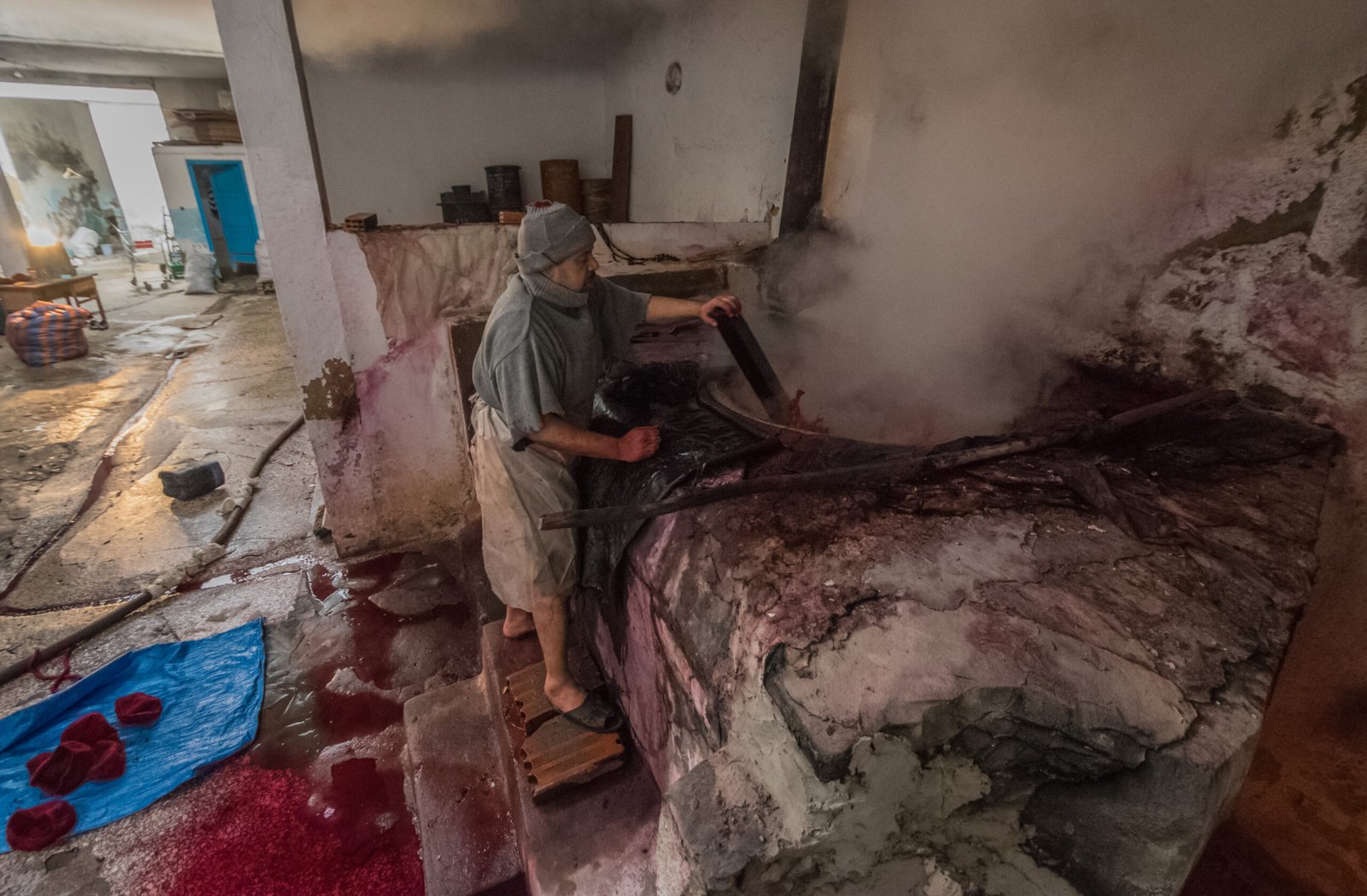
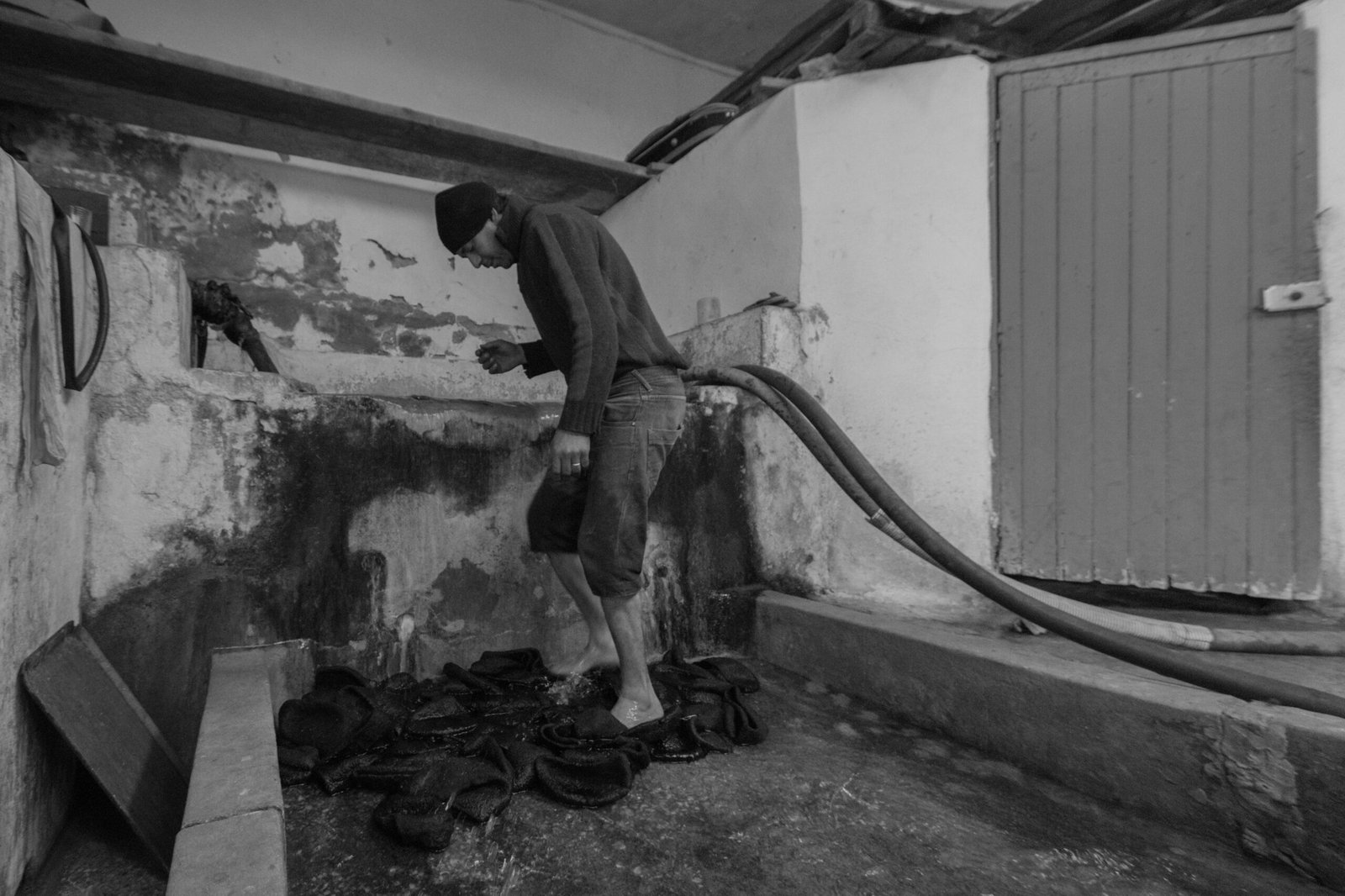
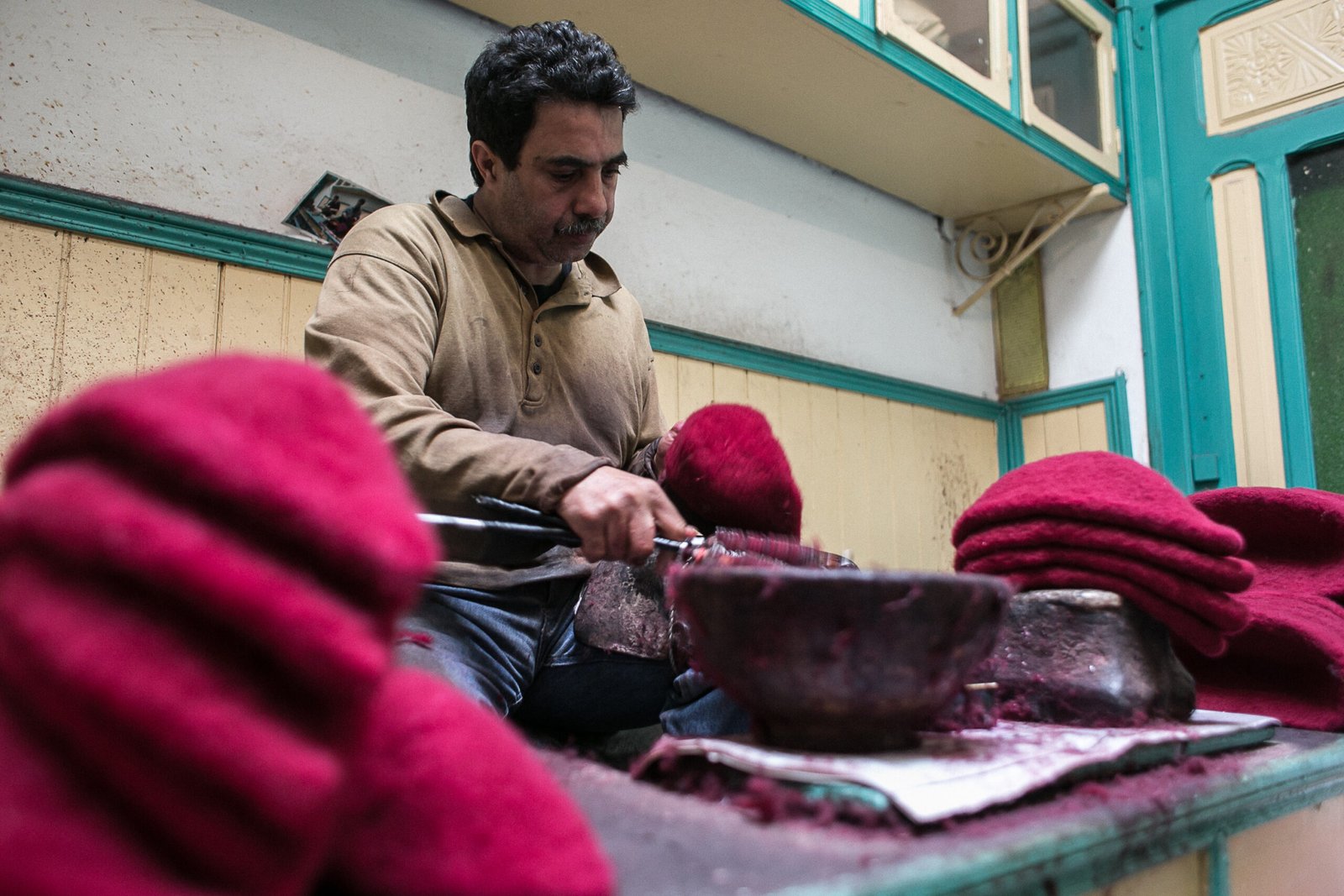
The curatorial account begins with women knitting loose cap shapes.[1] It then describes men fulling them to reduce their size, followed by carding, dyeing, and shaping while wet. Knitting is therefore an early structural act, rather than a pattern that must stay visible on the final surface. Fulling changes the wool and obscures the legibility of individual loops. Reading the catalogue’s “knitted” and “fulled” as interchangeable would hide the very transformation that makes this object interesting. Equally, calling it simply “felt” because the loops are hard to see would erase the documented knitting stage. The museum’s account assigns tasks within the production of this collected example; it cannot establish that every chechia workshop, in every period, divided work along the same gender lines.
For a knitter, the record is rich in questions but thin as an executable pattern. It does not specify the cast-on, stitch count, gauge, shaping increases or decreases, the needles used, or exact dimensions before fulling.[1] Five later photographs show related work, but they cannot supply those missing numbers for a 1990s museum object. A practical reading instead starts by separating stages. Which part was knitted to establish volume? Which wet process changed size and surface? When did shaping, embroidery, and a maker’s mark enter? Treating those as distinct steps helps a reader evaluate any modern pattern that promises a fulled cap. It also prevents a museum measurement from becoming an invented instruction.
The maker named in the museum’s acquisition record is Mohamed El-Abassi. The Tunisian National Office of Handicrafts profiles a business founded in 1945 near the Hamouda Pacha mosque in Tunis and says he learned the craft from his father, El-Arbi Abbassi.[2] It says Mohamed was elected amine of the trade in 1990 and that his daughter Aïda took over management in 2000. These are claims in an institutional profile about a family business, not names for the otherwise unidentified women who knitted the loose shapes. The spelling of the surname differs slightly between the museum and the office’s record, so the article preserves the forms each institution uses. A named business can anchor a story about work without standing in for every Tunisian maker.
Another page from the National Office describes the chechia as a red wool cap and says its production involves more than ten people across several stages.[3] This is an important corrective to the image of one artisan producing a complete item alone. It is not, however, a headcount for the British Museum cap. The office also presents a cultural history linking the craft to Andalusia and to Tunis. That account is attributed to the institution here; neither a date of first arrival nor a first maker can be established from these sources. Historical precision means keeping the scope of each record visible: a museum object, an institutional business profile, and an institutional account of a wider craft do different jobs.
Is making a chechia the same occupation as hand knitting? Tunisia’s tourism ministry lists Fabrication de la chéchia separately from Maille manuelle, the latter including knitting and crochet.[4] A nomenclature from the ministry responsible for training and employment likewise distinguishes a manual hosiery artisan, code 1105204, from a chechia-making artisan, code 1105205.[5] These categories do not deny the cap’s knitted beginning. They show that a multi-stage trade can have a name of its own even when it contains knitting. Nor can an occupational code identify who worked on the museum cap or how many people were present. A Tunis Creative Cities monitoring report hosted by UNESCO discusses employment and exports in the field, but it remains the city’s report for its own reporting period, not a current census.[6]
The five images below are comparisons, photographed in 2014, 2015, and 2017 by different people. They are not a continuous record of El-Abassi’s workshop, and none depicts the British Museum object. A view of needles and a loose shape, followed by scenes of dyeing, washing, and working a cap on a form, lets us ask what the catalogue means by stages. It cannot establish the identity of a pictured worker, the exact chronology among the photographs, or the stitch structure of the 1997–98 cap. Their value lies in making a reader notice what the written record supports and where it stops.
When you next open a wool-cap pattern, look for more than the finished circumference. Does its gauge refer to the fabric before or after washing? Will individual loops remain visible? When does shaping occur, and where does the maker add a mark or ornament? The Tunis cap reminds us that a finished surface may carry evidence of knitting even after the loops have become difficult to read. It also reminds us that the unrecorded cast-on and the names of anonymous workers remain unknown. A careful article can illuminate those limits without pretending to fill them.
Comparative photographs and individual reuse terms
Primary sources
- British Museum, chechia, Af1998,01.108.a-b — object date, place, materials, techniques, dimensions, and curatorial account.
- Tunisian National Office of Handicrafts, Mohamed El Abassi profile — family business and recorded roles.
- Tunisian National Office of Handicrafts, clothing crafts — institutional account of the craft and division of labor.
- Tunisian tourism ministry, traditional occupations — separate categories for chechia-making and manual knitting.
- Tunisian training and employment ministry, occupation nomenclature — codes 1105204 and 1105205.
- Tunis Creative Cities monitoring report, UNESCO-hosted copy — city-submitted contextual account, not present-day statistics.
If you enjoyed this story, please leave a warm greeting.
No name or email is needed. Greetings are published immediately, and your country and a masked IP address may be shown. The original IP address and browser information are stored with your greeting for comment management, spam prevention and security. Privacy policy and deletion requests
This product includes GeoLite Data created by MaxMind, available from https://www.maxmind.com.